
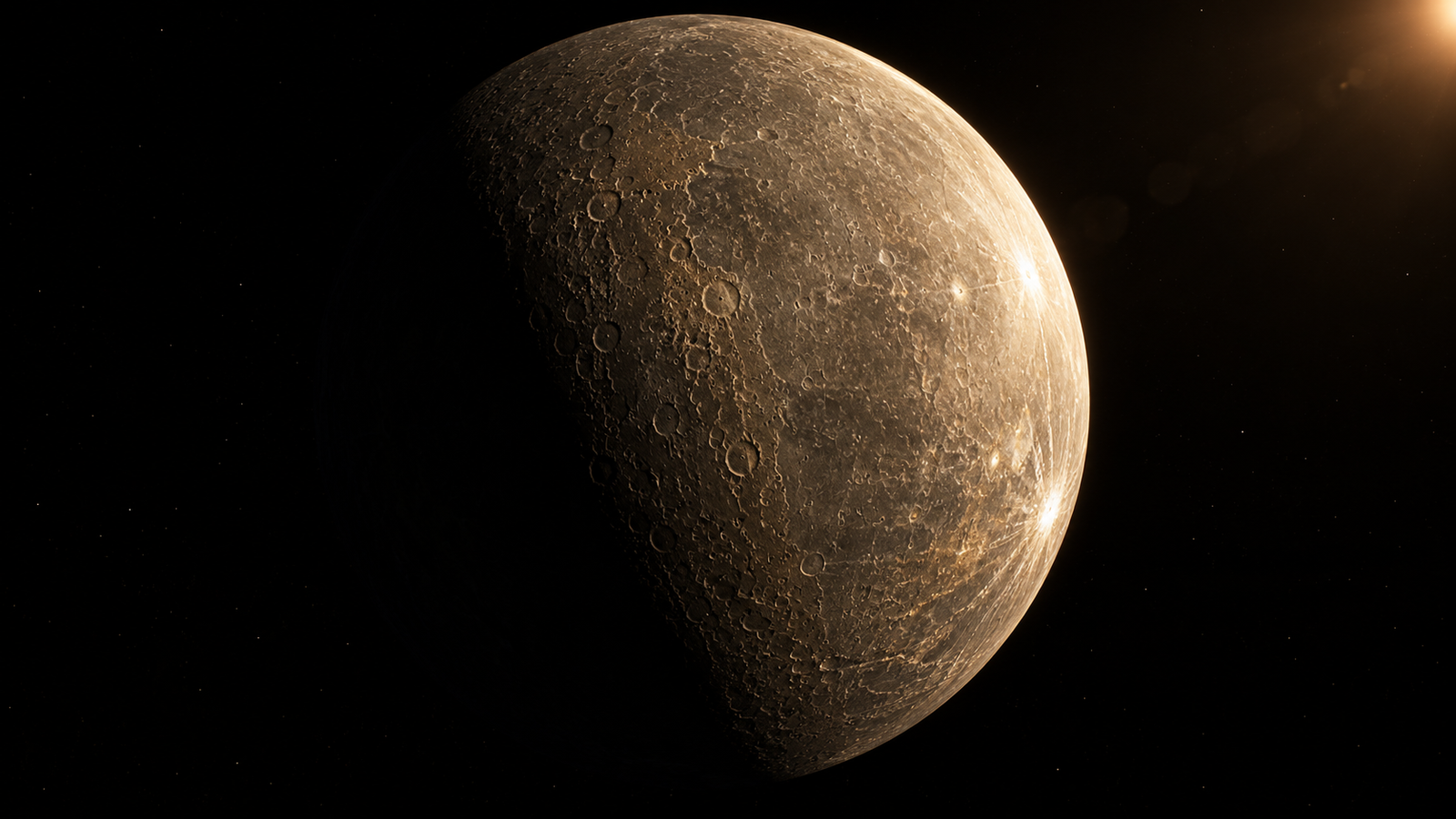
There is a planet where the ground can reach 430°C during the day, yet water ice survives in places where sunlight has never touched the surface.
A world so close to the Sun that sunlight can be up to seven times more intense than it is on Earth, yet it isn’t the hottest planet in the Solar System. A planet with almost no atmosphere, but a magnetic field.
A tiny rocky world with a metallic core so enormous that it occupies about 85 percent of the planet’s radius.
From Earth, Mercury can look like little more than a tiny point of light hiding in the Sun’s glare. But up close, Mercury is anything but simple.
Mercury Planet Facts at a Glance
Mercury is the smallest planet in the Solar System and the closest planet to the Sun. It is only slightly larger than Earth’s Moon, but its interior is dramatically different. Its enormous metallic core makes Mercury the second densest planet in the Solar System after Earth.
Here are the essential Mercury planet facts:
| Feature | Mercury |
|---|---|
| Position from Sun | 1st planet |
| Average distance from Sun | About 58 million km |
| Diameter | About 4,880 km |
| Year | 88 Earth days |
| Rotation | About 59 Earth days |
| Solar day | 176 Earth days |
| Gravity | About 38% of Earth’s |
| Moons | None |
| Rings | None |
| Daytime temperature | Up to about 430°C |
| Nighttime temperature | Down to about -180°C |
| Atmosphere | Extremely thin exosphere |
| Magnetic field | Yes |
| Core | About 85% of Mercury’s radius |
For the full set of measurements, orbital data, temperatures, structure and surface characteristics, NASA’s Mercury Facts is the primary reference
A Planet Almost Lost in the Sun’s Glare
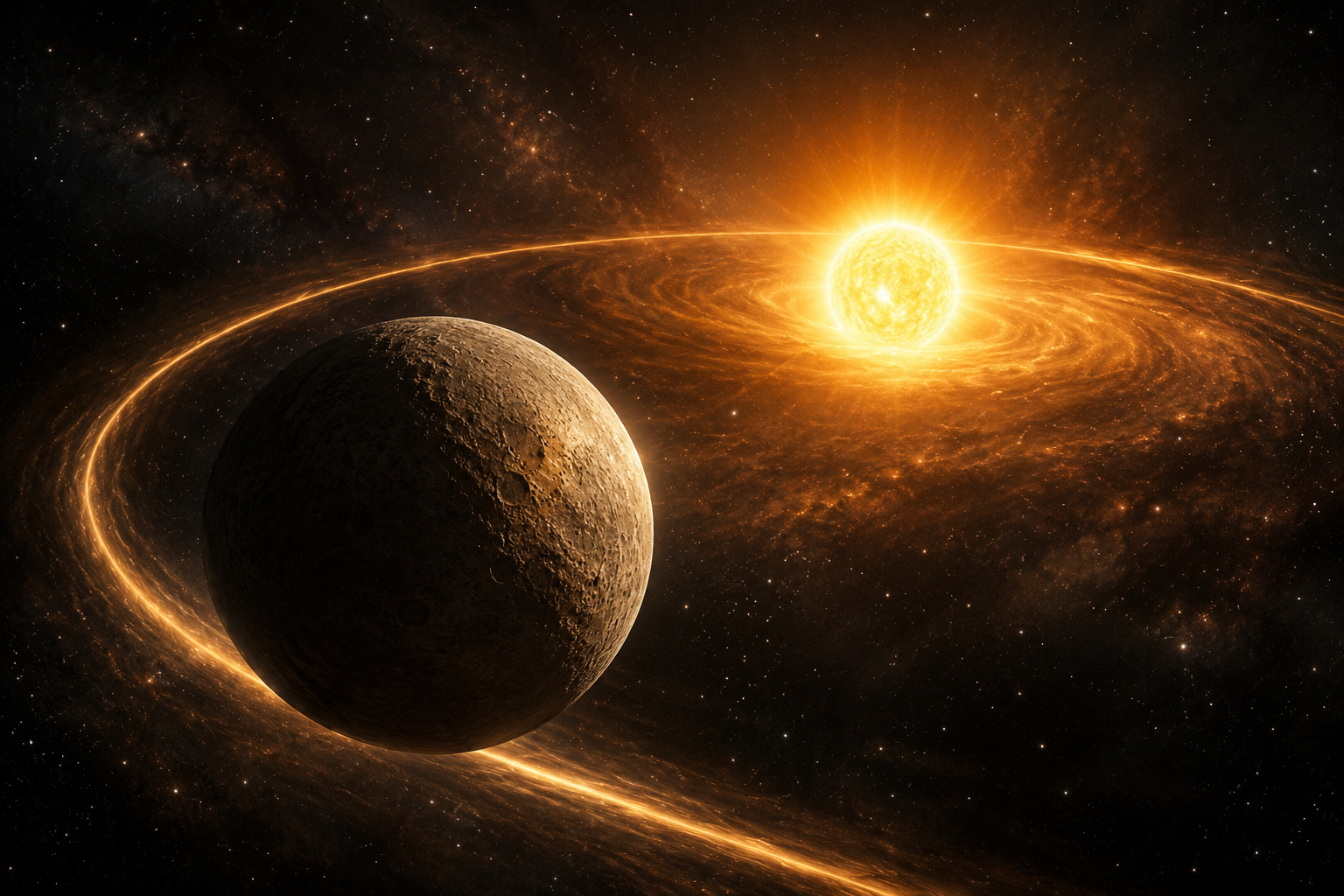
Mercury is surprisingly difficult to observe from Earth. Not because it is particularly far away. Because it lives so close to the Sun.
From our planet, Mercury never appears very far from the Sun in the sky. It can usually be seen only briefly after sunset or before sunrise, when the planet is separated enough from the Sun’s glare to become visible.
Ancient astronomers eventually realized that the object appearing in the morning sky and the object appearing in the evening sky were actually the same planet. But Mercury’s importance to astronomy went far beyond simply identifying another world.
Astronomers noticed that Mercury’s orbit behaved slightly differently from what classical Newtonian calculations predicted. The discrepancy involved the slow rotation of the point in Mercury’s orbit where it comes closest to the Sun.
Einstein’s general theory of relativity provided the explanation.
The Sun’s enormous mass curves spacetime around it, subtly changing Mercury’s orbit. That made Mercury one of the most famous early tests of Einstein’s theory of gravity.
A planet that was difficult to observe became one of the places where humanity discovered that gravity itself was stranger than we had imagined.
Mercury Has One of the Strangest Days in the Solar System
Mercury takes only 88 Earth days to orbit the Sun, making it the fastest planet in the Solar System.
But its rotation is much slower. One rotation takes about 59 Earth days. That produces an unusual relationship between Mercury’s rotation and its orbit called a 3:2 spin orbit resonance.
For every three rotations Mercury makes, it completes two trips around the Sun. The result is something even stranger. One complete solar day on Mercury, from one sunrise to the next, lasts about 176 Earth days.
In other words, a sunrise on Mercury is not something you would see again anytime soon. And near Mercury’s closest approach to the Sun, something even more bizarre can happen.
Because Mercury’s orbital speed changes dramatically along its elliptical orbit, the Sun can appear to rise, briefly reverse direction, and then continue moving across the sky from certain locations.
The sky on Mercury would behave in ways that would look almost impossible to someone accustomed to Earth.
The Surface Looks Dead. It Isn’t.
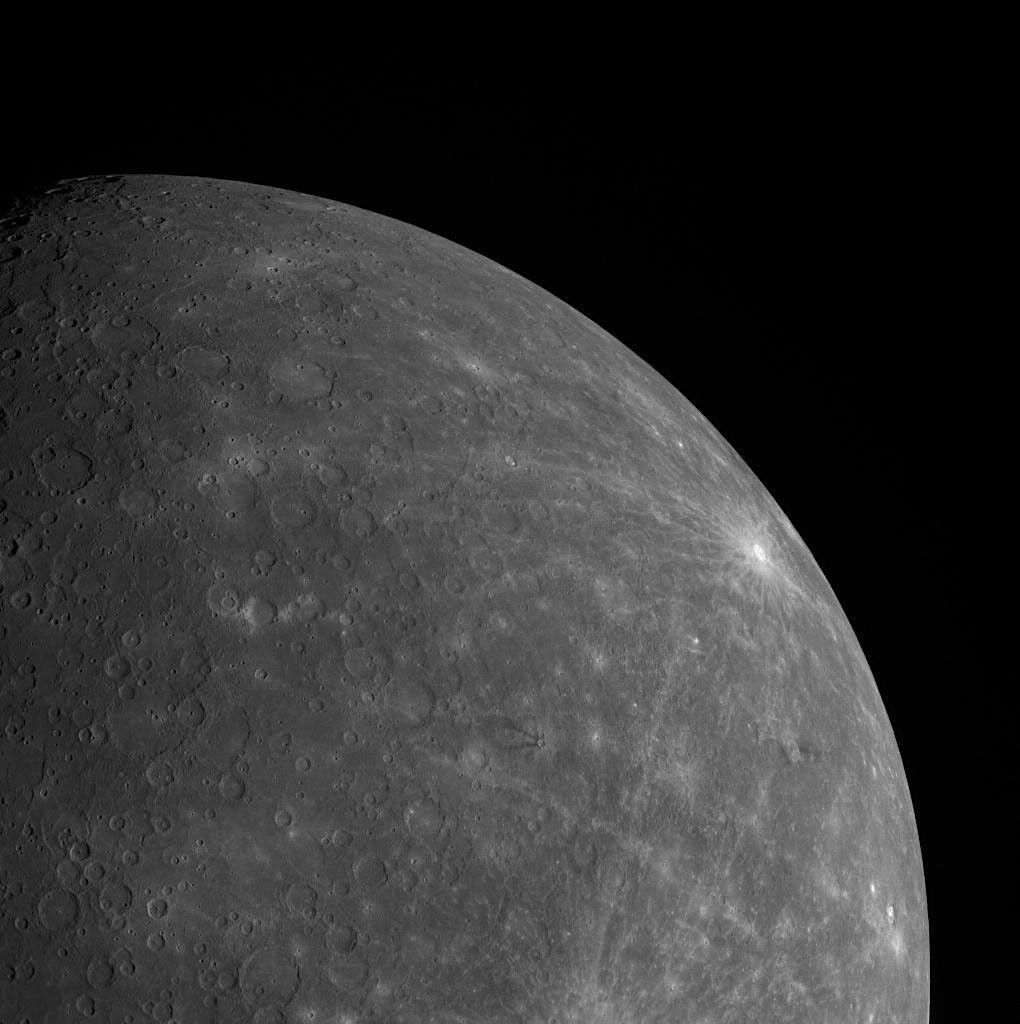
Mercury’s surface immediately reminds many people of Earth’s Moon.
It is covered with craters.
But beneath that battered appearance is a much more complicated geological history.
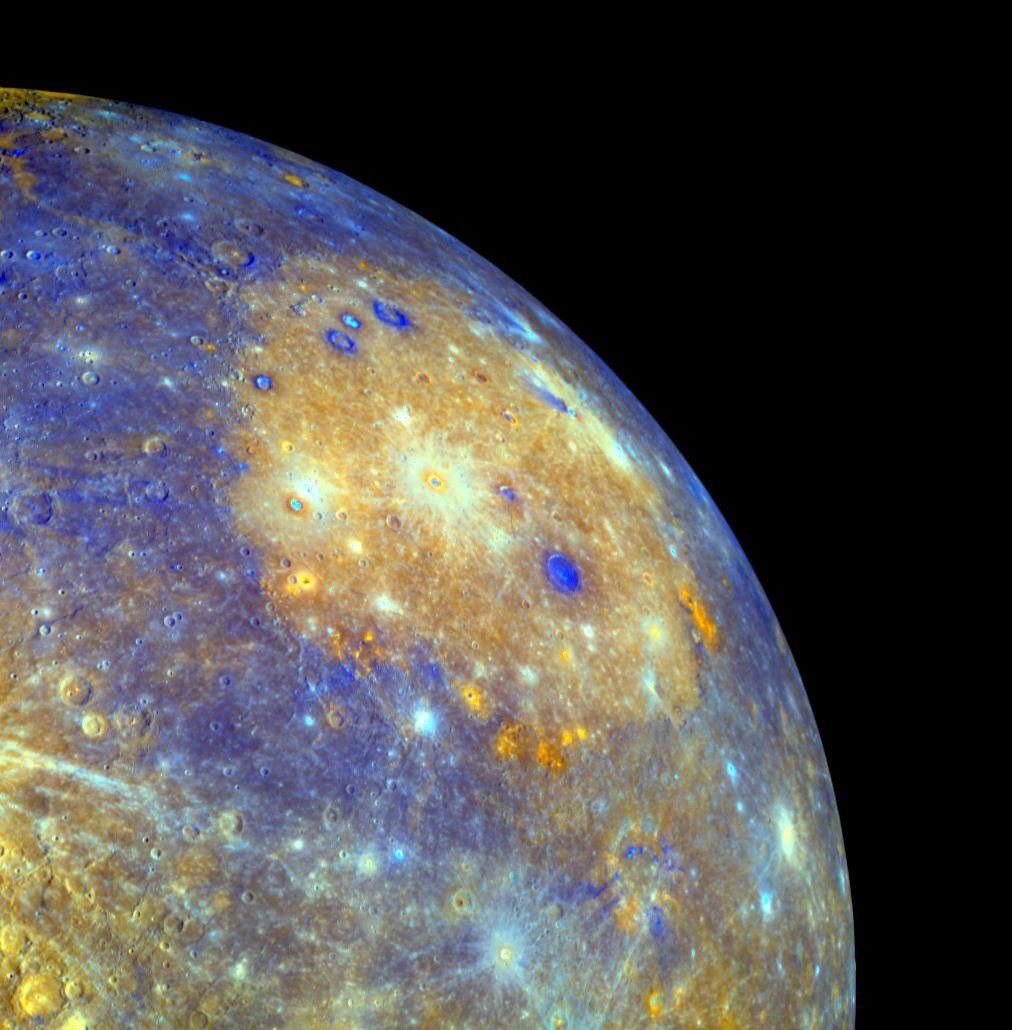
Mercury has enormous cliffs called lobate scarps, some stretching hundreds of kilometers across the planet.
These formations are evidence that Mercury itself changed shape.
As its interior cooled over billions of years, the planet contracted. Its outer layers were compressed, producing enormous cliffs and ridges across the surface. NASA’s observations of Mercury’s structure and surface provide evidence for this long term contraction.
Mercury therefore carries scars not only from things that hit it.
Some of its largest scars came from the planet cooling from the inside.
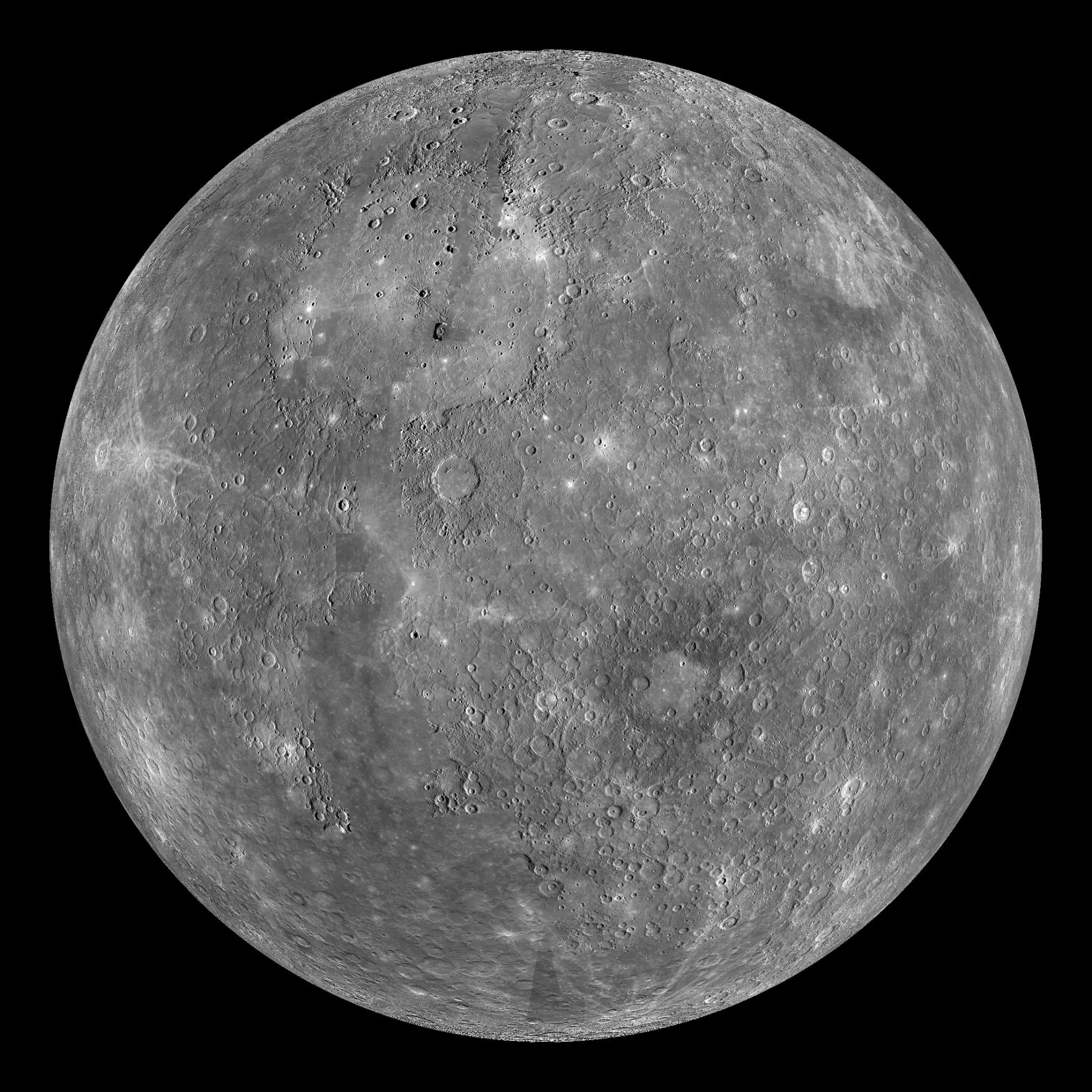
Credit: NASA/Johns Hopkins University Applied Physics Laboratory/Carnegie Institution of Washington.
Mercury Was Once a Volcanic World
It is easy to look at Mercury today and assume that it has always been a cold, dead rock. It hasn’t.
NASA’s MESSENGER mission found extensive evidence of ancient volcanic activity across Mercury. Smooth plains cover large areas of the planet, and some formed when lava erupted and flooded the surface billions of years ago.
That discovery changed our understanding of Mercury. The planet wasn’t simply built, bombarded by asteroids and left frozen in time. Its interior once produced enough heat to drive widespread volcanism.
Some of those volcanic regions are closely associated with enormous impact basins, creating geological records that preserve multiple chapters of Mercury’s history in the same location.
And no impact basin is more dramatic than Caloris.
Caloris Basin: The Impact That Shook Mercury
Mercury’s Caloris Basin is roughly 1,550 kilometers across.
It was created billions of years ago when a huge object collided with Mercury at extraordinary speed. The impact was so powerful that its effects extended far beyond the basin itself.
The energy from the collision travelled through the planet and produced heavily disrupted terrain on the opposite side. Later volcanic activity filled parts of the basin with lava.
The result is one of the most spectacular geological features in the Solar System. Caloris is not merely an enormous crater. It is a record of an impact powerful enough to affect an entire planet.
Beneath Mercury Is an Enormous Metal Heart
This is where Mercury becomes truly strange.
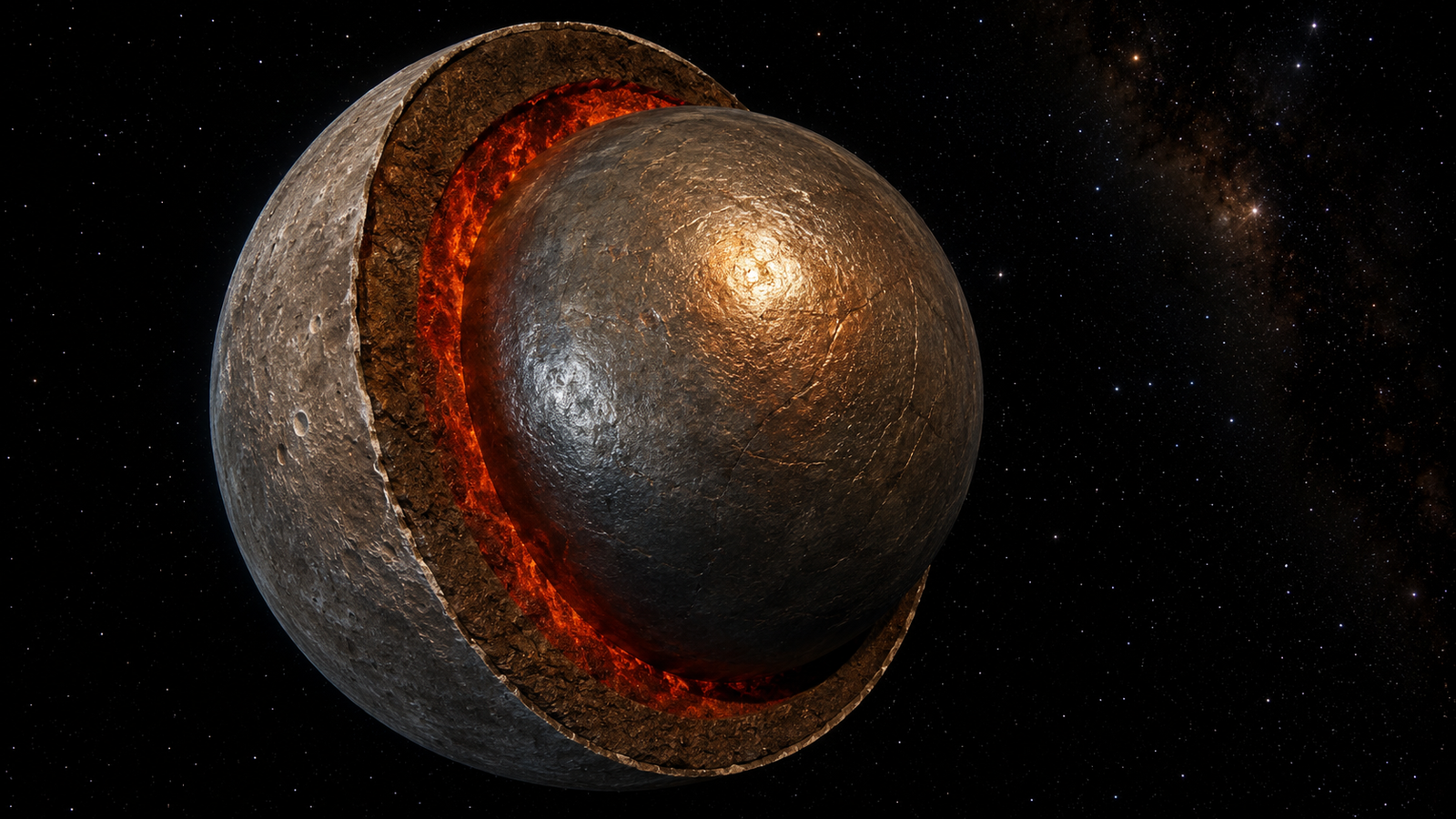
For such a small planet, Mercury has an enormous metallic core. Its core has a radius of roughly 2,074 kilometers, accounting for about 85 percent of Mercury’s radius. The rocky mantle and crust surrounding it are comparatively thin.
Earth has a metallic core too. But Mercury’s core dominates the planet to a much greater degree.
Scientists have proposed different explanations for Mercury’s unusual interior. One possibility involves enormous impacts during the Solar System’s violent early history stripping away some of the planet’s rocky outer material.
Other models suggest that Mercury may have formed under unusual chemical conditions close to the young Sun. MESSENGER made the mystery even more interesting by revealing that Mercury retained significant amounts of volatile elements despite its extreme environment.
That means Mercury cannot simply be explained as a world that formed close to the Sun and lost everything capable of evaporating. Its giant core is one of the biggest clues we have to how this planet formed.
Mercury Has a Magnetic Field. And That’s Strange.
Mercury is tiny. It rotates slowly. It sits extremely close to the Sun. Yet it has a global magnetic field.
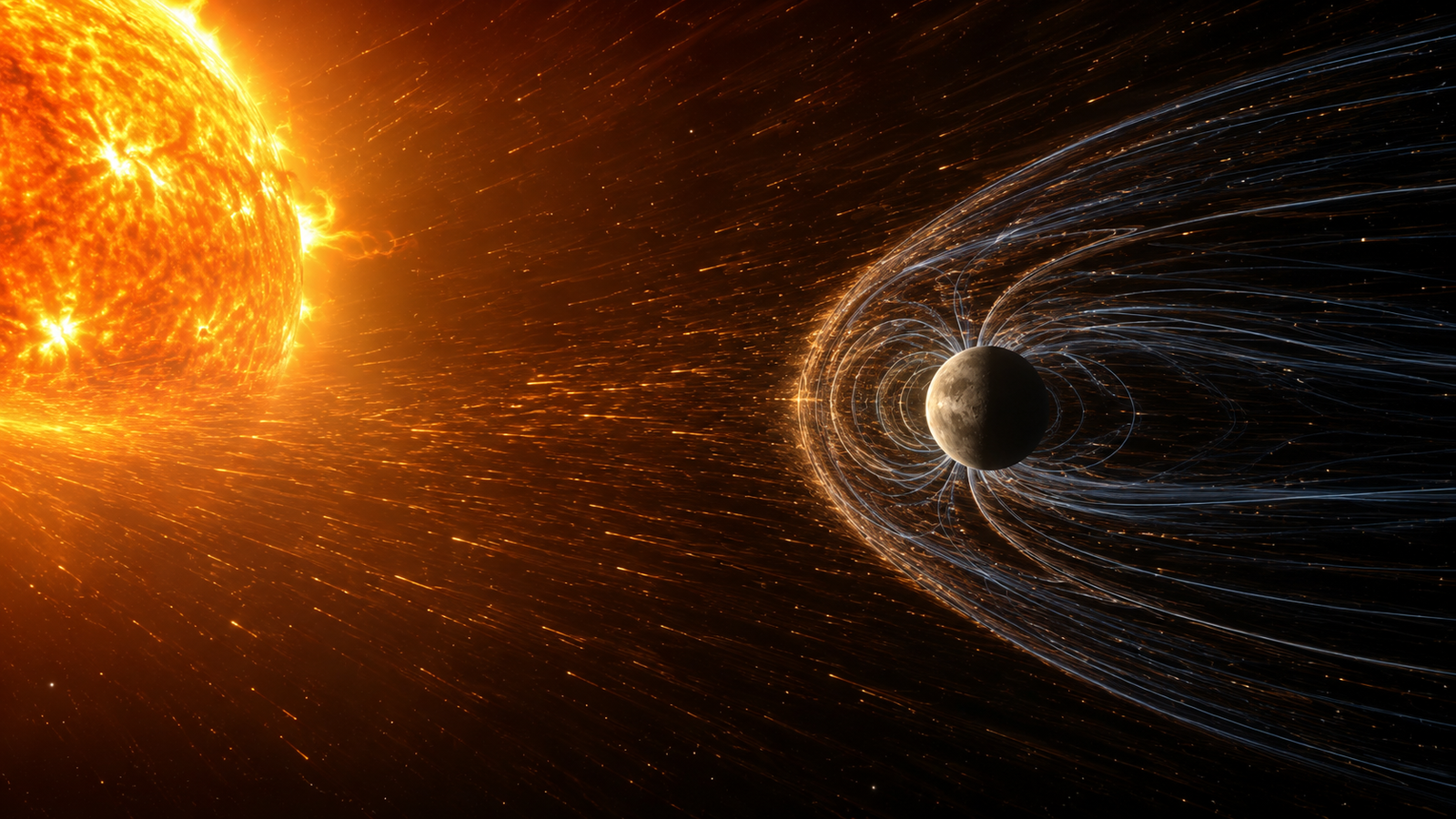
The field is much weaker than Earth’s, measuring only about 1 percent of Earth’s surface magnetic field strength. But it is strong enough to create a magnetosphere around Mercury.
That magnetic field interacts with the solar wind continuously.
NASA’s observations show that this interaction can create powerful magnetic structures that funnel energetic solar wind plasma toward Mercury’s surface. Those particles can knock atoms out of the surface and contribute to the planet’s extremely thin exosphere.
So Mercury is not simply sitting beside the Sun being heated. It is being bombarded by the Sun’s particle environment as well.
Mercury Doesn’t Really Have an Atmosphere
Mercury does not have an atmosphere in the way Earth does. Instead, it has an extremely thin exosphere.
NASA identifies oxygen, sodium, hydrogen, helium and potassium among the particles found there. These atoms can be released from Mercury’s surface by solar radiation, the solar wind and impacts from meteoroids.
There is so little gas around Mercury that it cannot redistribute heat efficiently around the planet. That helps explain the brutal temperature difference between day and night. Sunlit terrain can reach approximately 430°C. After sunset, temperatures can fall to around -180°C.
Mercury is therefore a world of extremes partly because of something it doesn’t have. No thick atmosphere. No clouds. No rain.
No global weather system capable of carrying heat from one side of the planet to the other.
The Most Unexpected Discovery: Water Ice on Mercury
This may be the fact about Mercury that sounds the least believable.
There is water ice on Mercury. Not liquid oceans. Not rivers. Not rain. Ice.
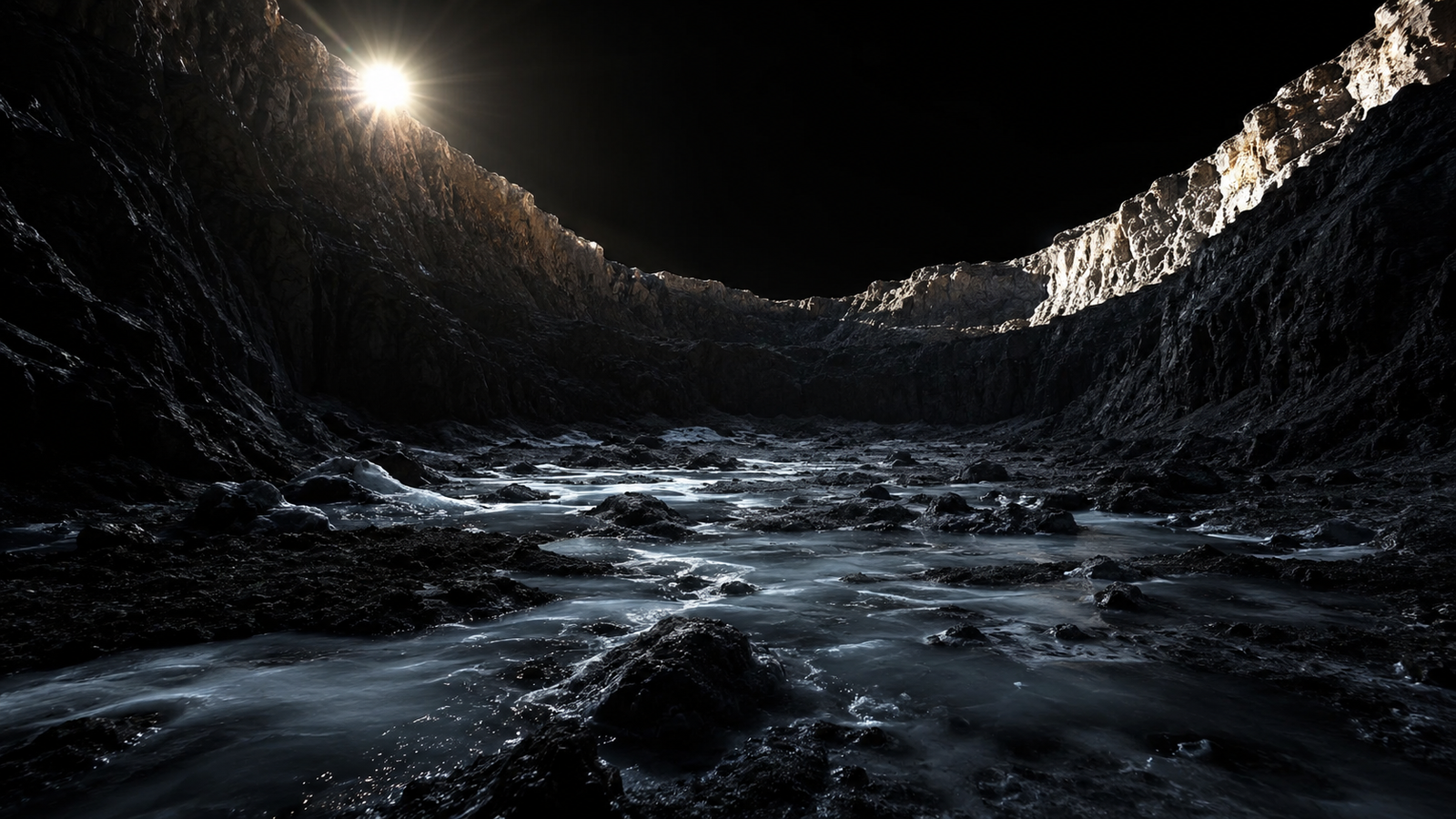
NASA’s MESSENGER mission verified that Mercury’s polar deposits are dominated by water ice. The explanation lies in Mercury’s poles. Some craters are positioned so that their floors never receive direct sunlight. Their walls permanently block the Sun.
These regions can remain incredibly cold even though nearby sunlit terrain becomes hot enough to reach hundreds of degrees Celsius. Water that became trapped there can therefore survive for extremely long periods. This is one of the Solar System’s most fascinating contradictions.
A planet exposed to intense solar radiation can preserve frozen water because some parts of it never see sunlight.
Mercury Has Another Mystery: The Hollows
Water ice isn’t Mercury’s only strange discovery.
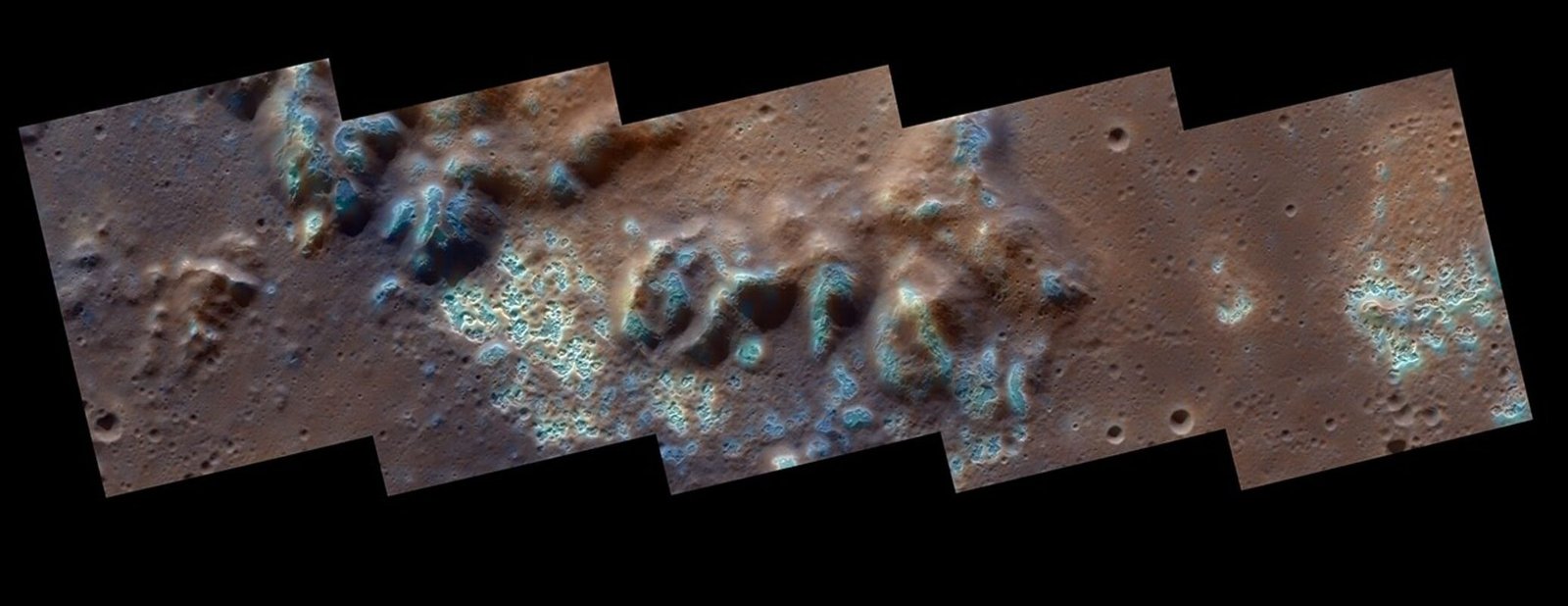
MESSENGER also revealed thousands of unusual depressions scattered across the planet. Scientists call them hollows.
They are shallow, irregular pits found in many different locations, including inside impact craters and along crater rims and peaks.The strange part is that Mercury doesn’t have the kind of atmosphere, rain or flowing water that could carve these features in the way erosion works on Earth.
NASA describes Mercury’s hollows as one of the planet’s major geological mysteries. Scientists have proposed that volatile materials may be escaping or being altered by Mercury’s intense environment, but the exact processes responsible remain an active area of research.
Mercury therefore contains landscapes that scientists can see clearly but still cannot completely explain. And that makes the planet far more interesting than its gray, battered appearance suggests.
Credit: NASA/Johns Hopkins University Applied Physics Laboratory/Carnegie Institution of Washington.
What Would It Actually Be Like to Stand on Mercury?
There would be no breathable air. No blue sky. No clouds. No wind carrying sound across the landscape.
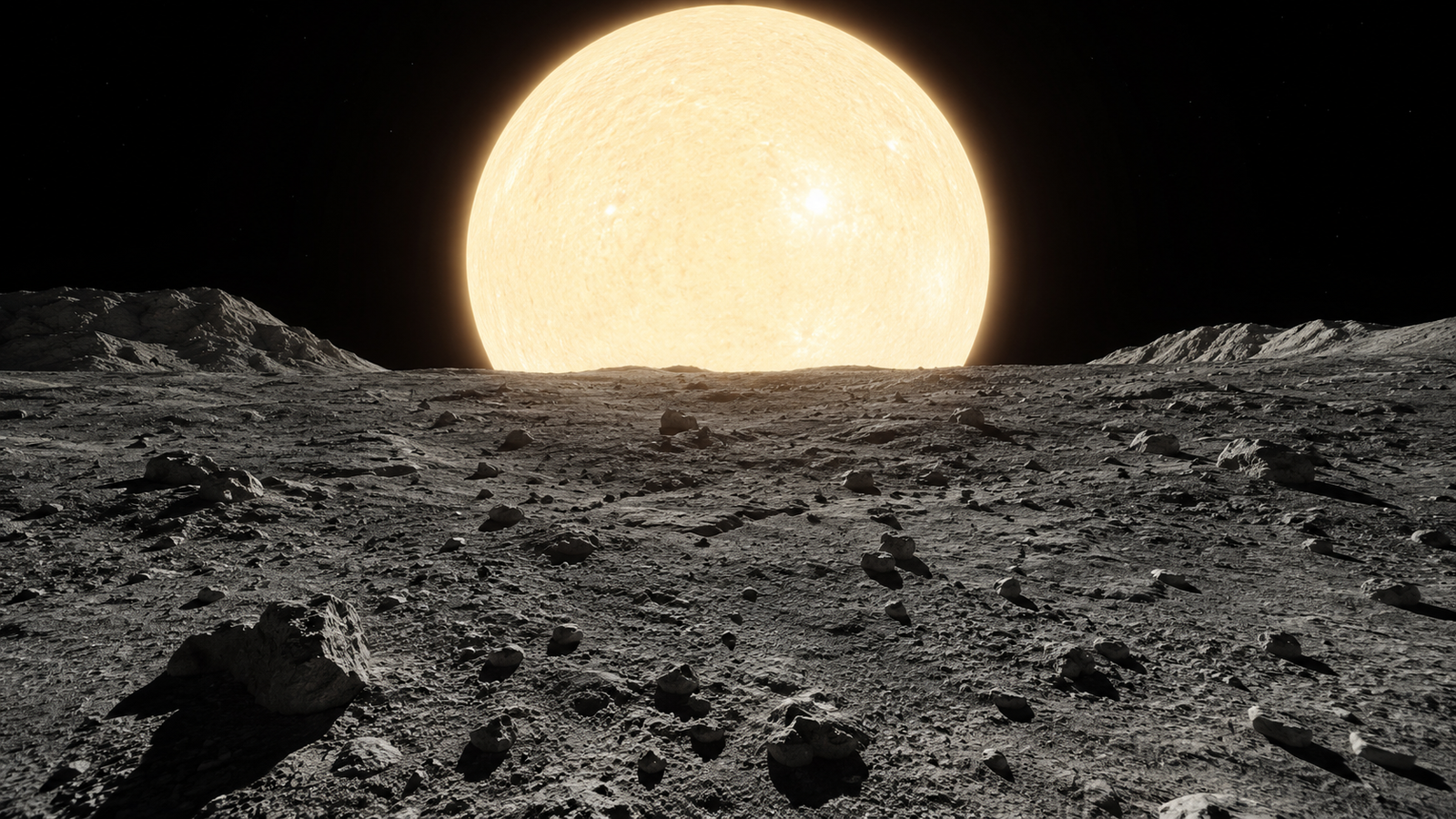
The sky would remain black even in daylight because Mercury has no substantial atmosphere to scatter sunlight. The Sun would appear more than three times larger than it does from Earth, while sunlight could be up to seven times brighter.
The landscape would be gray, dusty and heavily cratered. Shadows would be incredibly sharp. There would be no atmospheric haze softening the horizon.
And then there is the temperature. Stand in direct sunlight and the surface can become brutally hot. Move into permanent shadow near one of the polar craters and you could enter a region cold enough for water ice to survive.
Mercury isn’t simply a hot planet. It is a planet divided between extremes of heat and cold.
How Humanity Finally Reached Mercury
Mercury is one of the least explored planets in the inner Solar System. NASA’s Mariner 10 became the first spacecraft to visit Mercury in 1974. But it could only observe part of the planet. Decades later, another spacecraft returned with a much more ambitious mission.
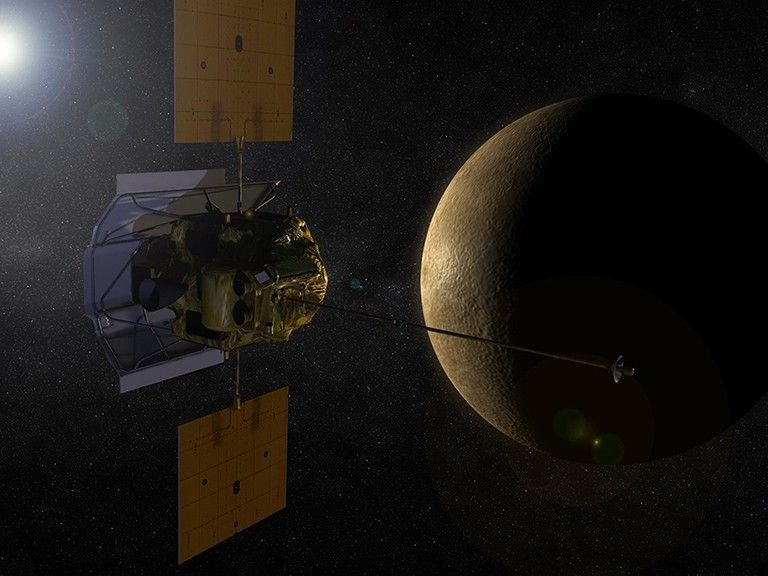
NASA’s MESSENGER became the first spacecraft to orbit Mercury in March 2011. It remained there for more than four years, mapping the planet and studying its surface composition, geology, interior, magnetic field and exosphere.
The mission eventually ended when MESSENGER impacted Mercury’s surface in 2015. But by then, it had completely changed our understanding of the planet. Before MESSENGER, Mercury was largely a mystery.
After MESSENGER, scientists knew about its enormous core, ancient volcanism, polar water ice, magnetic field and mysterious hollows.
BepiColombo Is About to Open the Next Chapter
Mercury’s story isn’t finished. In fact, another spacecraft is almost there.
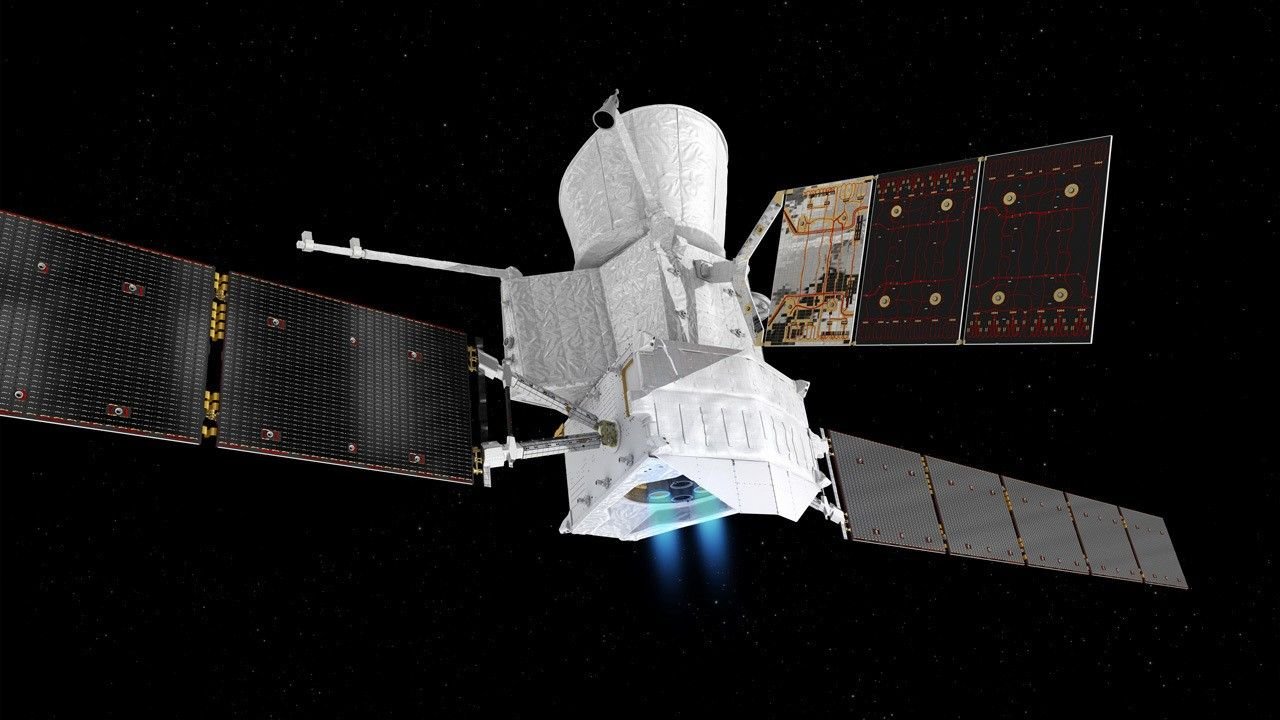
BepiColombo, a joint mission between the European Space Agency and the Japan Aerospace Exploration Agency, is currently approaching the final stage of its journey to Mercury.
The mission launched in 2018 and has spent years using planetary flybys and solar electric propulsion to reshape its orbit. Reaching Mercury is surprisingly difficult.
A spacecraft travelling inward toward the Sun is constantly being accelerated by the Sun’s enormous gravity. It therefore has to lose a tremendous amount of orbital energy to match Mercury’s path around the Sun. BepiColombo’s long journey was designed around precisely that problem.
According to the ESA BepiColombo mission schedule, the spacecraft’s Mercury orbit insertion is currently planned for November 21, 2026, followed by separation of its two science orbiters in December. Routine science operations are scheduled to begin in April 2027.
BepiColombo isn’t going there simply to photograph Mercury. Its instruments will investigate the planet’s interior, surface, magnetic environment, exosphere and interaction with the solar wind. It will also investigate some of the biggest unanswered questions left by MESSENGER.
Why does Mercury have such a huge core?
How does its magnetic field work?
How did its surface evolve?
How are volatile elements distributed across the planet?
What exactly created its mysterious hollows?
And what is happening inside Mercury today?
What Scientists Still Don’t Know About Mercury
This may be the most fascinating part of Mercury. We know dramatically more about the planet than we did before MESSENGER. But almost every major discovery created another question.
Why is Mercury’s core so enormous?
Exactly how did the planet form with such a metal rich interior?
How did Mercury retain volatile elements despite its proximity to the Sun?
How much of its core remains liquid?
How has its magnetic field changed over billions of years?
How much water ice is trapped near the poles?
Where did that water come from?
What exactly creates the hollows?
And how much geological activity is still occurring inside Mercury today?
BepiColombo was designed specifically to investigate many of these mysteries, including Mercury’s interior structure, magnetic field, exosphere and surface composition.
That is why Mercury matters far beyond its own orbit. It is a natural laboratory for understanding how rocky planets form, evolve and survive close to their stars.
The Strangest Mercury Facts
Mercury is the closest planet to the Sun, but Venus is hotter because its dense atmosphere traps enormous amounts of heat.
A Mercury year lasts only 88 Earth days.
A Mercury solar day lasts 176 Earth days.
Mercury has no moons.
Mercury has no rings.
Its enormous metallic core occupies about 85 percent of its radius.
Its surface contains giant cliffs created as the planet contracted.
Ancient volcanic activity reshaped enormous regions of the planet.
Water ice survives inside permanently shadowed polar craters.
Mercury has a global magnetic field despite being much smaller than Earth.
Thousands of mysterious hollows cover its surface.
And its unusual orbit played an important role in confirming Einstein’s theory of general relativity.
The smallest planet in the Solar System is anything but simple.
Frequently Asked Questions About Mercury
What are the most important Mercury planet facts?
Mercury is the smallest and innermost planet in the Solar System. It has an 88-day year, a 176-day solar day, no moons, an enormous metallic core, an extremely thin exosphere, a global magnetic field and water ice preserved inside permanently shadowed polar craters.
Why is Mercury not the hottest planet?
Mercury is closer to the Sun than Venus, but it has almost no atmosphere capable of retaining and redistributing heat. Venus has an extremely dense atmosphere that creates a powerful greenhouse effect, making Venus the hottest planet in the Solar System.
Does Mercury have water?
Yes. Water ice exists in permanently shadowed regions near Mercury’s poles. NASA’s MESSENGER mission verified that the polar deposits are dominated by water ice.
How long is a day on Mercury?
Mercury rotates once every 59 Earth days, but a complete solar day lasts 176 Earth days.
Does Mercury have an atmosphere?
Mercury has an extremely thin exosphere rather than a substantial atmosphere. It contains particles including oxygen, sodium, hydrogen, helium and potassium.
Does Mercury have a magnetic field?
Yes. Mercury has a global magnetic field, although its surface strength is only about 1 percent of Earth’s.
Has a spacecraft landed on Mercury?
No spacecraft has made a conventional landing on Mercury. Mariner 10 was the first spacecraft to visit Mercury, while MESSENGER became the first to orbit it. MESSENGER eventually impacted the planet at the end of its mission.
When will BepiColombo reach Mercury?
BepiColombo is currently scheduled to enter Mercury orbit on November 21, 2026, with routine science operations planned to begin in April 2027.
Conclusion
Mercury may be the smallest planet in the Solar System, but it is anything but simple. Its scarred surface preserves billions of years of impacts, its enormous iron core dominates its interior, and permanently shadowed craters can hide water ice despite the planet’s proximity to the Sun. Even its movement through space is unusual, locked into a strange 3:2 relationship between rotation and orbit.
The closer we look at Mercury, the less it resembles the simple, airless rock it first appears to be. It is a world shaped by extreme heat, ancient impacts, violent geological history and an environment unlike anything on Earth.
And Mercury is only one of the strange worlds orbiting our Sun.
The Universe Is Bigger Than Mercury
Mercury is only one world in a Solar System filled with places stranger than we could have imagined.
Explore From Worlds Beyond for more stories about the planets, moons, black holes, and cosmic mysteries hiding beyond our world.