
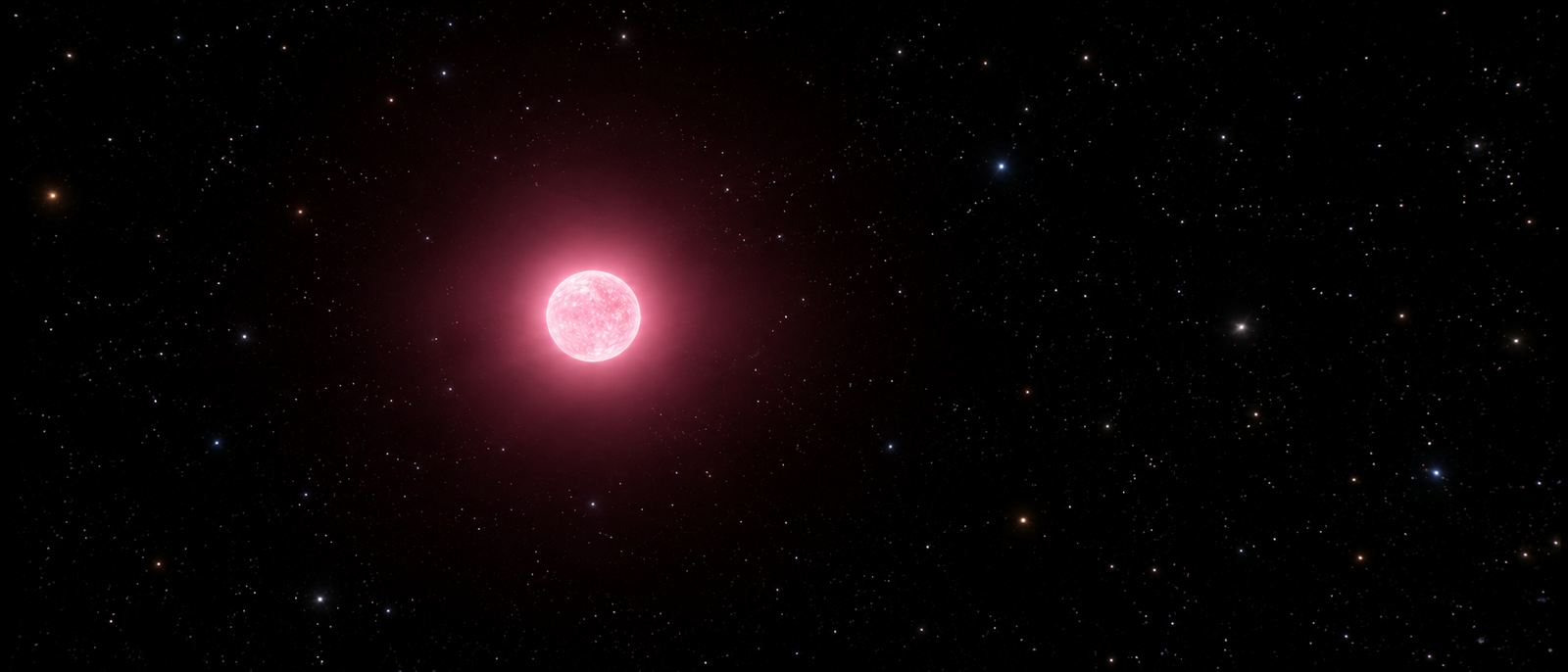
Imagine looking into space and discovering a star that appears salmon pink.
It sounds like science fiction. But new research from astronomers at the University of Warwick suggests that some of the Universe’s strangest stellar remnants could display colours far more unusual than we once imagined.
One remarkable object is a white dwarf called WD J1011+2845, located about 48 light years from Earth. According to calculations based on its observed spectrum and a model of human colour vision, this dead star would appear a deep salmon pink.
And the reason is even stranger than the colour itself.
Why Would a Star Look Pink?
Most of the time, the colour of a star is strongly connected to its temperature. Cooler stars can appear orange or red, while hotter stars can appear white or blue.
White dwarfs are different.
These objects are the incredibly dense remnants left behind after stars similar to our Sun reach the end of their normal lives. Their extreme environments can allow the chemistry of their atmospheres to change the light they emit in ways that are far more complicated than temperature alone.
In carbon rich white dwarfs, material from deeper inside the star can be brought upward toward the surface. Carbon molecules can then absorb specific portions of visible light.
That changes the mixture of wavelengths that would eventually reach a human eye.
For WD J1011+2845, the effect is particularly extreme. The researchers found that much of its visible light is concentrated at wavelengths longer than 600 nanometres, while a large amount of light between approximately 400 and 600 nanometres is strongly suppressed.
The calculated result is a deep salmon pink colour unlike that of an ordinary star.
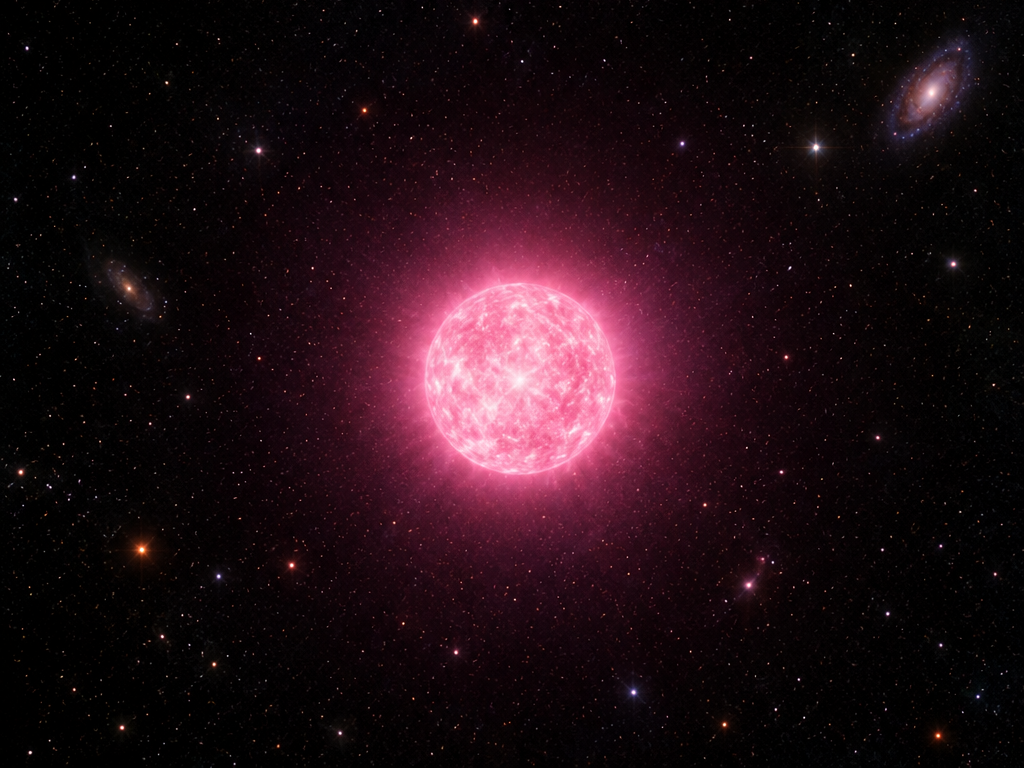
These Are Not Ordinary Stars
Perhaps the most extraordinary part of this discovery is what these objects actually are.
A white dwarf is not a young star burning brightly at the beginning of its life. It is the dense remnant left behind after a Sun like star has exhausted the stages of stellar evolution that define its normal lifetime.
In other words, some of the strangest colours in the Universe may belong to stars that have already reached the final chapters of their existence.
The University of Warwick researchers found that white dwarfs could potentially appear in colours including pink, purple, yellow, cyan and even green, depending on their atmospheric composition and extreme physical conditions.
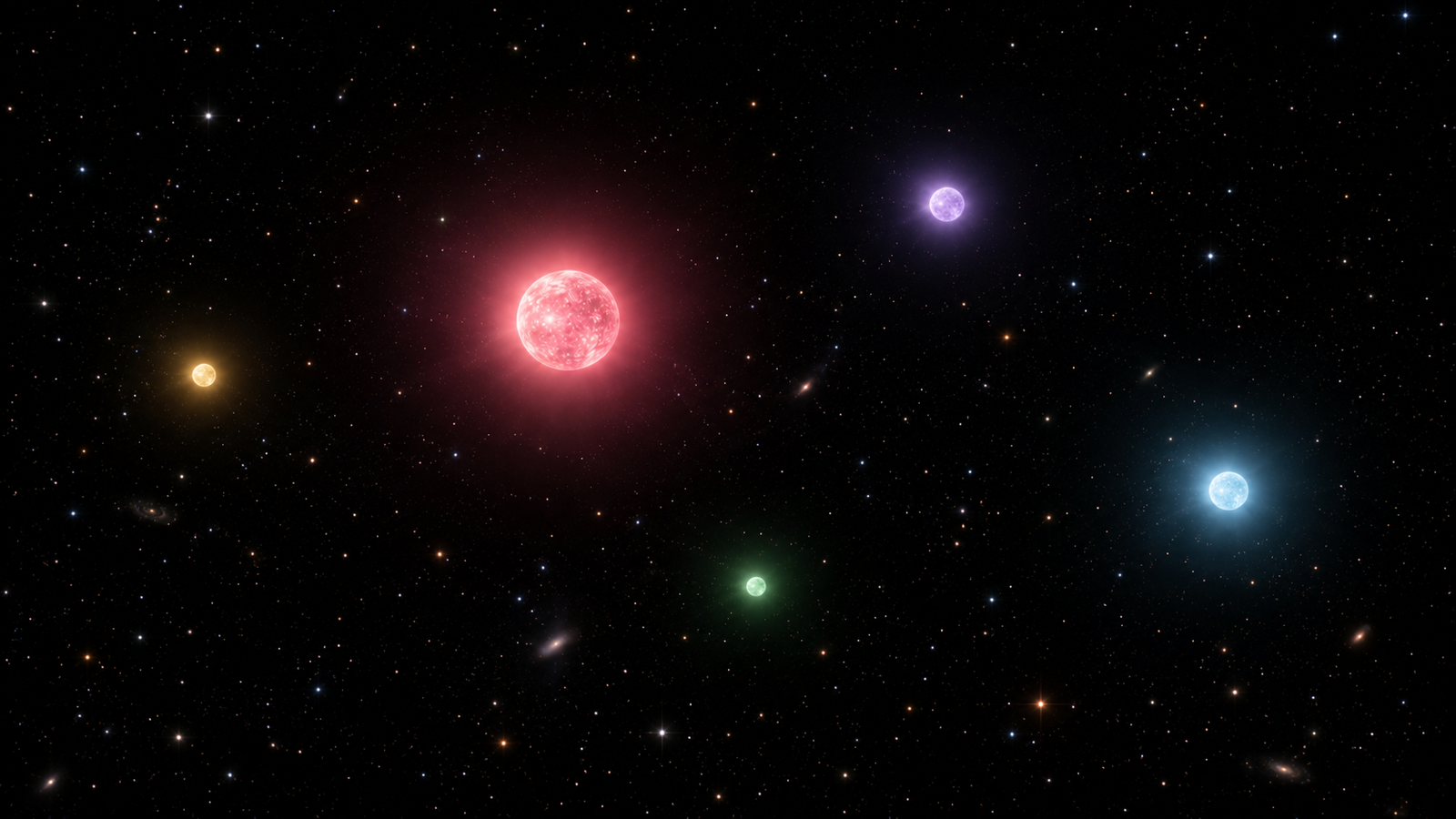
The Universe May Be More Colourful Than We Realised
The research also challenges a simple assumption about white dwarfs. Astronomers often associate them with white or pale blue colours, partly because hotter and brighter white dwarfs are easier to detect across great distances.
But when researchers examined a representative sample of nearby white dwarfs, the average object appeared white, while a small number displayed far more unusual colours.
The study found five unusually coloured objects among nearby white dwarfs examined in the sample, including pink and yellow examples. The researchers estimated that roughly one in thirty white dwarfs could have an unusual perceived colour. University of Warwick
That does not mean the night sky is secretly filled with bright pink stars visible to the naked eye. These objects are extraordinarily distant and their colours cannot simply be observed as large coloured discs through a telescope.
Instead, scientists used the detailed fingerprints of starlight, called spectra, and converted that information through a model of human colour perception.
But the result is still remarkable.
Some of the Universe’s dead stars may be far more colourful than humanity ever appreciated.
Could You Actually See a Pink Star?
Not in the way the images might suggest.
No white dwarf is close enough for its colour to be seen directly as a resolved coloured disc. The colours described in the research were calculated from spectral observations and models of how human vision perceives light. University of Warwick
That makes the discovery no less fascinating. For decades, astronomers have been able to study the temperature, chemistry and physical properties of these ancient stellar remnants. Now researchers are asking another surprisingly human question.
What colour would they actually look like?
For some of them, the answer may be something humanity never expected.
Salmon pink.
What Remains Unknown
WD J1011+2845 does not prove that the laws of physics are broken. Instead, it reveals how incomplete our visual intuition about stars can be.
A star’s colour is not always a simple thermometer. Under the extraordinary density and chemistry of a white dwarf atmosphere, molecules and elements can reshape the light that escapes into space.
The Universe did not suddenly create a pink Sun. We simply discovered that some of its oldest stellar remnants may look far stranger than we imagined.
Frequently Asked Questions
Is there really a pink star in space?
Research from the University of Warwick found that the white dwarf WD J1011+2845 would have a deep salmon pink colour when its measured spectrum is converted using a model of human colour vision. University of Warwick
What is WD J1011+2845?
It is a white dwarf, the extremely dense remnant left behind after a star similar to the Sun reaches the end of its normal stellar life.
Why does WD J1011+2845 look pink?
Carbon related molecular absorption strongly changes the visible wavelengths of light escaping from its atmosphere, producing a calculated deep salmon pink appearance. University of Warwick
Can astronomers directly photograph the pink surface of this star?
No. White dwarfs are too distant to appear as resolved coloured discs in telescopes. Researchers calculated the perceived colour from spectral observations. University of Warwick
Are there other strangely coloured stars?
Yes. The research found white dwarfs that could appear pink, purple, yellow, cyan and green, depending on their atmospheric composition and physical conditions.
Keep Exploring From Worlds Beyond
If you want to continue exploring the strangest possibilities hidden across the cosmos, you can also read:
Could Other Universes Exist Beyond Our Own? You can also explore more cosmic mysteries and discoveries on the From Worlds Beyond website. Follow From Worlds Beyond for more extraordinary discoveries from across the Universe.