
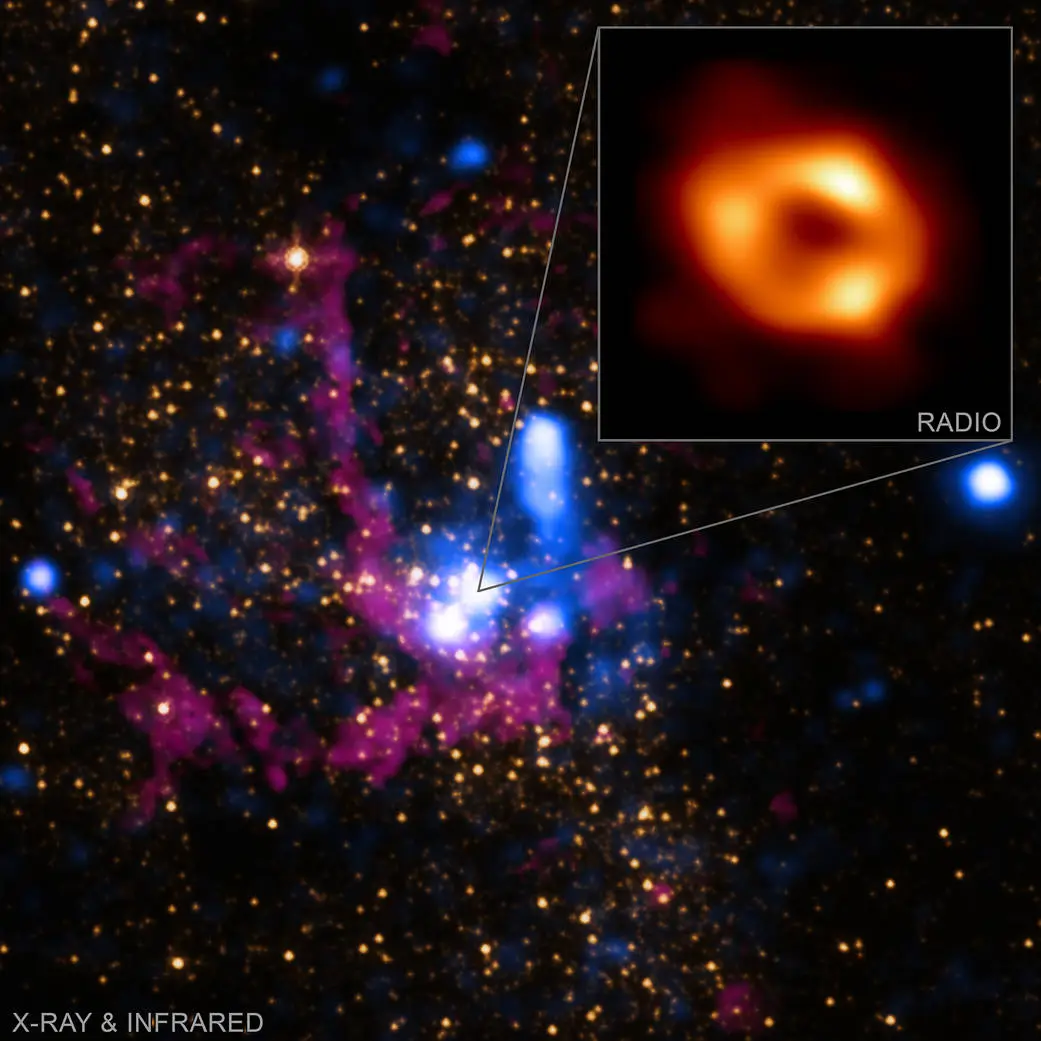
For almost a century, science has traced the universe back to a single explosive beginning, the Big Bang, roughly 13.8 billion years ago. A new theoretical model published in 2026 proposes something stranger, that black holes older than the Big Bang may have survived a cosmic bounce into the universe we see today, an earlier phase that contracted before reversing into the expansion we now call our own.
What Does “Black Holes Older Than the Big Bang” Actually Mean
This theory is a proposal, published in 2026 by physicist Enrique Gaztañaga of the University of Portsmouth, suggesting that some black holes may have formed during an earlier cosmic phase that contracted and then bounced into expansion, rather than beginning at the Big Bang itself. If correct, these surviving black holes could also explain dark matter, the invisible material that holds galaxies together. This remains an unproven, though peer reviewed and testable, model, not a confirmed discovery.
A Universe That Bounced Instead of Began
Gaztañaga’s model proposes something called a cosmic bounce. Rather than the universe beginning from a single point of infinite density, the idea is that an earlier universe existed, contracted under its own gravity, and then reversed course into the expansion we now call the Big Bang. This is the physical mechanism that would allow black holes older than the Big Bang to exist at all, since a bounce, unlike a true beginning, has something on the other side of it.
What makes a bounce physically possible, rather than pure speculation, is a mechanism already proven to work at smaller scales. At extremely high densities, quantum mechanics generates a powerful outward pressure that prevents matter from collapsing indefinitely. This same pressure already stabilizes white dwarf stars and neutron stars, stopping them from crushing into nothing under their own gravity. Gaztañaga’s model proposes that the same kind of pressure, at a vastly larger scale, could have halted the collapse of an entire contracting universe and triggered the expansion that followed.
Why Anyone Takes This Seriously
A theory this dramatic would mean little without something real to explain, and this one has two candidates already sitting on the table. The first is dark matter itself, the invisible material that outweighs all the ordinary matter in the universe roughly five to one, and whose actual identity has eluded physicists for decades. If black holes older than the Big Bang survived the bounce as relic “cosmic fossils,” they could account for a meaningful share of dark matter, or potentially all of it, without requiring any new, undiscovered particle at all.
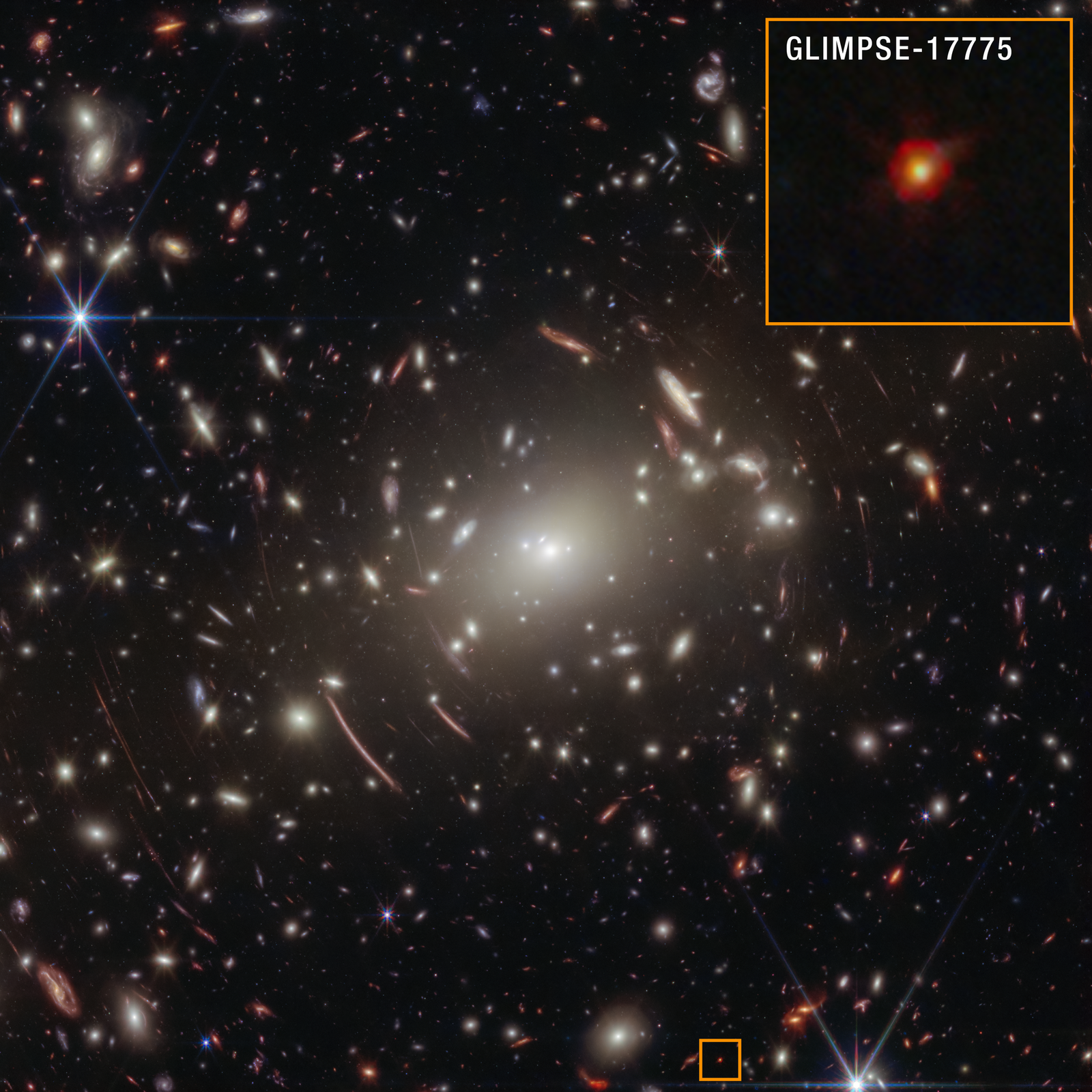
The second candidate is a genuine, ongoing puzzle from NASA’s James Webb Space Telescope. Since 2022, Webb has repeatedly found supermassive black holes and galaxies that appear far too massive and too mature for how early they existed in cosmic history, sometimes forming less than 600 million years after the Big Bang. Astronomers have struggled to explain how anything could grow that big, that fast, starting from nothing. If ancient black holes from before the bounce already existed the moment expansion began, the early universe would not have needed to build its biggest structures from scratch. It would have inherited a head start.
What the Model Cannot Do Yet
For all of that, it is worth being direct about what this theory has not done. Black holes older than the Big Bang have not been observed. They have not been confirmed to exist. What the theory has done is survive peer review, appearing in the respected journal Physical Review D, and offer specific, testable predictions rather than untestable speculation, which is the real dividing line between a legitimate scientific hypothesis and pure guesswork.
Those predictions include relic gravitational waves left over from the bounce itself, and subtle signatures that might still be hiding inside the cosmic microwave background, the faint afterglow of the early universe that telescopes have mapped in detail for decades. If future observatories find either signal, the bounce model gains real support. If they consistently find nothing, the theory loses ground the way any honest scientific idea eventually does when its predictions fail to appear.
If It Holds Up, What Changes
Should this model eventually be confirmed, it would not just add a footnote to cosmology, it would move the starting line of the universe’s story backward, from a single beginning to one chapter in something longer. The Big Bang would remain the moment our observable universe began, but it would stop being the beginning of everything that ever existed. Somewhere in the mathematics of a universe that came before, these ancient relics would still be out there right now, quietly shaping the galaxies around us, exactly as they may already be doing.
Interesting Facts
- The same quantum pressure proposed to halt the universe’s collapse already has a proven track record, it is the identical mechanism that stops white dwarf stars from collapsing further under their own gravity.
- Webb’s mysterious “little red dots,” including a black hole candidate called GLIMPSE-17775 confirmed in 2026, are so common in the early universe that some astronomers said they initially appeared to “break cosmology” before better explanations emerged.
- Dark matter outweighs all the ordinary matter in the universe by roughly five to one, yet no experiment has ever directly detected a single particle of it.
FAQ
Are black holes really older than the Big Bang? It is currently a theoretical proposal, not a confirmed fact. A 2026 peer reviewed model suggests some black holes could have formed before the Big Bang and survived a cosmic bounce into our current universe, but this has not been directly observed or proven.
What is a cosmic bounce? A cosmic bounce is a theoretical alternative to the traditional Big Bang origin story, in which the universe is proposed to have contracted from an earlier phase before reversing into the expansion we observe today, rather than beginning from a single explosive event.
Could black holes older than the Big Bang explain dark matter? Possibly. If enough relic black holes survived a cosmic bounce, researchers propose they could account for a significant portion, or potentially all, of dark matter, without requiring an undiscovered new particle.
How would scientists ever prove this theory? By searching for two specific signatures, relic gravitational waves left over from the proposed bounce, and subtle patterns hidden inside the cosmic microwave background, the faint radiation left over from the early universe.
Who proposed this theory? Professor Enrique Gaztañaga of the University of Portsmouth and the Institute of Space Sciences in Barcelona proposed the model, published in the peer reviewed journal Physical Review D in 2026.
Conclusion
For a hundred years, the Big Bang has marked the edge of what science can ask about, the point past which the question “what came before” stopped having an answer. A single, testable theory does not erase that edge. What it does is suggest, for the first time with real mathematical footing, that the edge might not be where we thought it was, and that somewhere in the dark, ancient relics from before it may already be holding the answer, quietly waiting for the right telescope to ask the right question.
The Universe Is Still Full of Questions
If questions this big keep you up at night in the best way, explore more deep space mysteries on the From Worlds Beyond blog, and follow along on YouTube for more of the universe brought to life.