
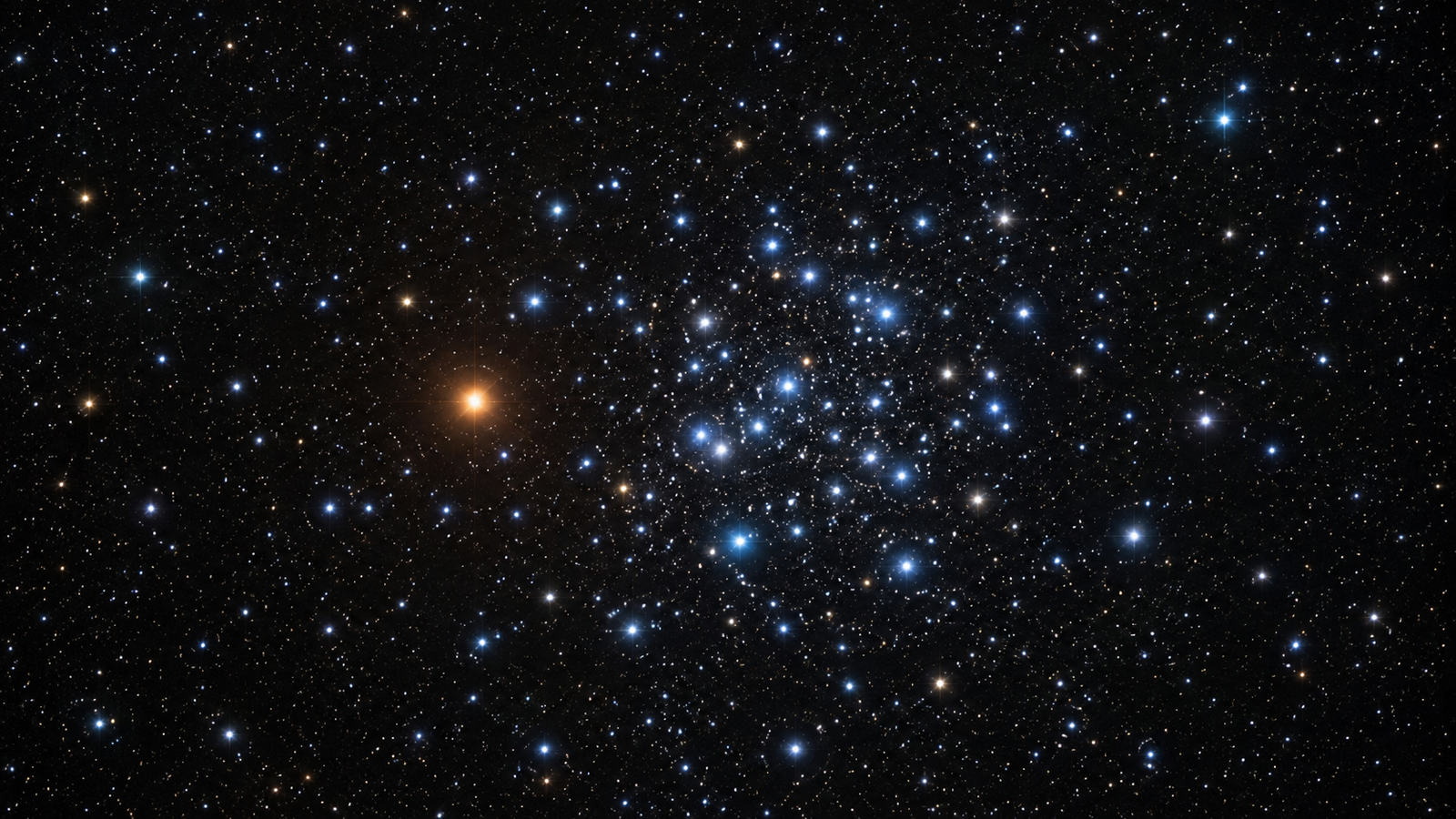
Mars in the Beehive Cluster is one of the most interesting morning sky sights of October 2026. Mars passes across the cluster from 10 to 12 October, coming closest on 11 October. Look after midnight with binoculars, and you will see the red planet sitting among hundreds of distant stars.
Mars in the Beehive Cluster: What Will You Actually See?
Mars is moving eastward against the background stars, and its path this month carries it straight across the Beehive, a loose family of stars in the constellation Cancer. According to Sky at Night Magazine, the planet makes its run in front of the cluster between 10 and 12 October, and it appears embedded in the cluster on the mornings of 11 and 12 October. Starlust describes it near the western edge on the 10th, almost in the middle on the 11th, and moving toward the eastern side on the 12th.
Closest approach comes around 12:27 GMT on 11 October, according to Star Walk. That is daytime for most of the world, so the views that count are the dark hours before dawn on the 11th and the 12th.
What is the Beehive Cluster?
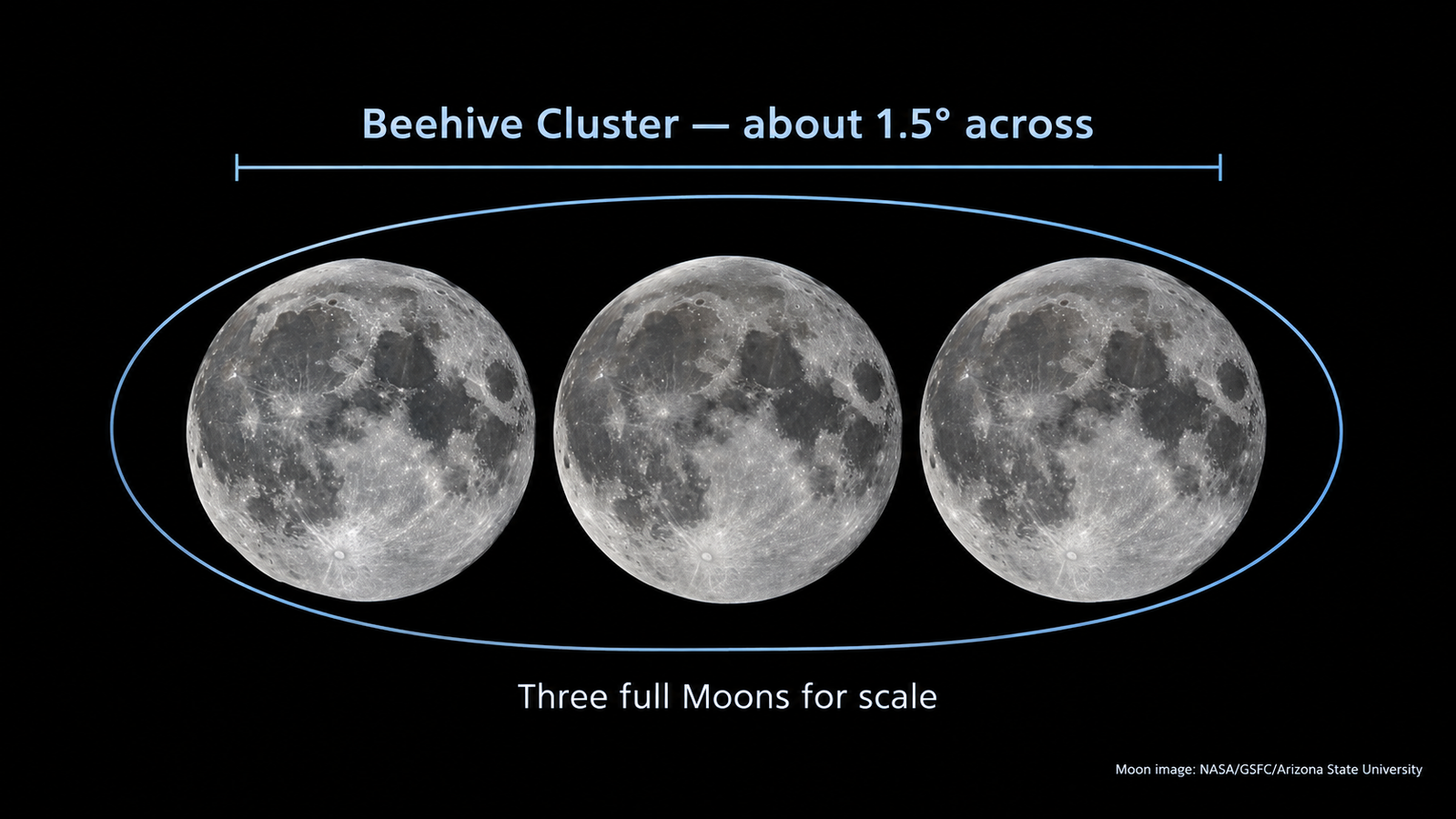
The Beehive, also catalogued as M44 and known since ancient times as Praesepe, is an open cluster of around 1,000 stars about 600 light years away. NASA’s Astronomy Picture of the Day notes that it covers about three full Moons on the sky and has been recognised since antiquity.
From a dark site you can spot it without any equipment as a soft, hazy patch. City lights wipe it out, which is why binoculars matter.
Where do you look, and when?
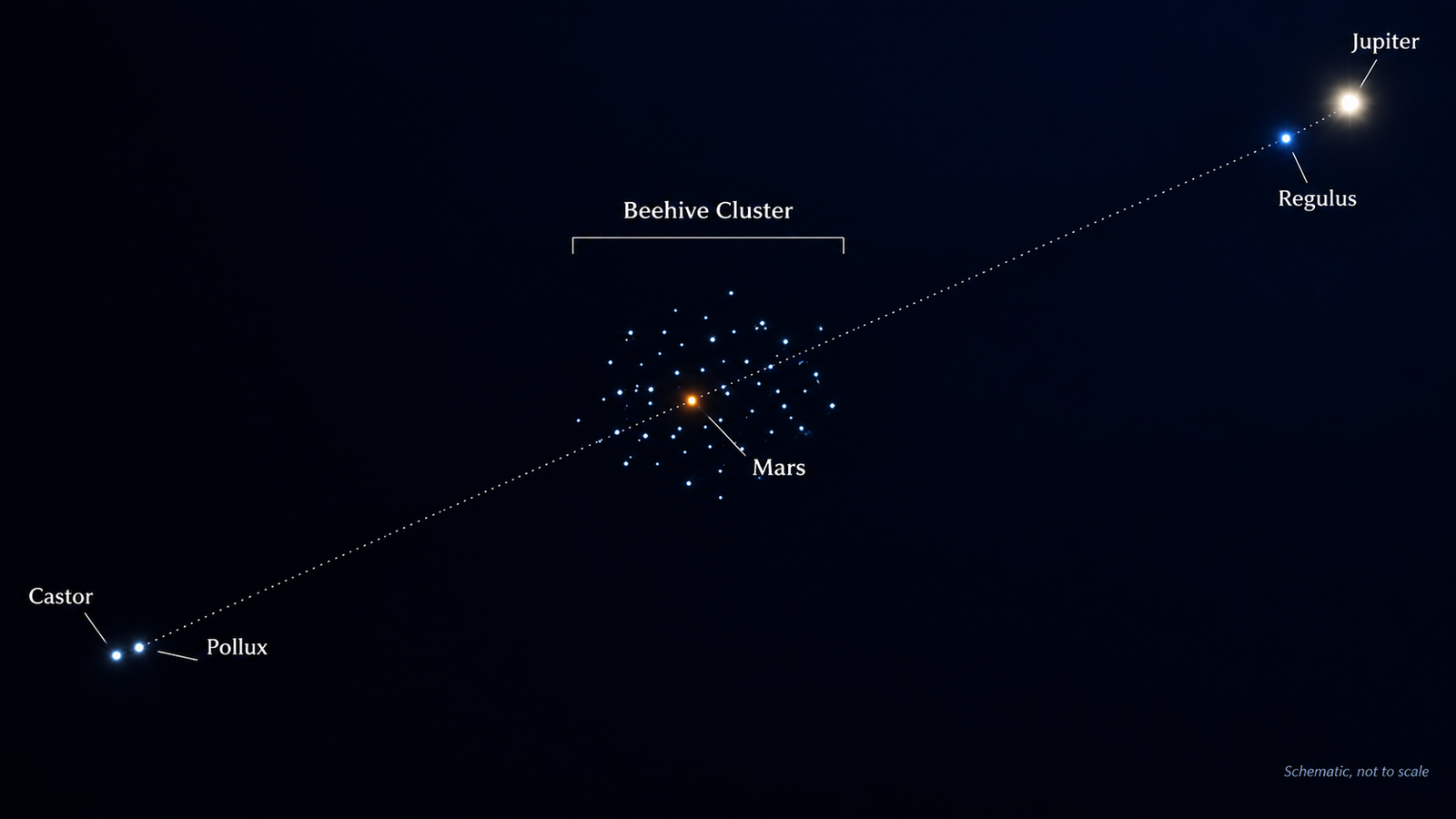
Look to the eastern sky after midnight. Find Pollux and Castor, the twin stars of Gemini, and Regulus in Leo, then check about halfway between them for the Beehive. Mars is the steady reddish point sitting in the cluster. Jupiter, the brightest object in that part of the sky, sits lower in the east, to Mars’s lower left, and the gap between the two planets narrows through October.
The Moon is near new, so the sky stays dark. From Los Angeles, for example, Starlust lists the cluster rising around 2 am, with the best view around 5 am local time. Your own times will differ, so check a planetarium app for your town, and EarthSky’s October guide is a good second reference for the morning planets.
What will you actually see?
With your eyes, Mars is easy. It outshines every star in the cluster, while the cluster itself shows only as a faint smudge under dark skies.
Binoculars give the best view. The whole cluster fits in one frame, and Mars sits inside it like a single warm bead in a scatter of faint stars. A telescope works against you here, because the cluster is too wide for most eyepieces and Mars still shows a disk of only about 6 arcseconds. Want to see what this looks like through a camera? NASA’s picture of the day from 2023, Mars and the Beehive, shows the planet beside the cluster in a real photograph.
Is Mars really inside the Beehive Cluster?
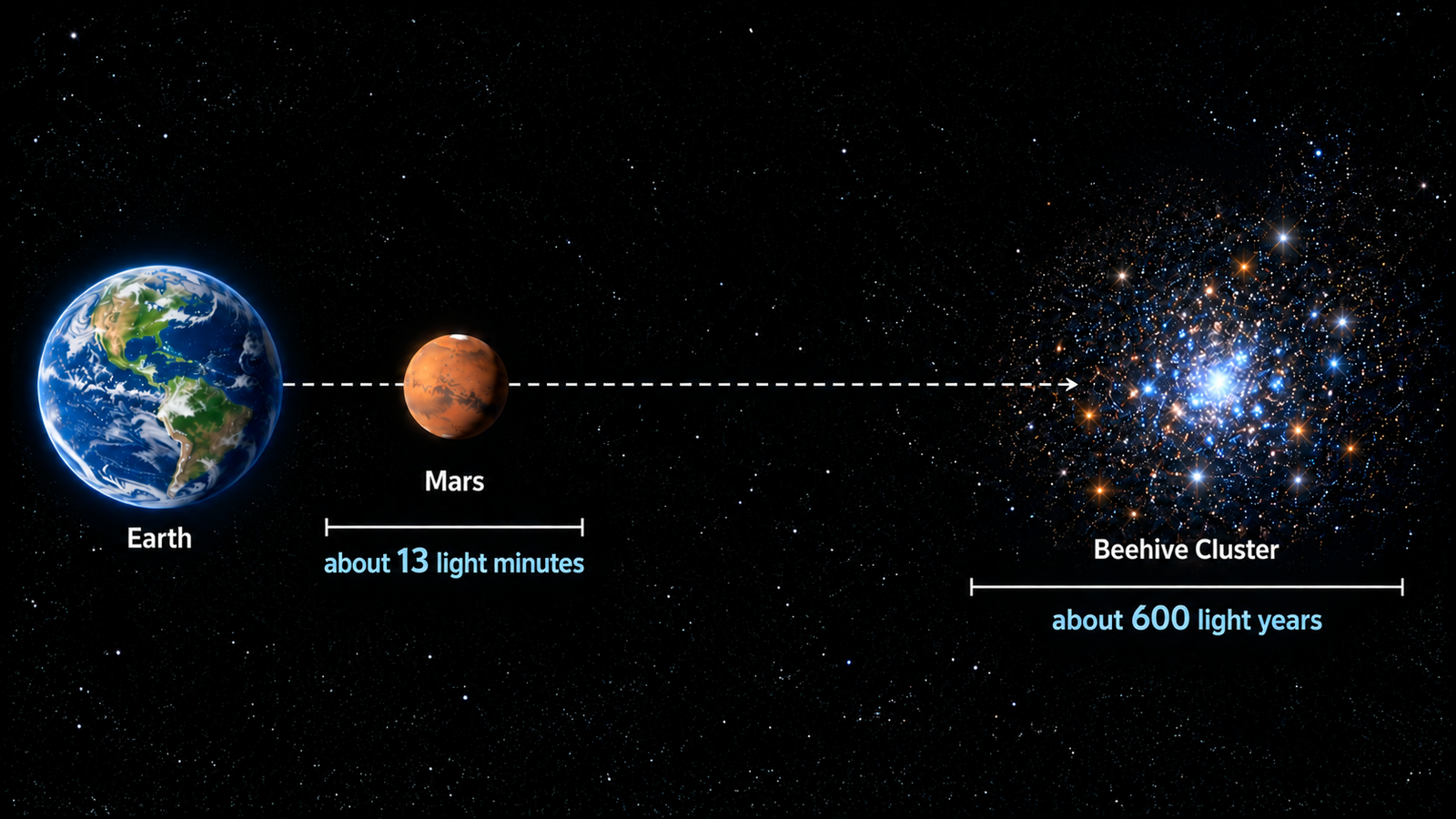
No, it only looks that way. Mars circles the Sun and creeps eastward from one night to the next, while the cluster stays put. They share a line of sight, nothing more. NASA made the same point about an earlier pass in Mars in a Manger, noting the cluster’s stars are about 600 light years away while Mars was only minutes away in light travel time.
The scale is the real story. Mars is about 238 million kilometres away on 11 October, so its light reaches you in roughly 13 minutes. The Beehive’s light left around 600 years ago, which means you are seeing those stars as they were in the early 1400s. For more on the planet itself, ESA’s Mars fact sheet is a solid reference.
What if you miss it or the weather turns?
Mars stays in the same binocular field as the cluster for several mornings, so one cloudy night does not end the show, although 11 October gives the best alignment. The next date worth marking is 16 November, when Mars passes close to Jupiter in the same morning sky, as listed in Space.com’s 2026 planet guide.
Set a reminder for the Orionids on 22 October, the next good night for looking up.
Frequently asked questions
Can you see Mars in the Beehive Cluster with the naked eye?
Mars, yes. The cluster only shows from a dark site, as a faint hazy patch. Binoculars bring the two together and give by far the best view. City lights will hide the cluster even though Mars stays bright.
When does Mars pass through the Beehive Cluster?
Mars reaches the western edge on 10 October, the middle on 11 October and the eastern side on 12 October 2026. Closest approach is around 12:27 GMT on 11 October. Because that is daytime for most people, the best views come on the mornings of the 11th and 12th.
What time is best to look?
Go out after midnight and before dawn, once Cancer has climbed well above the eastern horizon. The higher it gets, the cleaner the view. Exact times depend on where you live, so a planetarium app will give you a number for your own sky.
Do I need a telescope?
No, and binoculars work better. The cluster spans about three full Moons, too big for most telescope eyepieces, and Mars shows a disk of nearly 6 arcseconds. Ordinary binoculars frame both together, so reach for those.
When is the next Mars conjunction worth watching?
Mars passes close to Jupiter on 16 November 2026 in the morning sky. Before that, the Beehive, Mars and Jupiter form a rough line on 26 and 27 October, so the whole month rewards an early alarm.
You’ve Seen Mars. Now Meet the Planet.
Mars appears to sit among the ancient stars of the Beehive Cluster. But while those stars are hundreds of light years away, Mars is only minutes away at the speed of light. That tiny red point has its own story.
Behind that familiar red color is a world of enormous volcanoes, colossal canyons, ancient river valleys, frozen water, violent dust storms, two strange moons, and evidence that Mars was once very different from the cold desert we see today.
If seeing Mars among the stars made you want to know the world behind that tiny red point, continue the journey with Mars: The Planet That Lost Its Oceans.