
Parallel universes vs multiverse: most people use the two terms as if they mean the same thing, and physicists say they do not. One imagines other universes far beyond our own. The other splits reality into branches right here. And one team has actually gone looking.
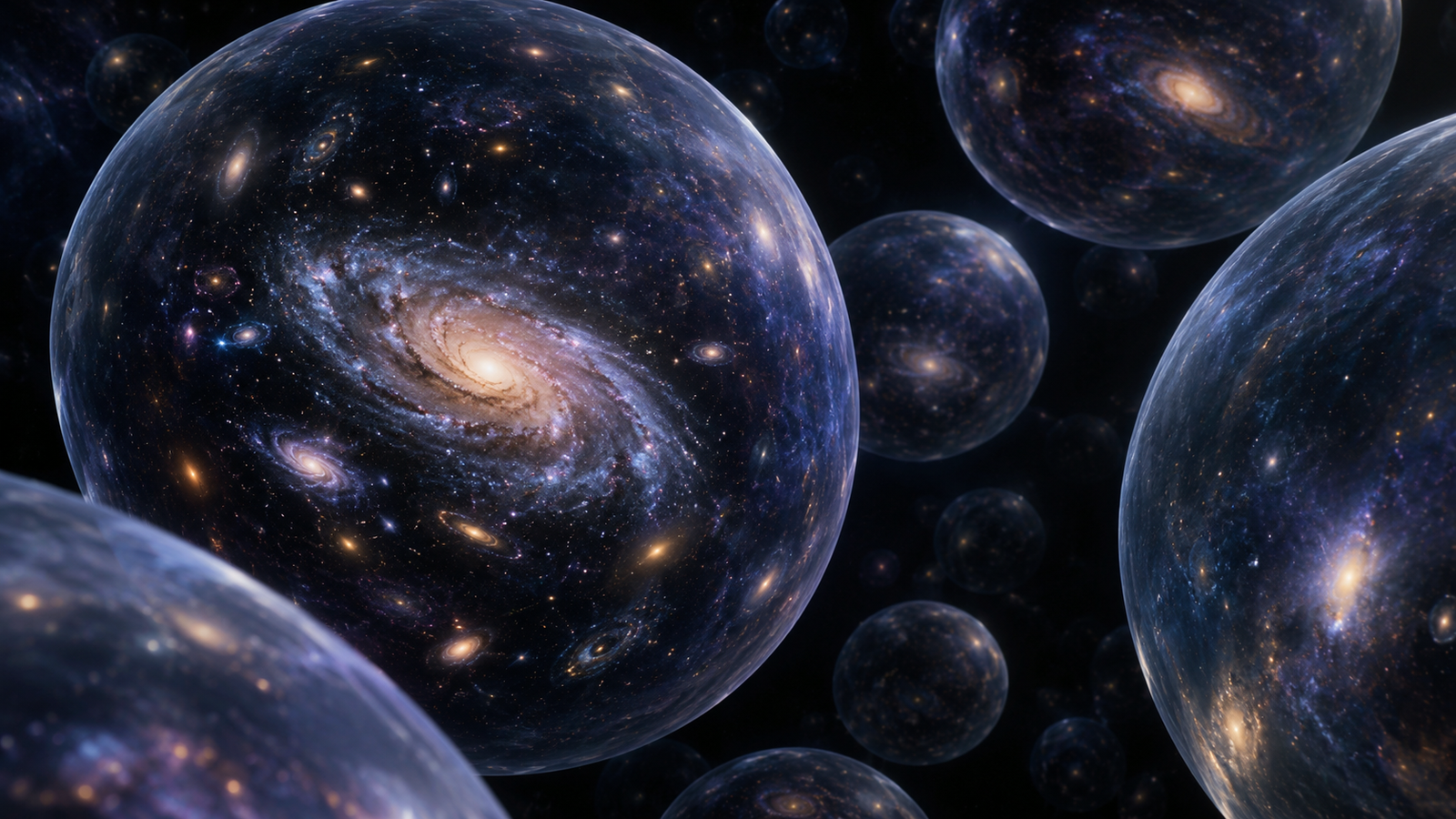
Look up at the darkest sky you can find. Every star, every galaxy, every speck of light that has ever reached a telescope belongs to one region of space, the part we can see. Whether anything exists beyond it is one of the strangest open questions in physics.
Some scientists think there may be more. But the words people use for that idea hide a trap, and most of the confusion starts there.
Parallel Universes vs Multiverse: What Is the Difference?
Two very different ideas hide behind those words. The first comes from cosmology: the multiverse of bubble universes, other regions of space that could sit far beyond anything we can observe. The second comes from quantum mechanics: the many worlds interpretation, where different outcomes become branches of a single quantum state.
Physicist Sean Carroll draws the same line in Are Many Worlds and the Multiverse the Same Idea? In the cosmological picture, other universes are simply far away. In quantum mechanics, they would be right here, in different possibility spaces. Neither idea is confirmed, and they are worth keeping apart.
| Bubble universes | Many worlds | |
|---|---|---|
| Where the idea comes from? | Cosmology, through eternal inflation | Quantum mechanics, without a collapse of the quantum state |
| Where the other universes would be? | Far beyond what we can observe | Not far away in space, but as branches of the same quantum state |
| Has it been tested? | Searched for collision signs, nothing confirmed | Debated as an interpretation, not independently confirmed |
| Status | Unconfirmed | Unconfirmed |
Could Our Universe Be Just One Bubble Among Many?
It begins in the first instant of everything. According to inflation theory, the young universe swelled almost unimaginably fast. WMAP researcher David Spergel described a region no larger than a marble growing, in a trillionth of a second, to become larger than the visible universe, as Space.com reported from NASA’s announcement. NASA’s final WMAP analysis calls the inflationary model the standard picture of cosmology, although what drove inflation is still unknown (Bennett et al.).
Some models go further. In eternal inflation, inflation might never stop everywhere at once. Live Science explains the picture: while inflation ended in our region, it could continue in other, much more distant regions, and individual universes could pinch off from them.
Here is the crucial detail. That step goes beyond inflation itself. Evidence for inflation is not evidence for bubble universes.
Many Worlds: When Quantum Mechanics Seems to Split Reality
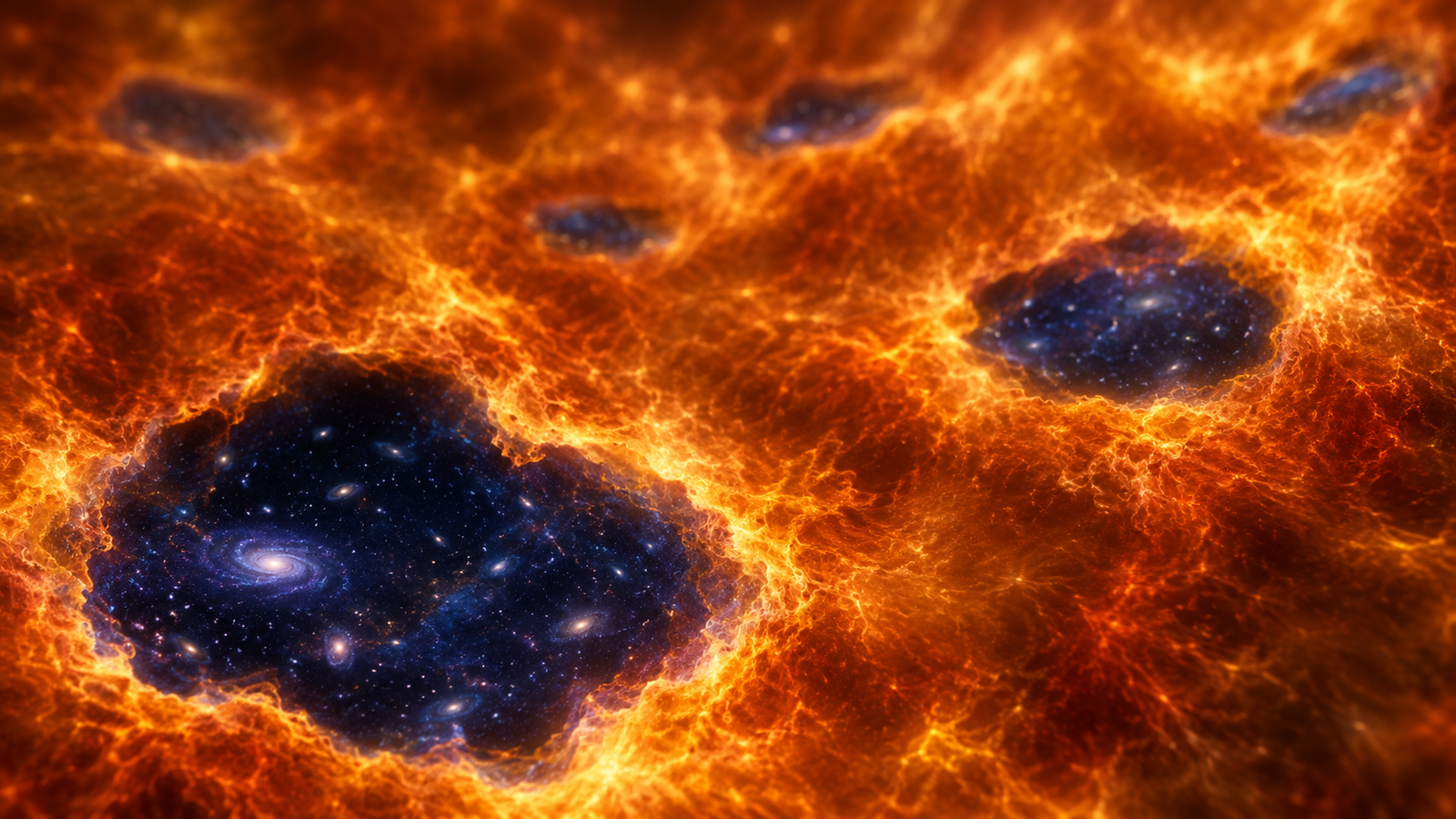
Now forget distance. Quantum theory describes a system with a mathematical quantum state, and the usual story says a measurement collapses that state into one outcome. Hugh Everett proposed dropping the collapse. As the Stanford Encyclopedia of Philosophy explains, his proposal is an attempt to solve the measurement problem, and later attempts to rebuild it led to many worlds, many minds and other versions.
In the many worlds version, every outcome corresponds to a branch of reality, and the branches become effectively separate through a process called decoherence. These are not distant bubbles in space, and the idea does not mean that every imaginable scenario happens somewhere.
Physicists still debate how to interpret quantum mechanics. Many worlds is a serious proposal, but no one has observed another branch.

Is There Any Evidence for Other Universes? The Oldest Light Says Not Yet
If a bubble ever collided with ours, the impact could have left a mark on the cosmic microwave background, the oldest light in the universe. In 2011, a team led by Stephen Feeney searched seven years of WMAP data for exactly that. Their paper in Physical Review Letters found nothing that justified adding bubble collisions to the standard model, and limited the expected number of detectable collisions across the whole sky to fewer than 1.6, at 68 percent confidence. The authors added that data from ESA’s Planck satellite could test the idea more definitively.
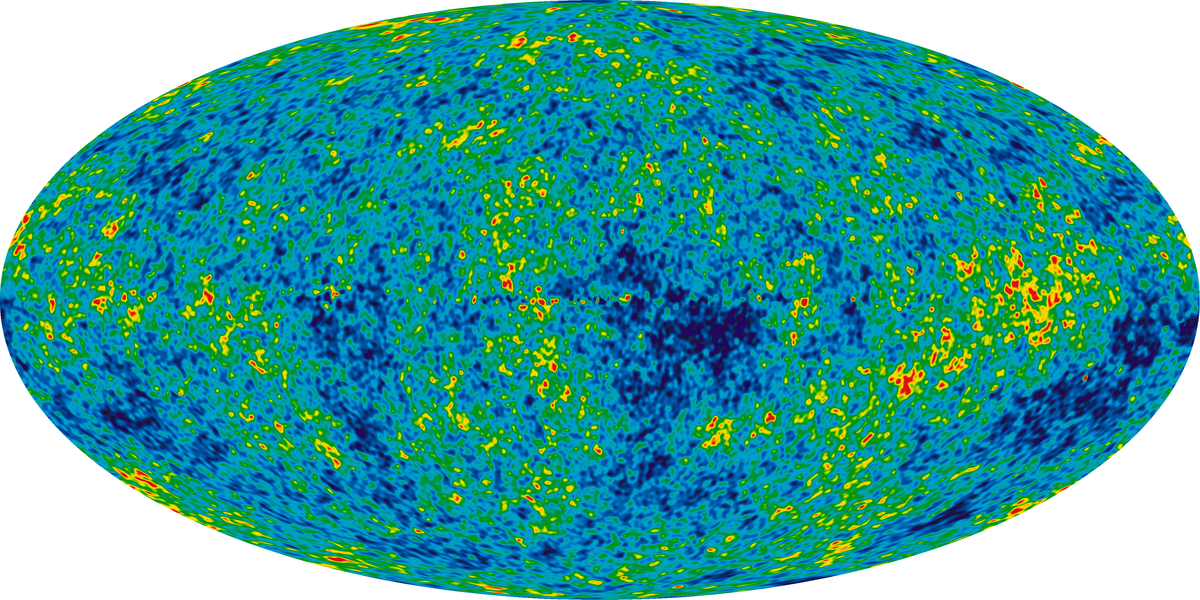
That is a null result, not a death sentence. It rules out some versions of the idea and leaves others untouched.
Then comes the deeper problem. If another universe can never touch ours in a detectable way, finding evidence for it may be impossible, and the line between a physical claim and an elegant piece of mathematics gets hard to see. The honest answer is not that the multiverse is impossible. It is that we do not know.
What Does the Multiverse Mean for Reality? The Math Allows More Than the Evidence
If other universes exist, reality could be far larger than the part we can see. Some models allow different physical conditions in separate regions, while the many worlds interpretation describes branches tied to different quantum outcomes. These are distinct ideas, and neither gives evidence that another Earth, or another you, must exist.
Their value lies in the questions they raise and the predictions researchers might one day test. Extraordinary implications are a reason to investigate carefully, not a reason to treat them as fact. For now, the universe we can observe remains our only confirmed cosmic home.
Prefer to watch? Experience the possibility of other universes in this cinematic journey.
Confirmed vs Claimed: What Science Knows About Other Universes
| Confirmed | Still proposed |
|---|---|
| WMAP data support the inflationary picture of the early universe | Eternal inflation producing bubble universes |
| A search of WMAP data found nothing that justified adding bubble collisions to the standard model | Many worlds as the correct reading of quantum mechanics |
| Physicists treat bubble universes and many worlds as different ideas | Other versions of you in other universes |
Frequently Asked Questions About Other Universes
Is the multiverse a real scientific theory? Not yet. There is no single confirmed multiverse theory. Eternal inflation and the many worlds interpretation are separate proposals with different foundations, and neither has shown that another universe exists. Researchers keep testing them, but so far no confirmed observation supports either one.
Are parallel universes and bubble universes the same thing? No. Bubble universes come from cosmology, where eternal inflation could leave other regions far from ours. Parallel worlds in the many worlds interpretation are branches of the quantum state. Popular culture blends the two terms, but they describe different ideas.
Could another universe contain another version of me? Some speculative models raise the possibility, but there is no evidence that another version of you exists. The answer depends on which model you pick and what it actually predicts, and none has been confirmed. Treat it as a thought experiment, not a finding.
Can scientists ever prove other universes exist? Possibly, if a model predicts an effect we can observe and tell apart from other explanations. A universe that can never influence ours in a detectable way may be impossible to test, which is why some scientists question whether the multiverse counts as science.
Is the multiverse in Marvel films and Everything Everywhere All at Once real science? The films borrow real ideas, but the stories go far beyond the evidence. Science News Explores notes that visiting other universes, if they exist, looks unlikely. Treat the movies as fiction inspired by physics.
Has anyone looked for another universe? Yes. In 2011, a team searched NASA’s WMAP microwave data for signs of collisions with bubble universes and found nothing that justified adding them to the standard model. The search ruled out some possibilities, but it does not prove other universes are impossible.
If That Bent Your Mind, Wait Until the Earth Lost its Gravity
The multiverse is unproven, but the physics of our own universe can be frightening enough. Watch the ground let go in what would happen if Earth lost its gravity. Follow From Worlds Beyond so the next story finds you.
Sources
- Nine Year Microwave Sky, NASA WMAP Science Team
- First Observational Tests of Eternal Inflation, Feeney, Johnson, Mortlock and Peiris, Physical Review Letters 2011
- Are Many Worlds and the Multiverse the Same Idea?, Sean Carroll
- Everett’s Relative State Formulation of Quantum Mechanics, Stanford Encyclopedia of Philosophy