
How long could humans survive without the Sun? Most people on the surface would likely last weeks to months, as temperatures fall below freezing within a week and crops stop growing. Underground groups might last longer, but it is untested.
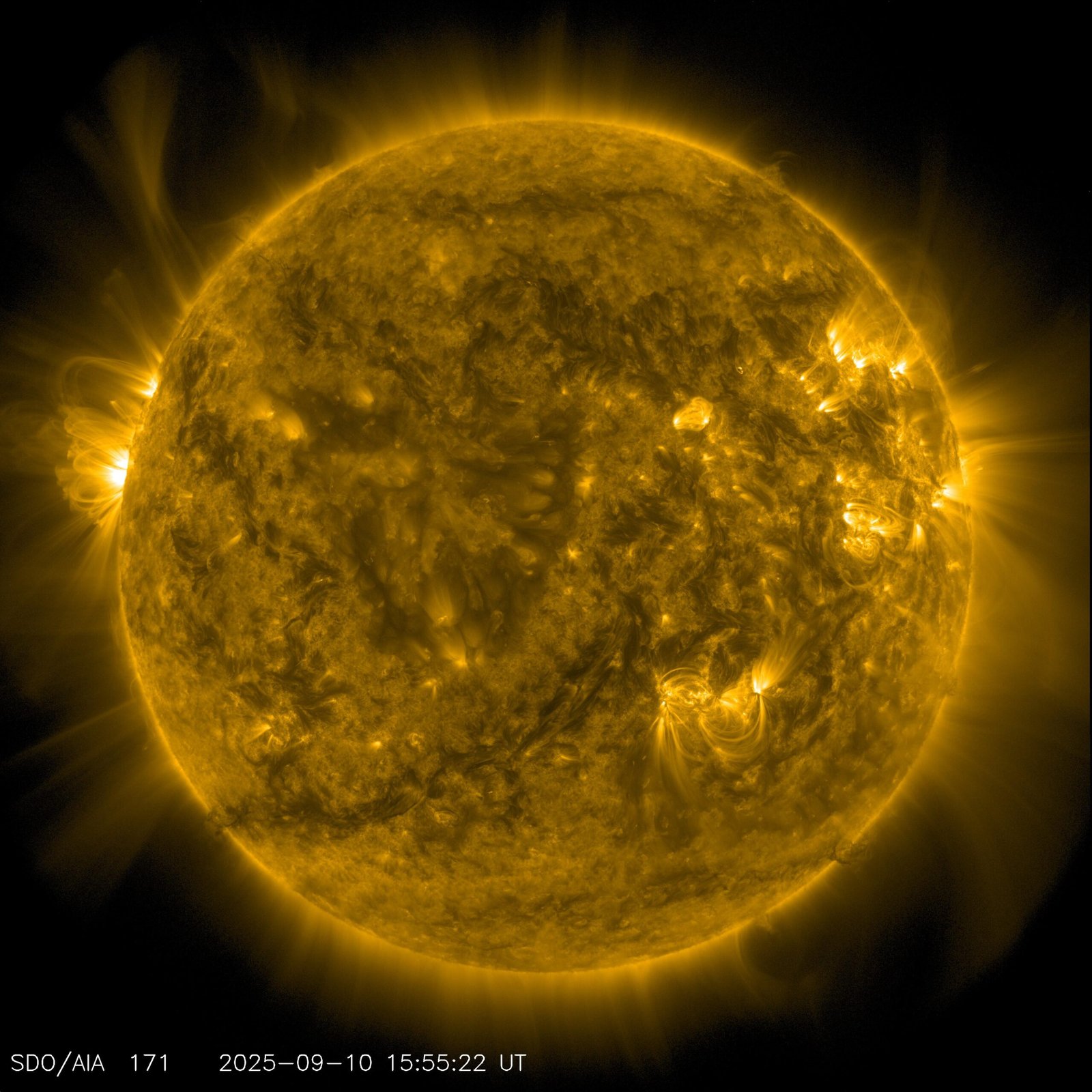
Right now, the light falling on your skin is eight minutes old. Somewhere behind it, the thing that made it could already be gone, and nothing about this afternoon would tell you.
This is what happens next, from the first dark minute to the last warm place on Earth.
How Long Could Humans Survive Without the Sun?
No one has ever measured this, because the Sun cannot simply vanish. What follows is the best reconstruction physics allows. The first rows are certain, the later ones are modelled estimates, and the table says which is which.
| When | What happens | How sure we are |
|---|---|---|
| First 8 minutes 20 seconds | Nothing noticeable. Light and gravity still arrive | Confirmed |
| After 8 minutes 20 seconds | The sky goes dark and Earth leaves its orbit | Expected from physics |
| Within 1 week | Average surface temperature below about minus 18 °C, photosynthesis stops | Modelled estimate |
| Within 1 year | Average surface temperature near minus 73 °C | Modelled estimate |
| Decades | Large trees may still be alive | Estimate |
| Hundreds of thousands of years | Deep oceans may stay liquid under ice | Estimate |
| Millions of years | Surface settles near minus 240 °C | Estimate |
The temperature figures come from Caltech planetary scientist David Stevenson, quoted by Popular Science. For people, the honest estimate is weeks to months on the surface without prepared shelter, heat and food, and longer for small prepared groups. That second part is speculation, and it deserves to be called that.
What Happens When the Sun Disappears: The First 8 Minutes Look Normal
Somewhere above you, the Sun is already gone, and you cannot tell. The light still falling on your face was sent before it vanished, and it keeps arriving, warm and ordinary. Sunlight needs 8 minutes and 20 seconds to reach Earth, so for that long the sky stays blue and the day carries on.
The planet, meanwhile, does not wait. NASA’s Earth Fact Sheet puts Earth’s mean orbital speed at 29.78 kilometres per second, so in those 500 seconds you travel roughly 14,900 kilometres around a star that is no longer there. That is further than the planet is wide, since Earth measures 12,742 kilometres across.
Does Earth Keep Orbiting If the Sun Disappears?
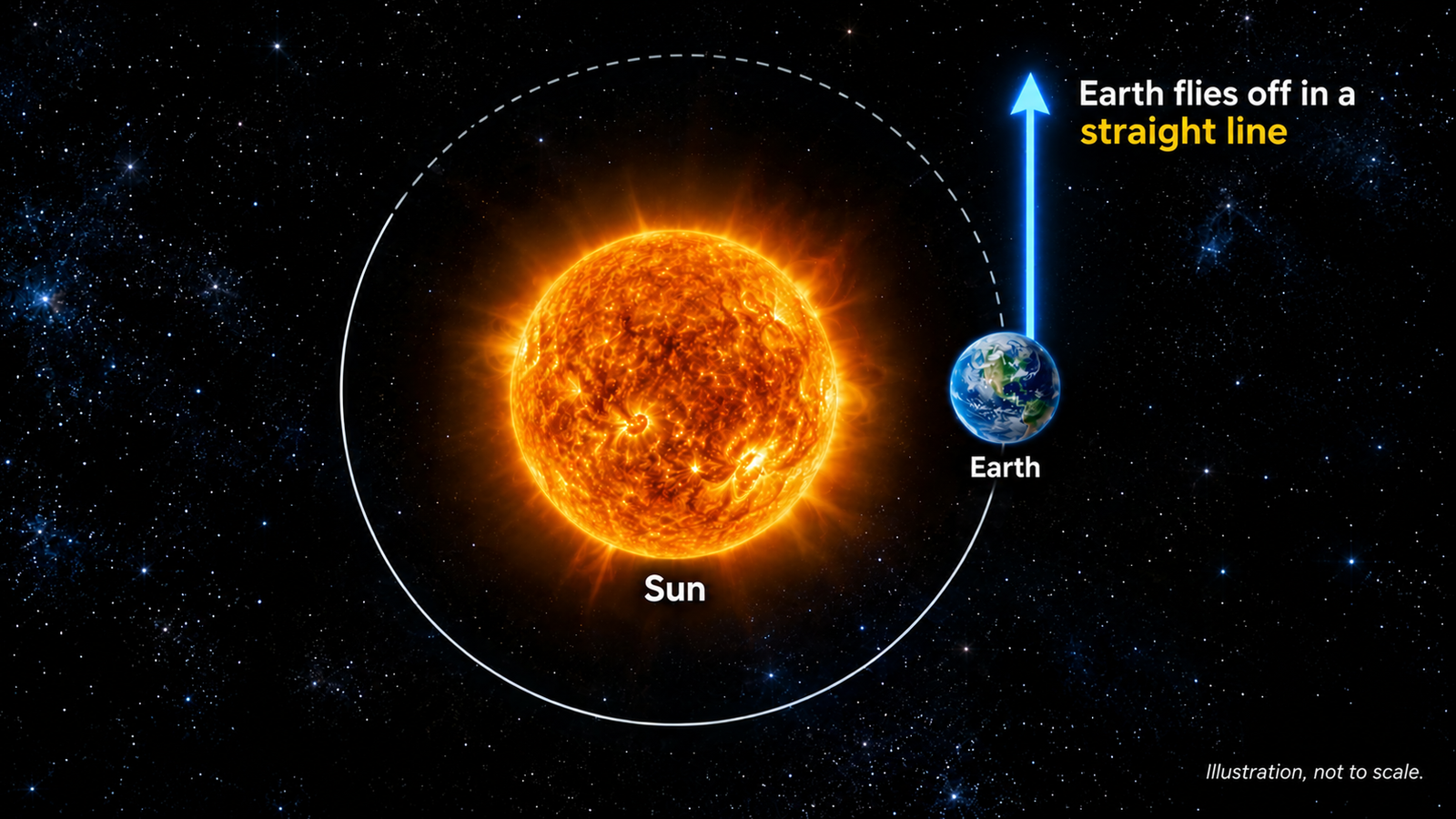
For 8 minutes and 20 seconds, yes. Then the last light arrives, the sky goes out, and at the same instant the invisible grip that has bent Earth’s path for billions of years lets go. Einstein’s general relativity predicts that a change in gravity travels at the speed of light, and a 2017 observation backed it up. LIGO’s summary explains that gravitational waves and a gamma ray burst from the same collision arrived only 1.7 seconds apart, so any difference between the speed of gravity and the speed of light is tiny. That was measured for waves from a distant collision, and the same speed is expected for the Sun’s pull, which is why Earth would follow its old curve for exactly 8 minutes and 20 seconds.
After that, nothing explodes. Earth keeps its speed but stops curving, and drives off into the dark in a straight line, like a ball swung on a string and then let go, as Popular Science puts it. The Moon is held by Earth’s own gravity, so it goes with you, though it turns dark, because it only ever reflected sunlight.
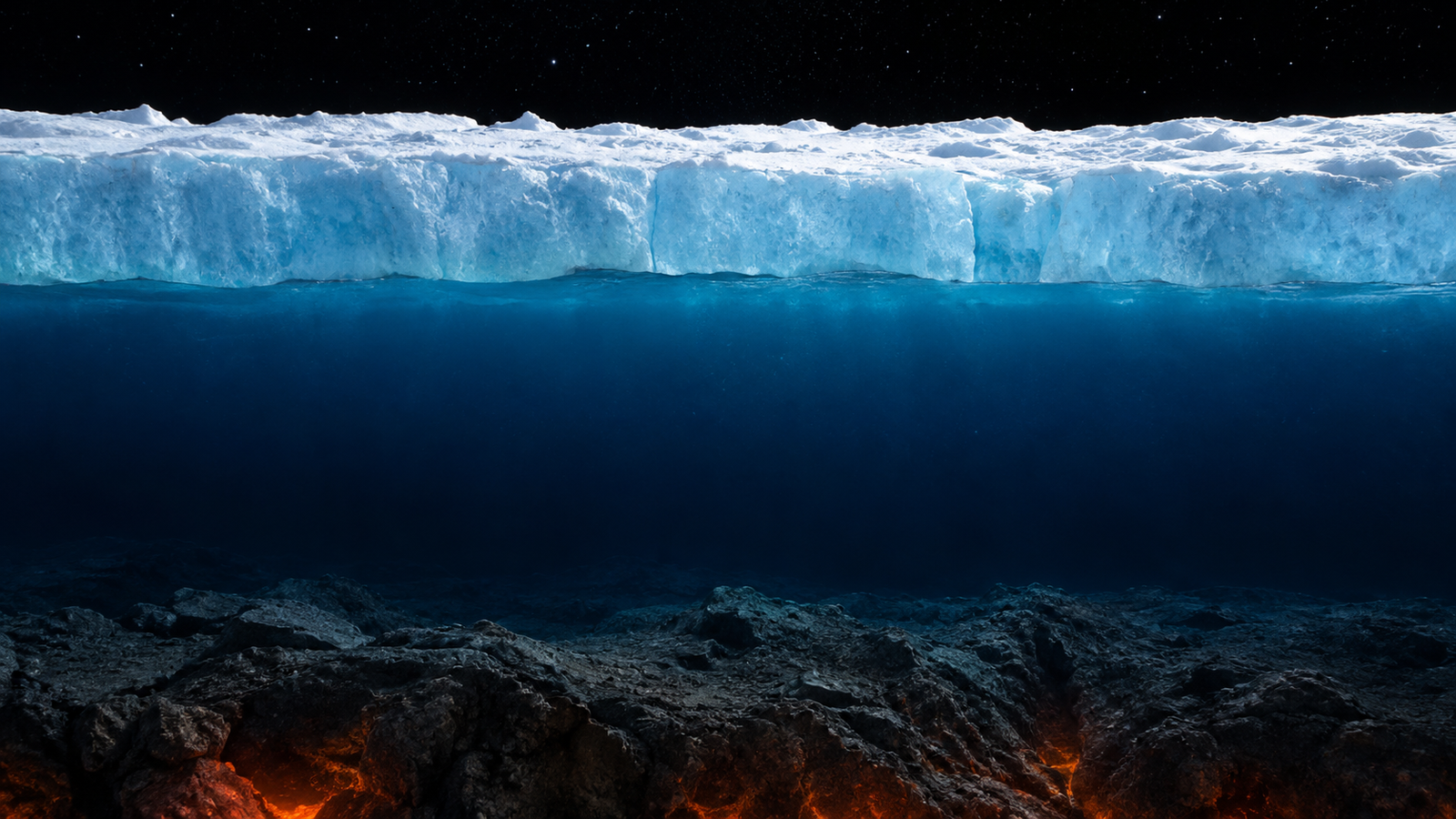
ce Closes Like a Lid: How Oceans Freeze Without the Sun
The cold arrives from above. Water loses heat at its surface first, so the top of every ocean freezes first, and that ice becomes a lid. According to Stevenson, it would insulate the deep water and keep the oceans from freezing solid for hundreds of thousands of years. Over millions of years the planet would settle near minus 240 degrees Celsius, where heat leaking from Earth’s core balances the heat it radiates into space.
Life in the Dark: What Could Survive Without the Sun
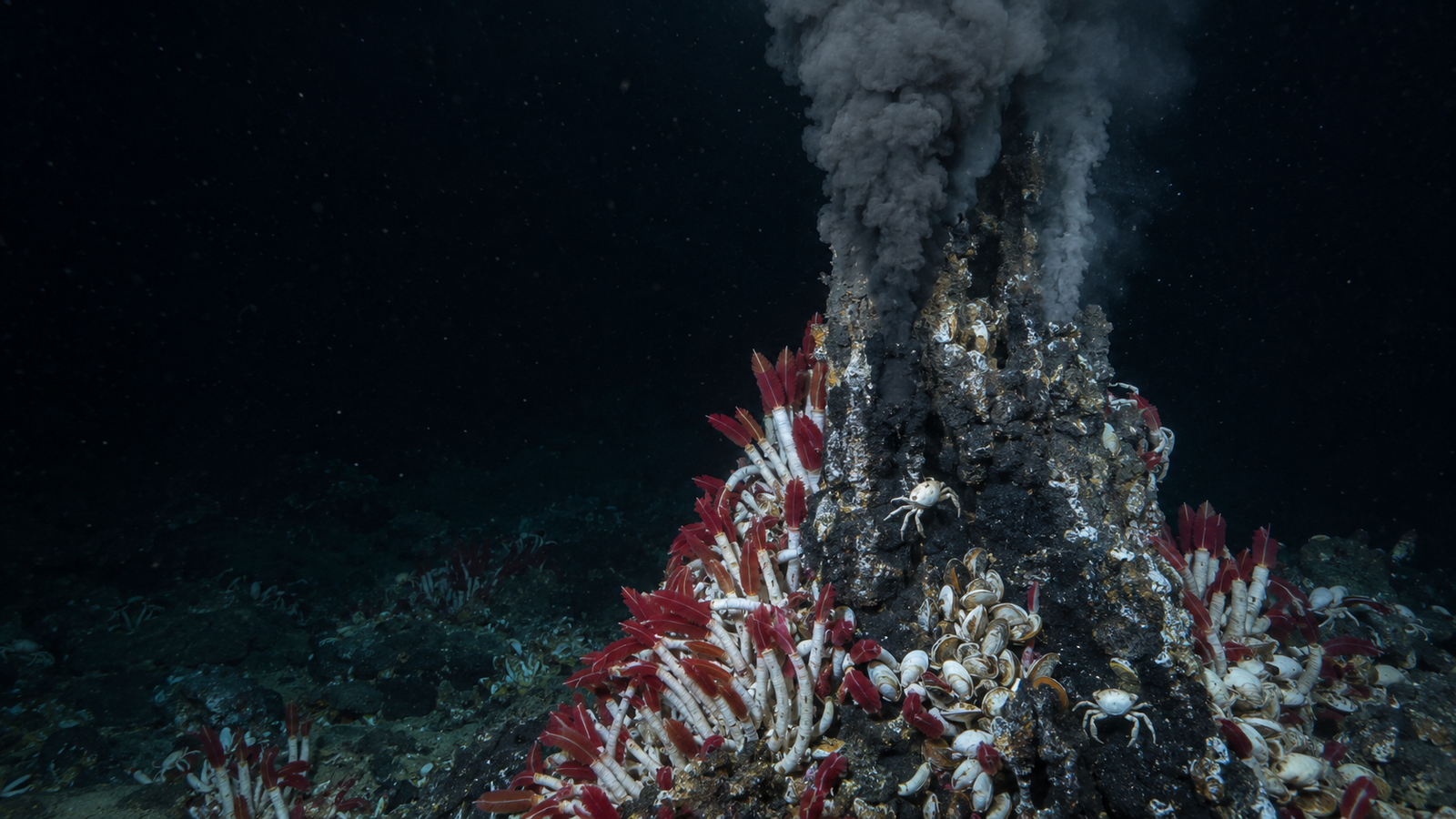
Far below the ice, in permanent darkness, something could still be alive. Deep sea vent communities run on chemical energy rather than light, and NASA’s Ocean Planet page on thermal vents explains that chemicals, not heat, are the key, with tube worms relying on bacteria. Popular Science adds that some microorganisms living in Earth’s crust would also hold on. How long complex vent animals could last is an open question. The same hunt for hardy life runs on other worlds, including the milder cloud layers of Venus, though no life has been detected there, as our Venus deep dive explains.
Could Humans Live Underground Without the Sun?
Possibly for a time, but nobody knows, and nobody has tested it. Picture a sealed shelter under the ice, humming on borrowed heat. Popular Science says humans could live in submarines in the warmest parts of the deep ocean, but nuclear or geothermal powered habitats look like a more attractive option, with Iceland as one candidate. Astronomer Eric Blackman of the University of Rochester says people could keep harnessing volcanic heat there for hundreds of years. These are proposals, not tested plans, and food and breathable air would be the hardest problems.
Why the Sun Cannot Actually Disappear
Here is the comfort at the centre of this nightmare: it cannot happen. The Sun holds over 99.8 percent of the mass of the solar system, and NASA’s fact sheet lists it at about 333,000 times the mass of Earth. A mass that large cannot simply vanish, and Popular Science calls it physically impossible. The real end of the Sun comes much later, when its core eventually runs out of hydrogen.
Confirmed vs Claimed: What We Know About a Sunless Earth
| Confirmed | Still proposed |
|---|---|
| Sunlight takes 8 minutes and 20 seconds to reach Earth | Exact cooling timelines, which vary by source and are modelled estimates |
| The Sun holds over 99.8 percent of the solar system’s mass | Deep oceans staying liquid for hundreds of thousands of years |
| Vent life runs on chemical energy, not sunlight | Complex vent animals surviving for long periods |
| Gravitational waves and light travel at the same speed, measured in 2017 | The Sun’s own pull updating at light speed, which is expected but never tested directly |
| Humans surviving underground |
Frequently Asked Questions About Life Without the Sun
Would we feel the Sun’s gravity vanish before we saw the light go out? No. Physicists expect a change in gravity to spread at the speed of light, the same speed as the last sunlight. So the darkness and the loss of the Sun’s pull would reach Earth together, about 8 minutes and 20 seconds after the Sun vanished.
Would we freeze before we even noticed the darkness? No. Heat already on its way would keep arriving for those 8 minutes and 20 seconds, and the air, oceans and ground hold stored warmth. Cooling would be gradual. Estimates cited by Popular Science put the average surface below minus 18 degrees Celsius only after about a week.
Would we still see the Moon and planets in the sky? The Moon would go dark once the last sunlight reached it and bounced back, because it only reflects sunlight. Distant planets would stay visible a little longer, since sunlight takes longer to reach them and return. After that, only the stars would remain.
What happens if there is no sun for 3 days? Temperatures would already be falling fast and photosynthesis would have stopped, heading toward the below minus 18 degrees Celsius average Stevenson expects by the end of the first week. Crops would stop growing, though large trees could survive for decades.
Could people survive underground with nuclear or geothermal power? Perhaps for a time. Futura Sciences mentions sealed shelters powered by nuclear energy as one idea, and others point to geothermal heat. No one has tested this. Food and breathable air would be the hardest problems, so treat any long survival estimate as speculation.
Would Earth become a rogue planet, and could it ever warm up again? Yes, Earth would become a rogue planet drifting along a straight line. If its path ever carried it near another star, a thaw is conceivable, but the distances are enormous and nothing about it is predicted. Treat that as a thought experiment, not a forecast.
The Sun Is Still Up There. Now Imagine the Ground Letting Go.
You just watched a planet lose its light, its orbit and its warmth. The one thing that stayed was the ground under your feet. Our story on what would happen if Earth lost its gravity takes that away too, second by second, so read it next. If you would rather watch a world cook than freeze, Venus: The Planet That Became Earth’s Nightmare is waiting. Follow From Worlds Beyond so the next story finds you.
Sources
- Earth Fact Sheet, NASA Goddard Space Flight Center
- Gravitational Waves and Gamma Rays from a Binary Neutron Star Merger, LIGO science summary
- Creatures of the Thermal Vents, NASA Ocean Planet
- If the Sun Went Out, How Long Would Life on Earth Survive, Popular Science