
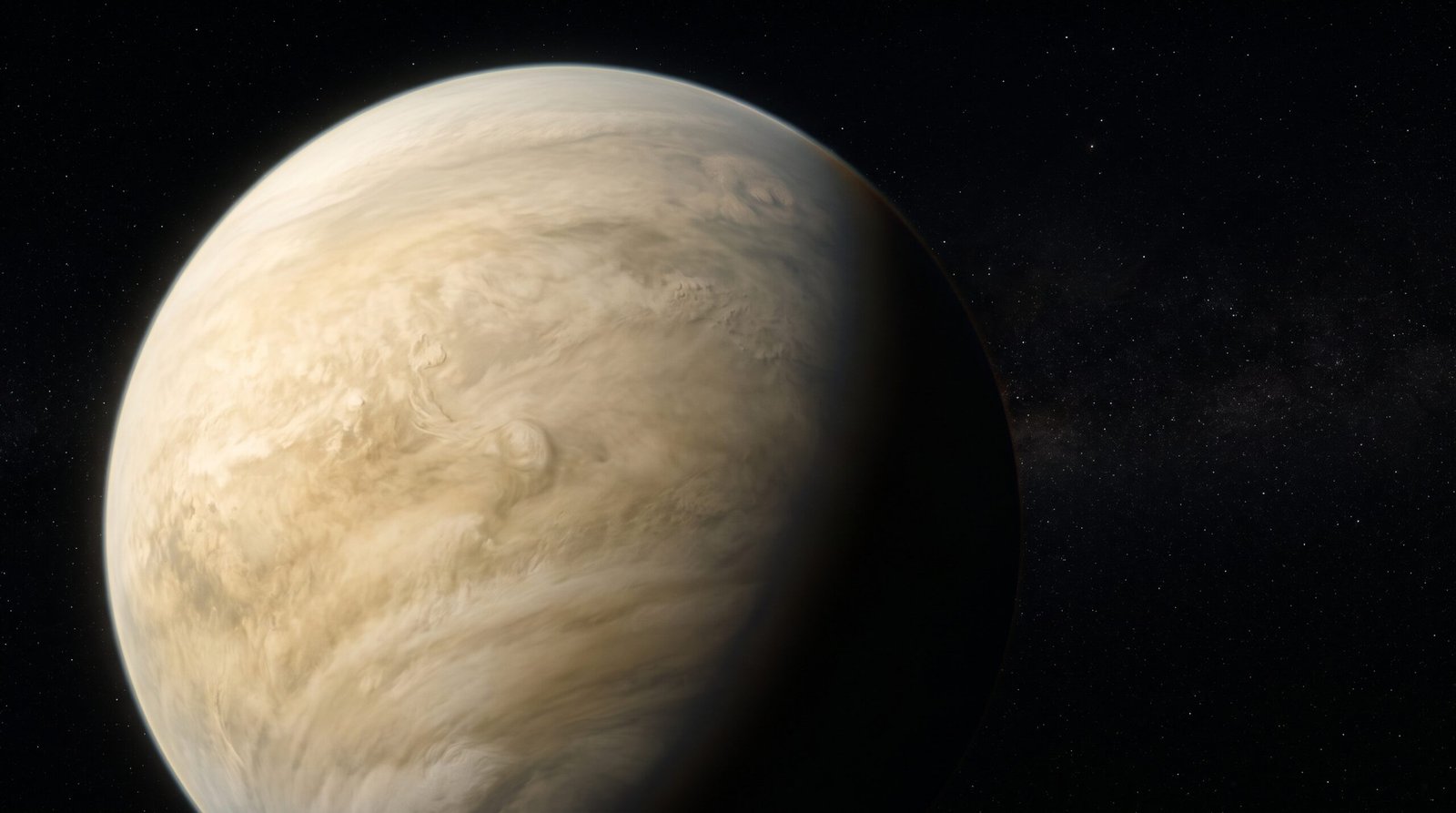
There is a world in our Solar System that looks strangely familiar from a distance.
It is almost the same size as Earth. It is made largely of the same basic rocky ingredients. Its gravity is not dramatically different from ours, and its position in the Solar System is close enough that spacecraft can reach it in relatively short journeys.
Yet if Earth and Venus are planetary siblings, they are siblings that took radically different paths.
Venus is the hottest planet in the Solar System. Its surface reaches temperatures of about 467°C, hot enough to melt lead. The pressure at the ground is roughly 93 times greater than the pressure at sea level on Earth. Above that hostile surface sits a dense atmosphere dominated by carbon dioxide, wrapped in persistent clouds containing sulfuric acid.
From space, however, none of this is obvious.
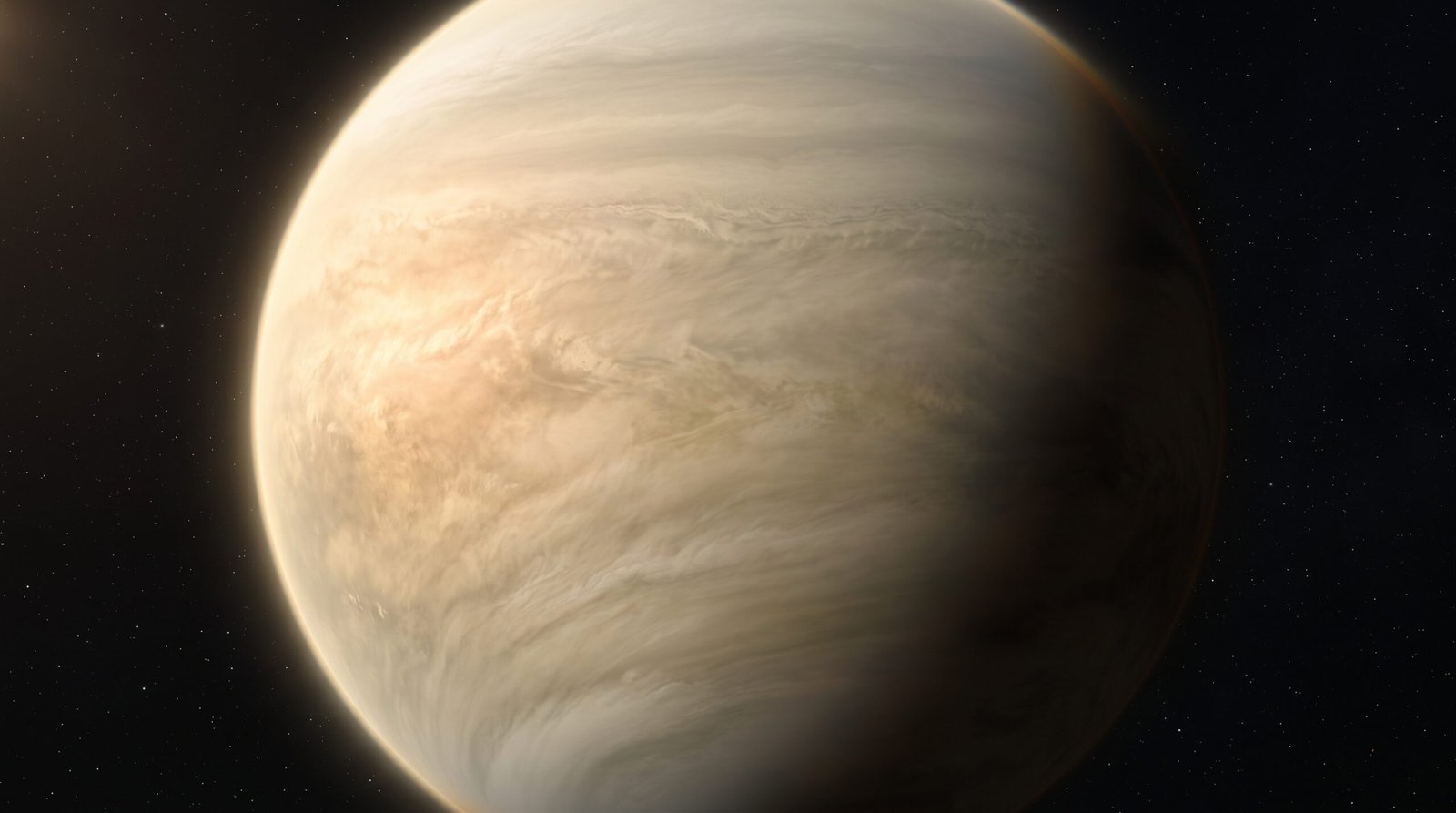
Venus appears as a beautiful pale world almost completely hidden beneath a smooth layer of clouds. There are no oceans visible from above. No familiar continents break through the atmosphere. No blue sky reveals what waits beneath the clouds.
For centuries, humanity could only see the bright world in the sky. Then our spacecraft began going there.
They discovered a planet where the atmosphere is so dense that it behaves unlike anything we experience on Earth. They found enormous volcanic landscapes, mountains and strange geological formations hidden beneath the clouds. They discovered that Venus rotates in the opposite direction from most planets and takes longer to rotate once than it takes to complete an orbit around the Sun.
And then came the bigger mystery. Venus may not have always been the world we see today.
Scientists are still investigating whether ancient Venus once had conditions that were considerably more favorable to liquid water and possibly even habitability. NASA’s upcoming DAVINCI mission is specifically designed to investigate the origin, evolution and present state of Venus and help determine whether the planet was once wet and potentially habitable.
That changes the story completely. Venus is not simply a hot planet. It is a planetary mystery.
It is a world that may hold clues about how rocky planets evolve, why two worlds that began with important similarities can become radically different, and how common Venus like worlds might be elsewhere in the galaxy.
So what happened to Earth’s strange twin?
To understand Venus, we have to begin with the reason these two worlds were ever compared in the first place.
Venus at a Glance
| Fact | Venus |
|---|---|
| Position from the Sun | Second planet |
| Type | Rocky planet |
| Average distance from the Sun | About 108.2 million km |
| Diameter | About 12,104 km |
| Gravity | About 90% of Earth’s |
| Length of a day | About 243 Earth days |
| Length of a year | About 225 Earth days |
| Average surface temperature | About 467°C |
| Surface pressure | About 93 times Earth’s |
| Main atmospheric gas | Carbon dioxide |
| Clouds | Mainly sulfuric acid |
| Moons | None |
| Rings | None |
| Rotation | Retrograde |
| Highest known mountain | Maxwell Montes |
| Major surface feature | Extensive volcanic terrain |
Venus Looks Surprisingly Like Earth
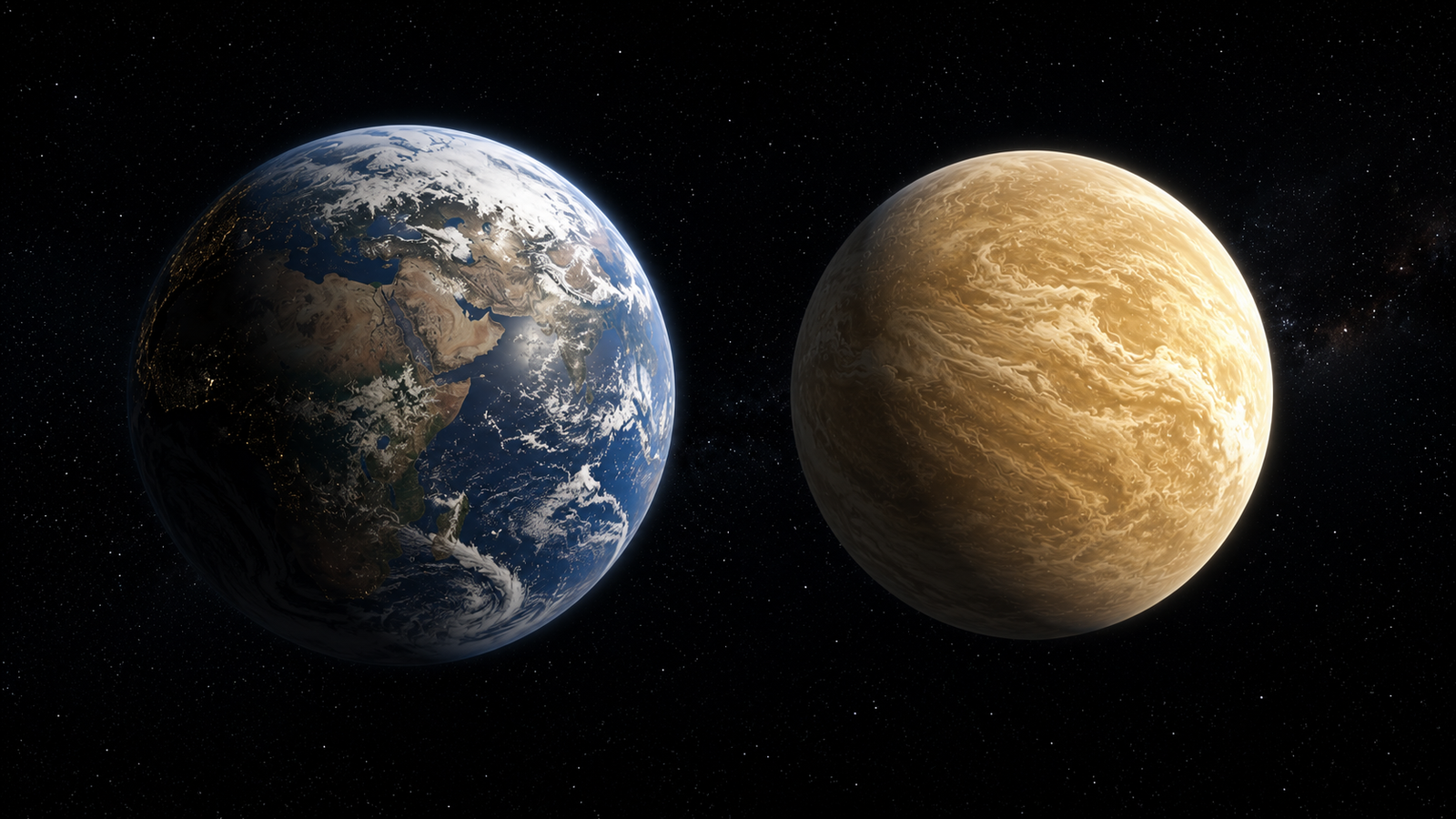
Venus is sometimes called Earth’s twin because the two planets are remarkably similar in several basic physical characteristics.
They are both rocky worlds with solid surfaces. Their sizes and masses are relatively close, and Venus has surface gravity that is about 90 percent of Earth’s.
That similarity is important because it makes the difference between them even more striking.
Earth developed a surface dominated by liquid water, a nitrogen rich atmosphere, a relatively mild climate and an environment capable of supporting an extraordinary diversity of life.
Venus went somewhere else entirely.
Its atmosphere became enormously dense and dominated by carbon dioxide. Its surface became hot enough to melt lead. Its clouds became saturated with sulfuric acid. Its surface was reshaped by enormous volcanic and tectonic processes, while any ancient water that may once have existed was lost over geological time.
The contrast is so extreme that NASA itself describes Venus as Earth’s “evil twin.”
But calling Venus Earth’s twin can actually hide the most interesting part of the story.
The question is not simply why Venus is so hostile. The real question is why two rocky planets that are similar in size and composition ended up with such dramatically different worlds.
That question is one of the central reasons scientists are returning to Venus.
NASA’s VERITAS mission is designed to investigate the planet’s surface and interior and help reveal how the paths of Venus and Earth diverged. ESA’s EnVision mission is similarly designed to study Venus from its interior through its surface and atmosphere to understand how the two planets evolved so differently.
And this is where the story of Venus becomes much bigger than one planet.
It becomes a story about how worlds are made, how atmospheres evolve, how water can disappear, how volcanic activity can reshape an entire planet, and how a world that once may have looked very different can eventually become the furnace hidden beneath Venus’s beautiful clouds.
How Did Venus Become So Hot?
Venus does not receive the most sunlight in the Solar System. Mercury is closer to the Sun. Yet Venus has the highest surface temperature of any planet, reaching roughly 467°C. The reason is not simply how much sunlight Venus receives. It is what happens to that energy after it enters the planet’s atmosphere.
Venus is wrapped in an atmosphere dominated by carbon dioxide. The atmosphere is extraordinarily thick, and the clouds above it contain sulfuric acid. Sunlight can enter the atmosphere, but the heat produced at the surface has a much harder time escaping back into space. The result is an extreme greenhouse effect that has transformed Venus into a planetary furnace.
This is why the familiar comparison between Venus and Mercury is so revealing. Mercury is closer to the Sun, but it has almost no atmosphere capable of trapping heat on the same scale. Its surface temperatures therefore swing dramatically between day and night. Venus, by contrast, has an atmosphere so dense that heat becomes distributed throughout the lower atmosphere and remains trapped.
The result is astonishing. Even the side of Venus facing away from the Sun remains brutally hot.
Venus does not simply have a hot afternoon and a cooler night. Its entire surface exists inside an atmosphere that has turned the planet into a giant heat trapping system. And that atmosphere is not a thin layer hanging above the ground. It is an enormous weight pressing down on everything beneath it.
The Atmosphere Would Crush You
The temperature is only half of the problem.
At the surface of Venus, the atmospheric pressure is approximately 93 times greater than Earth’s sea level pressure. NASA compares this pressure to the kind of pressure experienced roughly a kilometer beneath Earth’s oceans.
Imagine standing on the ocean floor without being underwater. That is the kind of pressure a spacecraft descending toward the Venusian surface has to survive.
But unlike Earth’s ocean depths, Venus offers no cool water surrounding you. The environment is simultaneously crushing and extraordinarily hot.
The atmosphere itself is mostly carbon dioxide, with nitrogen making up much of the remainder. There is essentially no breathable oxygen for a human being. Above the surface, enormous cloud layers contain sulfuric acid, creating an environment unlike anything found naturally on Earth.
This combination is what makes Venus so dangerous. Remove the heat and the pressure would still be deadly. Remove the pressure and the temperature would still be deadly. Remove both and the atmosphere would still be impossible to breathe. Venus combines all three.
That is why sending a spacecraft to its surface is such a difficult engineering challenge.
The Soviet Venera missions demonstrated this brutally. Several spacecraft successfully reached the surface and transmitted data back to Earth, but surviving in the Venusian environment required spacecraft designed to withstand conditions far beyond those encountered by ordinary planetary probes.
Why Is Venus Hotter Than Mercury?
This is one of the simplest questions about Venus, but it leads directly into one of the most important ideas in planetary science.
Mercury is the closest planet to the Sun. So why does Venus have the higher surface temperature?
The answer is its atmosphere. Mercury has an extremely thin atmosphere, more accurately described as an exosphere. It cannot retain and redistribute heat the way Venus’s enormous atmosphere does. As a result, Mercury experiences enormous differences between its day and night temperatures.
Venus behaves very differently.
Its dense carbon dioxide atmosphere acts as a powerful blanket around the planet. Solar energy enters the atmosphere, warms the surface, and the resulting heat is absorbed and re emitted by atmospheric gases. The thick atmosphere makes it extraordinarily difficult for that energy to escape directly into space.
This is the runaway greenhouse effect.
The phrase can sound dramatic, but on Venus it describes a real planetary climate process. The important thing is that Venus did not simply become hot because it moved closer to the Sun. Its atmosphere changed the way the entire planet handled energy.
That distinction matters because it turns Venus from a strange astronomical curiosity into something much more important. Venus is a natural laboratory for understanding how atmospheres can transform rocky planets. And that leads to an even bigger question.
Was Venus always this way?
Scientists still do not have a complete answer.
One of the major goals of future Venus exploration is to determine how the planet evolved and whether its early environment was dramatically different from what we see today. NASA’s DAVINCI mission is designed in part to study the atmosphere and investigate clues about Venus’s possible ancient water and habitability.
If Venus once had significantly different conditions, then the planet we see today is not simply a world that was born as a furnace. It may be the final chapter of a much longer planetary story.
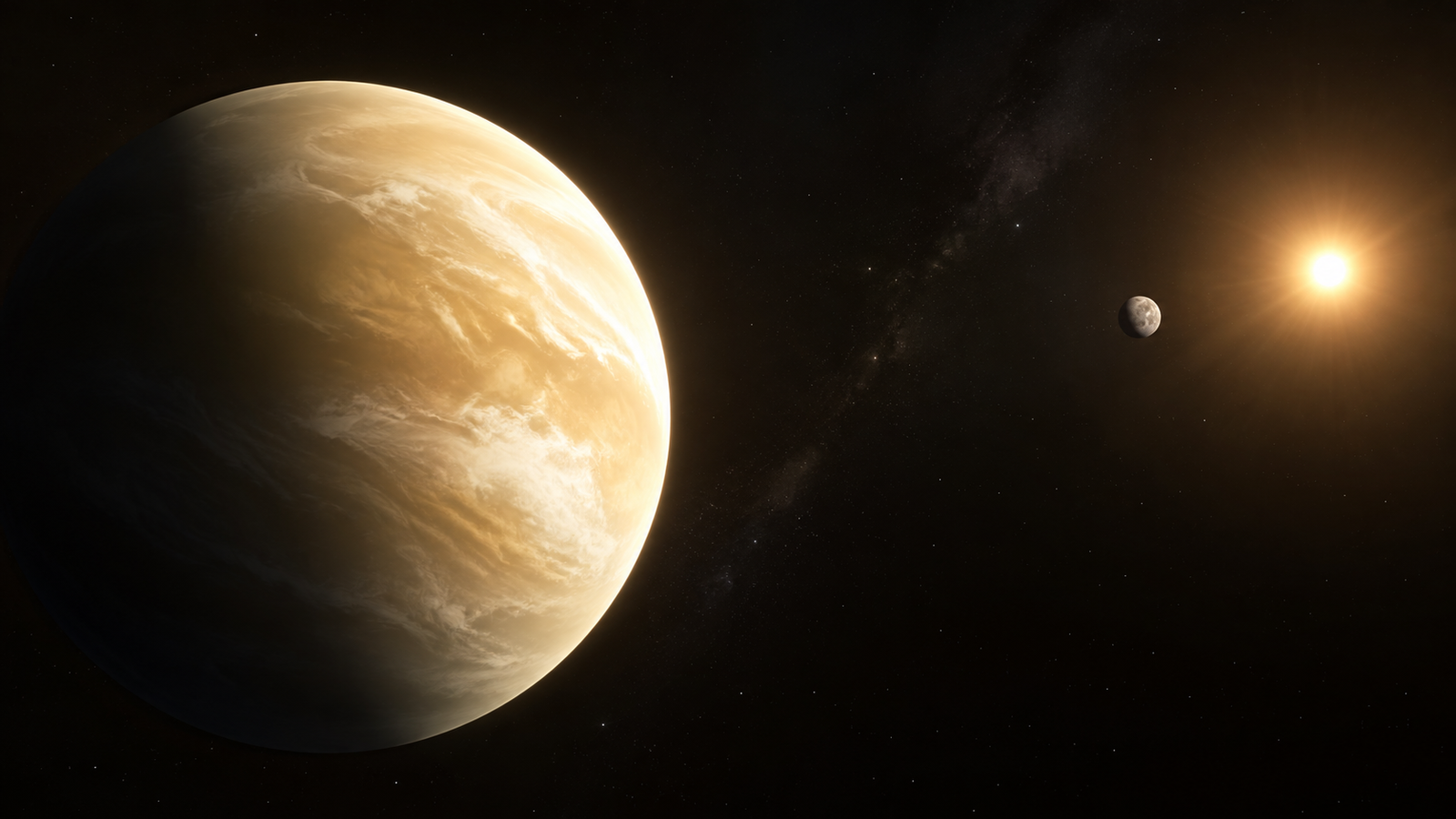
Venus Is Wrapped in an Ocean of Clouds
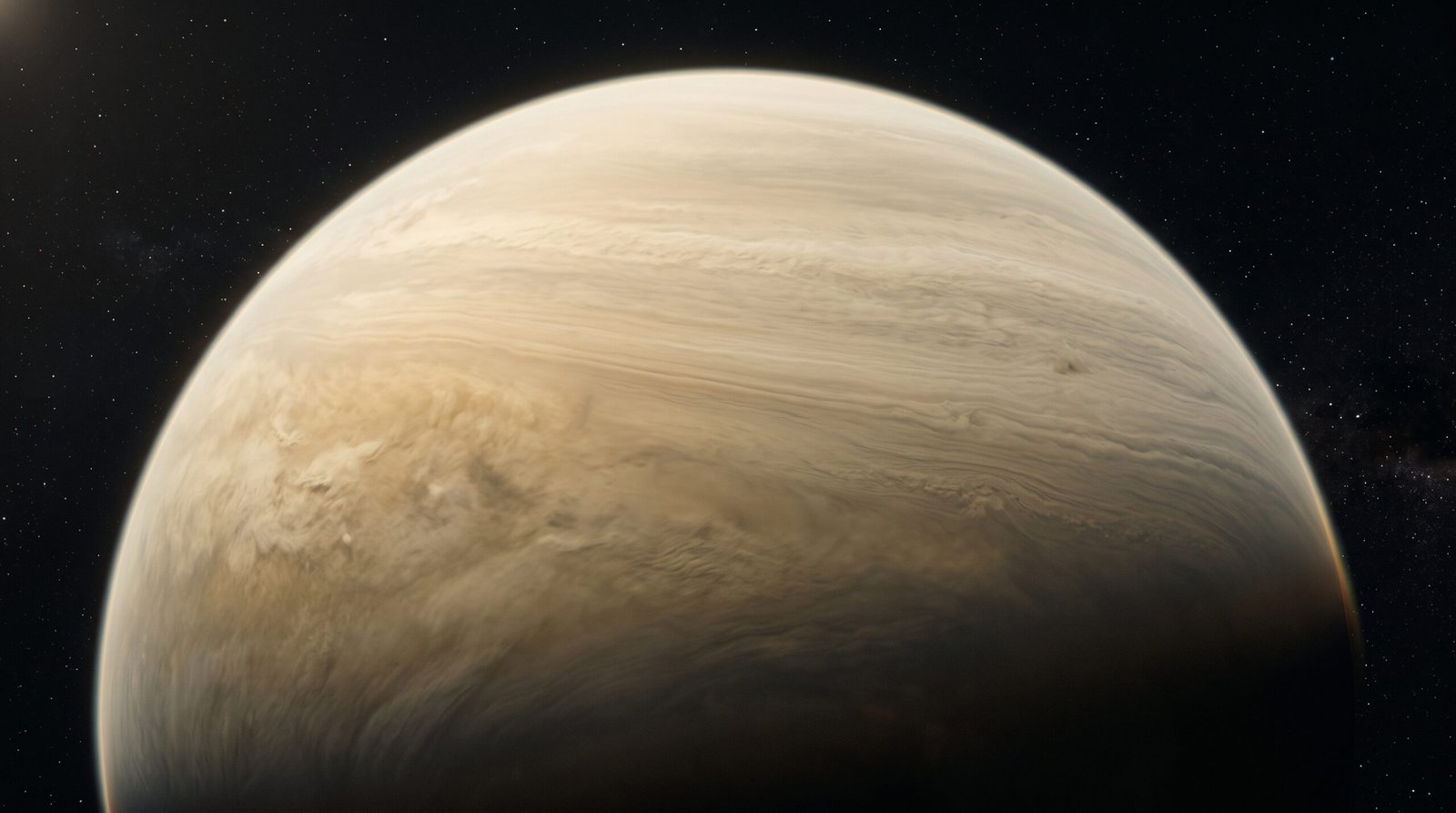
From space, Venus appears almost smooth. That is deceptive. The planet’s surface is almost completely hidden beneath an enormous cloud system that circles the world.
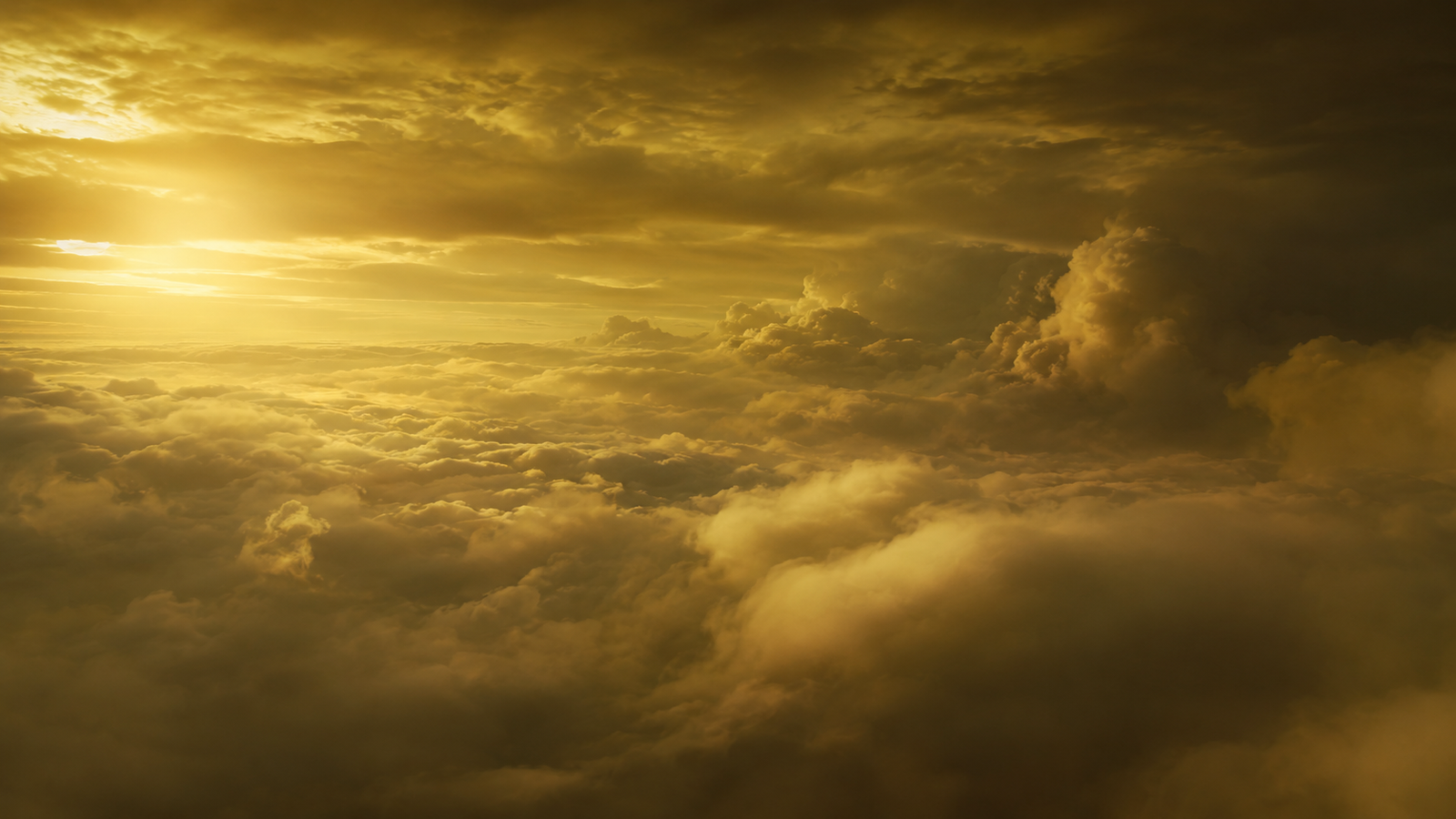
These clouds are not ordinary water clouds like those on Earth. They are dominated by sulfuric acid droplets suspended within Venus’s atmosphere. The main cloud layers occur high above the surface, while the lower atmosphere becomes progressively hotter and denser as altitude decreases.
This creates one of the strangest environments in the Solar System.
A spacecraft approaching Venus would first encounter a world hidden behind thick clouds. It would descend through an atmosphere where powerful winds race around the planet. Eventually, the clouds would thin.
The spacecraft would emerge into the lower atmosphere. And below it would be the surface of a planet hot enough to melt lead. Yet there is an important misconception worth correcting. When people hear that Venus has sulfuric acid rain, they often imagine acid falling continuously onto the ground.
That is not what happens.
Sulfuric acid droplets can form and fall within the atmosphere, but as they descend into the increasingly hot lower atmosphere, they evaporate before reaching the surface under typical conditions.
So Venus does have sulfuric acid precipitation within its clouds, but the surface itself is not being washed by a constant rainfall of liquid sulfuric acid.
That distinction makes Venus no less extraordinary. If anything, it makes the atmosphere even stranger.
The First Major Mystery
Venus is already extraordinary. But the hottest planet in the Solar System may not have always looked like this.
Beneath its clouds are clues that could reveal whether Venus once had a very different climate, whether water survived on its surface for significant periods, and how its atmosphere evolved into the dense carbon dioxide envelope we see today.
Those questions cannot be answered simply by looking at Venus from Earth.
Scientists need to understand what lies beneath the clouds, how the planet’s atmosphere behaves at different altitudes, how its surface has changed, and what its chemistry reveals about its past.
That is why Venus is becoming a major target for a new generation of planetary missions. And before we can understand what Venus might once have been, we need to descend through the clouds and see the world hiding beneath them.
Because the surface of Venus is where the story becomes truly extreme.
Beneath the Clouds, Venus Becomes Another World
For centuries, Venus was little more than a bright point in the sky. Even through a telescope, its surface remained hidden. The planet’s thick cloud cover reflected sunlight back into space, concealing whatever lay beneath it.
Then spacecraft began reaching Venus. What they found was not a smooth, featureless world.
Beneath the clouds lies a landscape shaped by enormous volcanic activity, tectonic deformation, vast plains, mountains, ridges and strange geological structures unlike anything on Earth.
The surface is almost completely hidden from ordinary visible light, so scientists had to find another way to see it. They used radar.
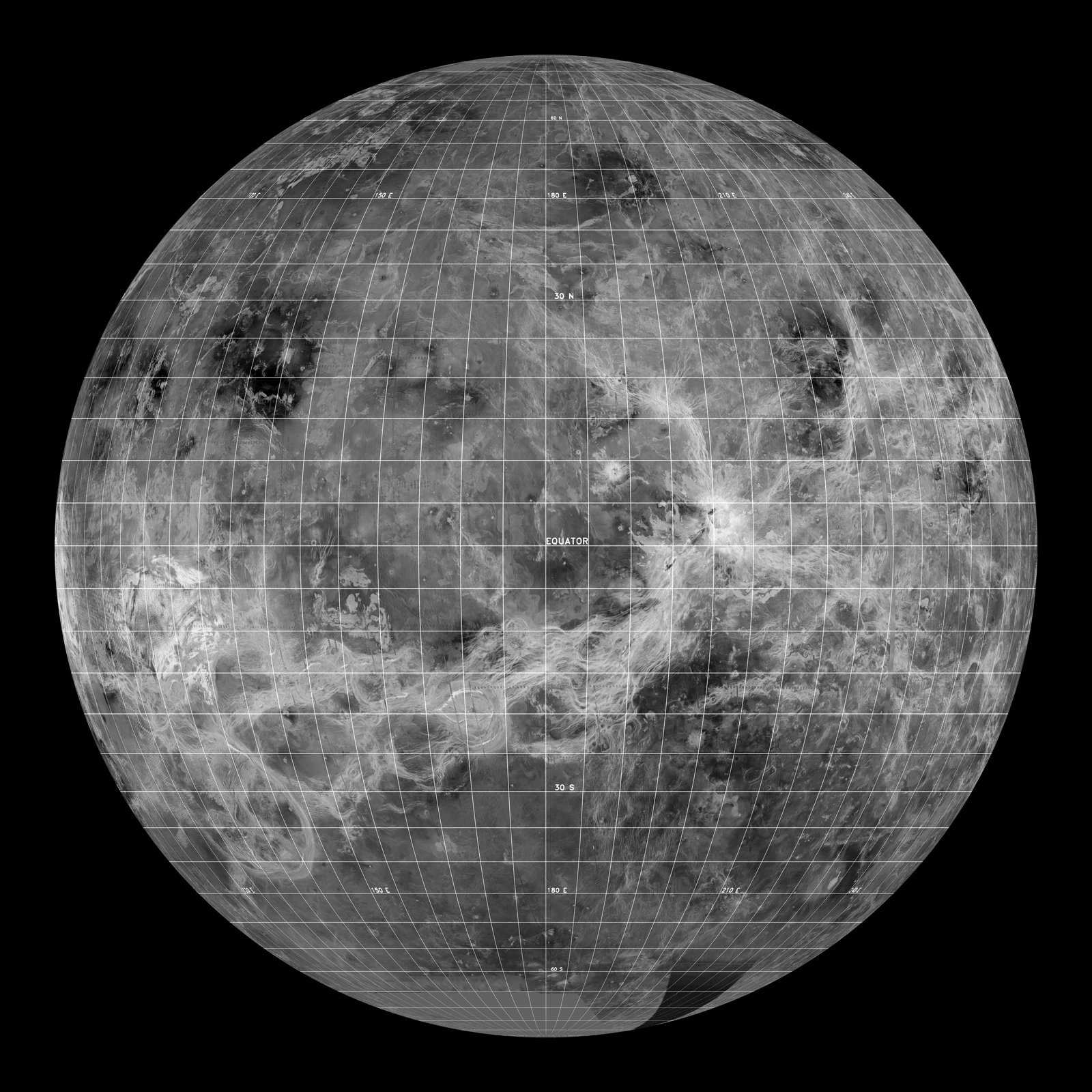
NASA’s Magellan spacecraft arrived at Venus in 1990 and used radar to map roughly 98 percent of the planet’s surface. For the first time, scientists could study Venus as an actual world rather than a mysterious bright sphere hidden behind clouds.
The map revealed a planet that had been hiding in plain sight. There were enormous volcanic plains. Mountain ranges rose above the surrounding terrain. Long channels stretched across the surface.
Circular structures called coronae covered parts of the planet. And scattered across the landscape were thousands upon thousands of volcanic features.
Venus was not geologically boring. It was one of the most volcanically shaped worlds we had ever seen.
A Planet Covered in Volcanoes
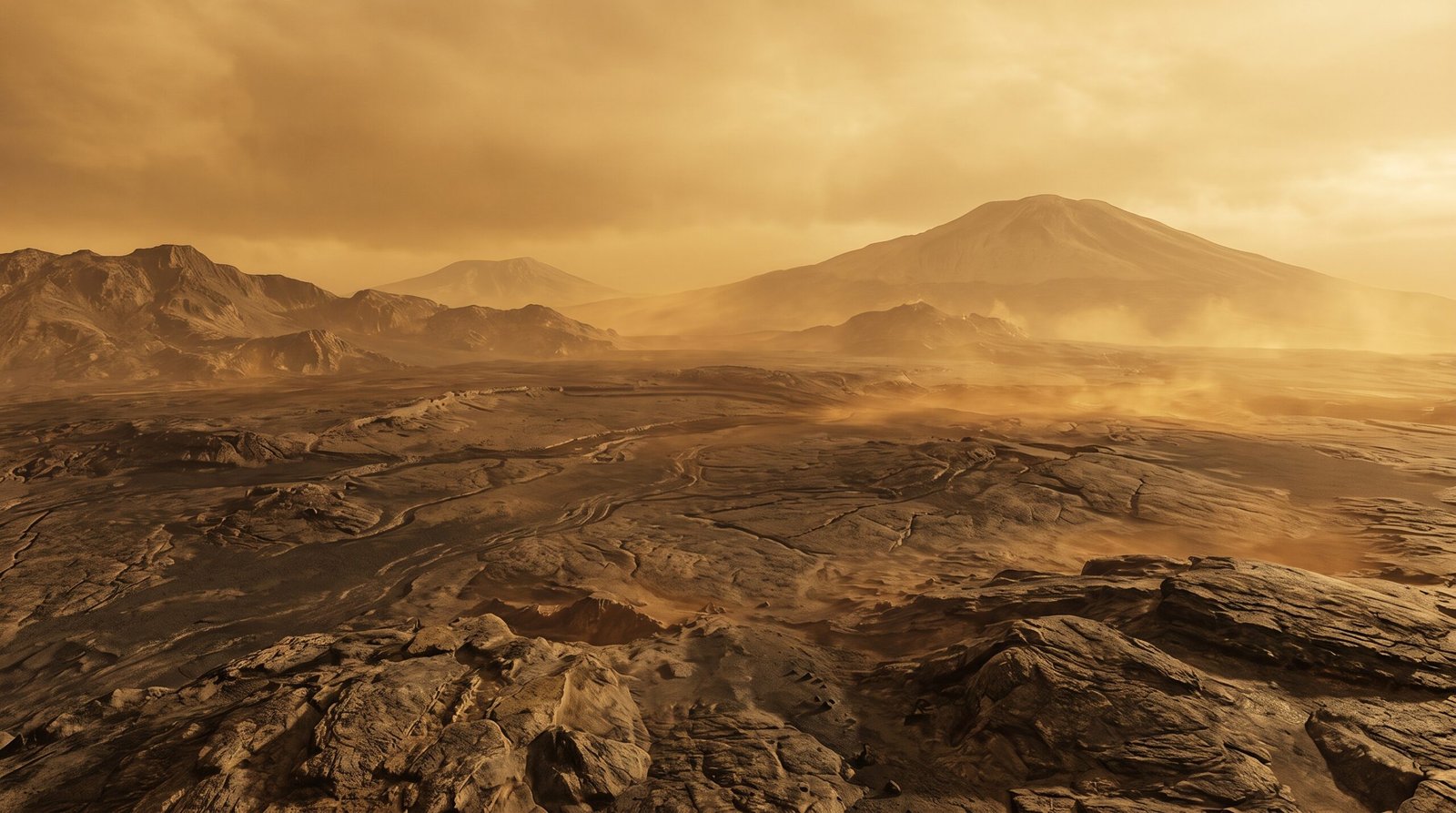
Volcanoes are not a small part of Venus. They are one of the defining features of the planet.
Magellan’s radar observations revealed extensive volcanic terrain across Venus, with enormous lava plains covering much of the surface. Scientists have identified tens of thousands of volcanic features across the planet.
Some are unlike familiar volcanoes on Earth.
Venus has enormous shield volcanoes, broad volcanic plains and unusual structures that formed as hot material from inside the planet pushed toward the surface.
There are also strange circular formations called coronae. These structures can stretch for hundreds of kilometers and are thought to form through complex interactions between Venus’s interior and crust.
Then there is the planet’s extraordinary tessera terrain. Tesserae are heavily deformed regions covered by intersecting ridges and valleys. They may represent some of the oldest surviving surfaces on Venus, making them particularly important to scientists trying to reconstruct the planet’s early history.
Venus may therefore be hiding something even more valuable beneath its clouds. A geological record. A record that could tell us what the planet was like billions of years ago.
Is Venus Still Volcanically Active?
This is where the story becomes more complicated.
Scientists have found evidence suggesting that Venus may still be volcanically active today.
In recent years, researchers have re examined old Magellan radar observations and identified changes that may represent relatively recent lava flows. Other studies have investigated geological activity that could indicate that Venus remains internally active.
But there is an important scientific debate.
Radar observations from different viewing geometries can create apparent changes that are difficult to distinguish from genuine geological activity. Recent research has challenged some interpretations of proposed modern lava flows, while the original researchers have defended their conclusions.
Venus may still be alive beneath its clouds, but scientists are still working to determine exactly how active the planet is today.
That uncertainty is one of the reasons future missions are so important. New spacecraft will be able to collect data specifically designed to detect changes and investigate the planet’s interior. And there is another remarkable possibility.
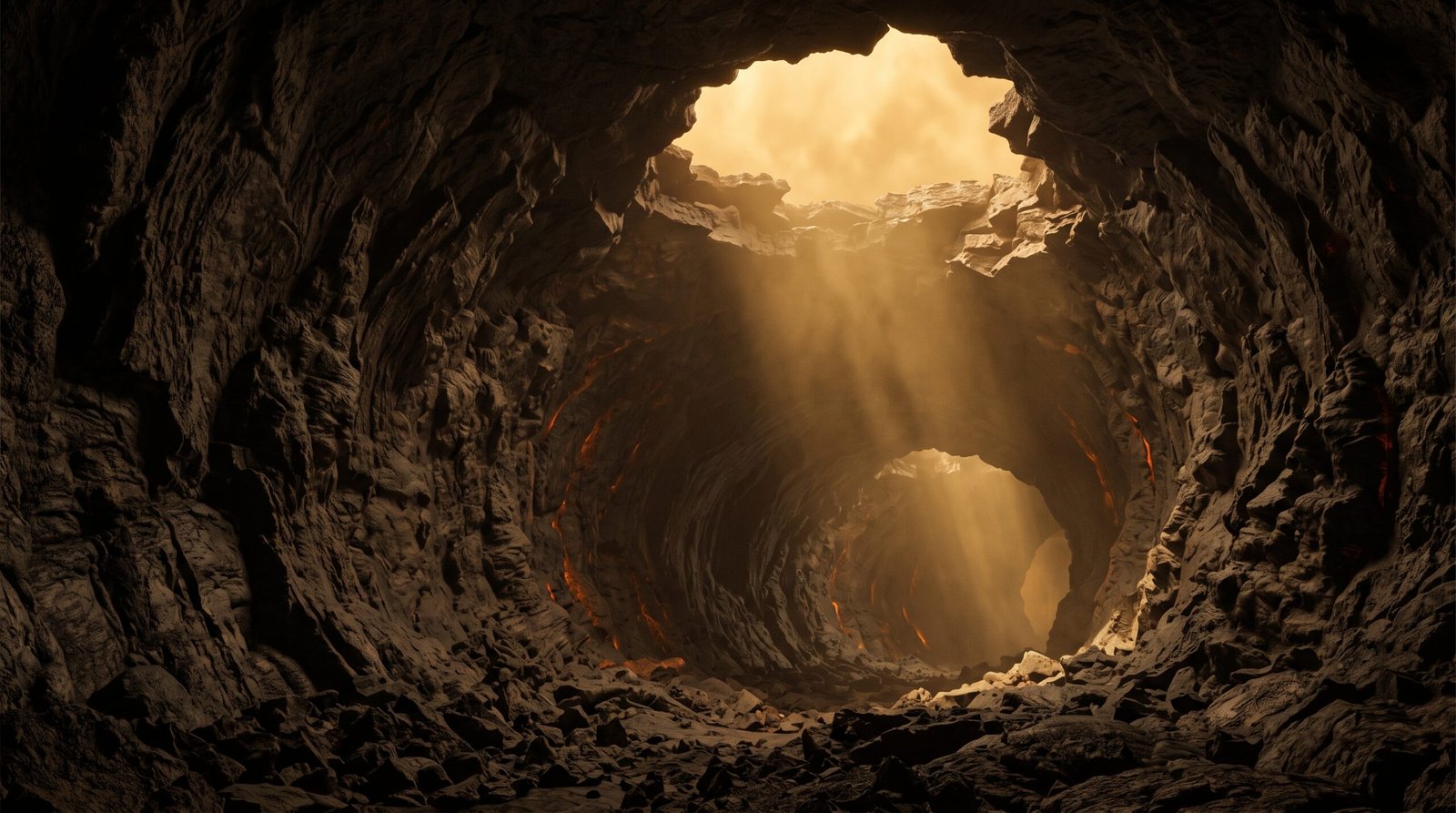
Some of the volcanic structures detected on Venus may extend beneath the surface in the form of enormous underground passages.
A Possible Underground World
In 2026, researchers reported radar based evidence interpreted as a possible lava tube on Venus.
Lava tubes form when the surface of a lava flow cools and hardens while molten material continues moving underneath. Eventually, the lava drains away and leaves a tunnel behind.
On Earth, these structures can become enormous underground networks.
Finding evidence for one on Venus would be significant because it would provide another clue about the planet’s volcanic history and the processes that shaped its surface.
The feature was identified through radar observations. Scientists did not send a spacecraft into a Venusian cave and photograph it. The evidence is based on the way radar interacts with the surface and subsurface structure.
That distinction matters. Venus still has enormous amounts left to reveal.
The Mountains of Venus
Venus is not only a world of volcanoes. It also has mountains.
The highest mountain range on Venus rises far above the surrounding terrain, with Maxwell Montes reaching approximately 11 kilometers above the planet’s mean surface radius.
That makes it comparable in height to some of the greatest mountains on Earth. But the environment surrounding those mountains could not be more different from our planet.
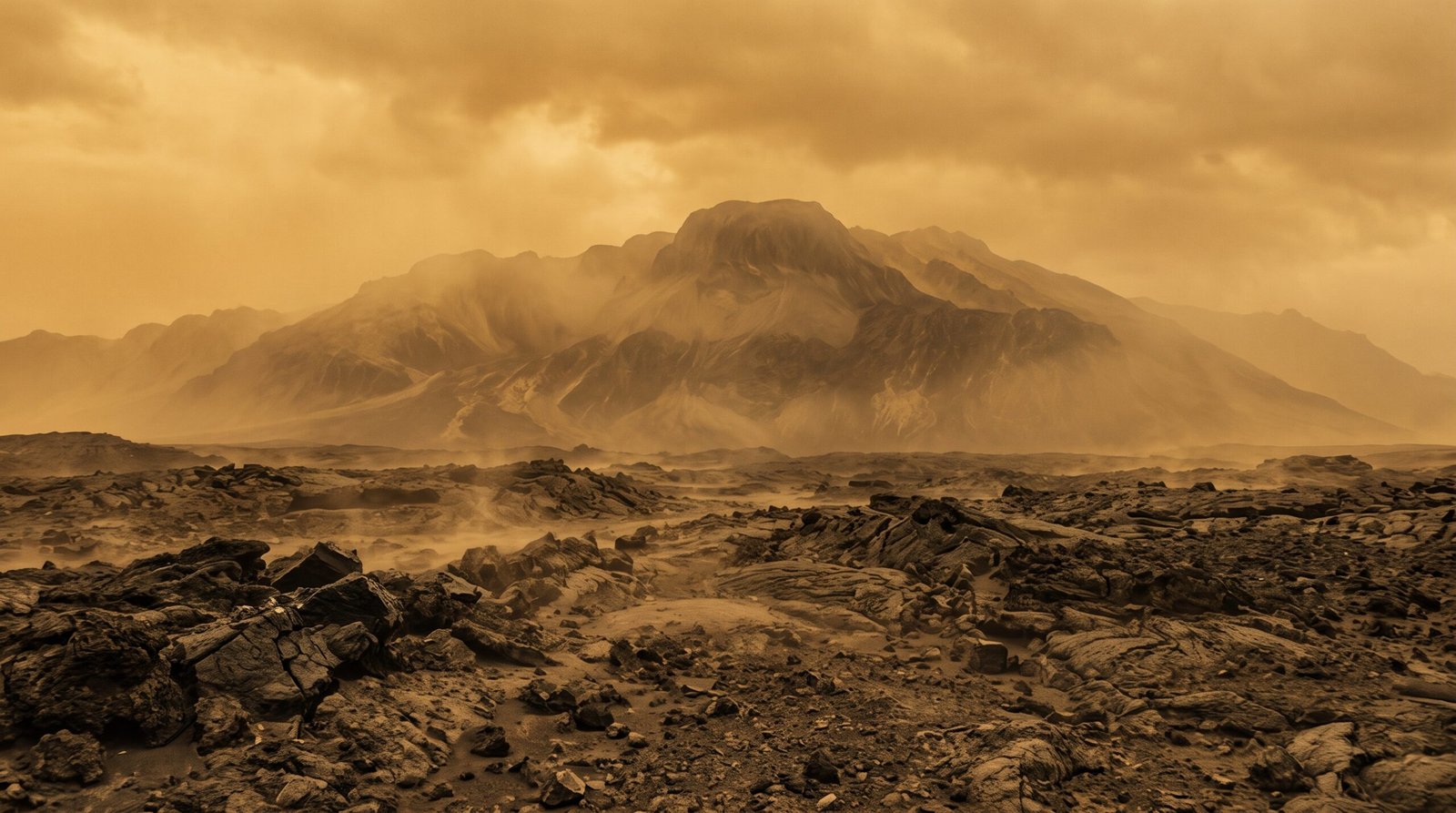
There are no blue skies. No forests. No glaciers. No breathable air. Instead, the mountains sit beneath an atmosphere so dense that distant terrain would appear through layers of haze and scattered light. The landscape would likely feel strangely compressed.
The horizon would not have the crisp clarity we associate with photographs taken on Earth. Everything would exist inside a thick atmospheric ocean. And yet, despite the hostile conditions, the surface of Venus contains some of the most extraordinary geological structures in the Solar System.
What Would You Actually See on Venus?
Imagine for a moment that you could somehow survive the temperature, pressure and atmosphere. You step onto the surface. The first thing you would notice is the sky. It would not look like Earth’s.
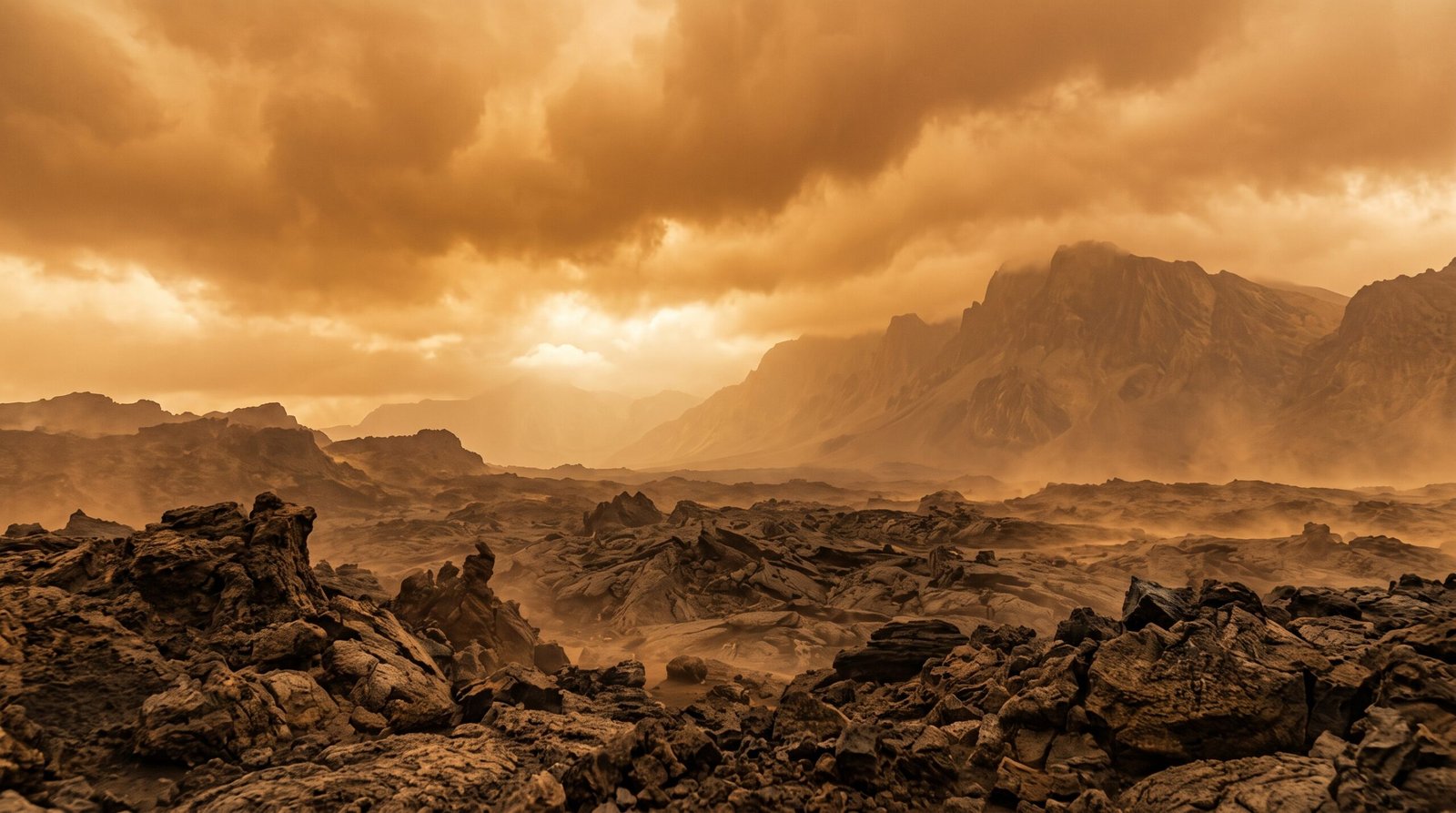
The dense atmosphere would scatter and absorb sunlight in a way that would produce a heavily filtered, orange yellow environment. The Sun would not hang in a crisp blue sky. Instead, its light would pass through an enormous atmospheric layer before reaching the ground.
The landscape would stretch into the distance beneath a thick veil of haze. You would see volcanic rocks, ridges, plains and mountains. And the horizon would appear much closer and softer than it does on Earth because of the extraordinary density of the atmosphere.
There would be no breathable air. No rain falling from a blue sky. No ocean. No vegetation. No familiar soundscape.
Just a silent landscape beneath an atmosphere pressing down with tremendous force.
And although Venus has winds far faster than anything humans normally experience, the atmosphere near the surface moves much more slowly than the spectacular winds found higher in the clouds.
The planet’s most violent atmospheric motion occurs far above the ground. There, Venus’s atmosphere does something extraordinary. It races around the planet.
The Atmosphere Moves Faster Than the Planet
Venus rotates extremely slowly. One complete rotation relative to the distant stars takes about 243 Earth days. But high above the surface, the atmosphere circles the planet much faster. This phenomenon is called superrotation.
At the cloud tops, winds can reach roughly 360 kilometers per hour, carrying the atmosphere around Venus in only a few Earth days. Think about the contrast. The solid planet beneath the clouds turns at an almost glacial pace.
The atmosphere above it races around the entire world. This is one of the great atmospheric mysteries of Venus.
Scientists understand that solar heating and atmospheric circulation play important roles, but the precise mechanisms behind the planet’s extraordinary superrotation are still being studied.
Venus is therefore not simply a planet with an extreme atmosphere. It is a planet whose atmosphere behaves in ways that challenge our understanding of planetary climates.
And the deeper we look, the stranger Venus becomes. Because beneath the atmosphere and volcanic landscape lies another mystery.
Where Did Venus’s Water Go?
Today, Venus is extraordinarily dry.
That is difficult to reconcile with the idea that a planet so similar to Earth in size and composition might once have possessed abundant water. Yet scientists have several clues suggesting that water may have played an important role in Venus’s early history.
One of the biggest clues comes from the atmosphere itself.
Venus contains extremely little water today, but its atmosphere carries chemical evidence that scientists can use to reconstruct parts of its history. Hydrogen is especially important because water contains hydrogen and oxygen. When water vapor reaches high altitudes, sunlight can break its molecules apart. The lighter hydrogen can then escape into space.
Over enormous stretches of geological time, that process can remove water from a planet.
Research published in Nature in 2024 found that Venus is losing water through atmospheric processes involving hydrogen escape and concluded that the planet has experienced substantial water loss to space. The researchers also found that the present atmosphere contains far less water than would be expected from simply removing a large ancient ocean through one straightforward escape process, suggesting that the history of Venus’s water is more complicated than a simple ocean boiling away.
That is an important distinction. We know Venus is extremely dry today. We know water can escape from Venus into space. But exactly how much water Venus possessed in the distant past, and whether it ever existed as long lived surface oceans, remains an open scientific question.
Did Venus Ever Have Oceans?
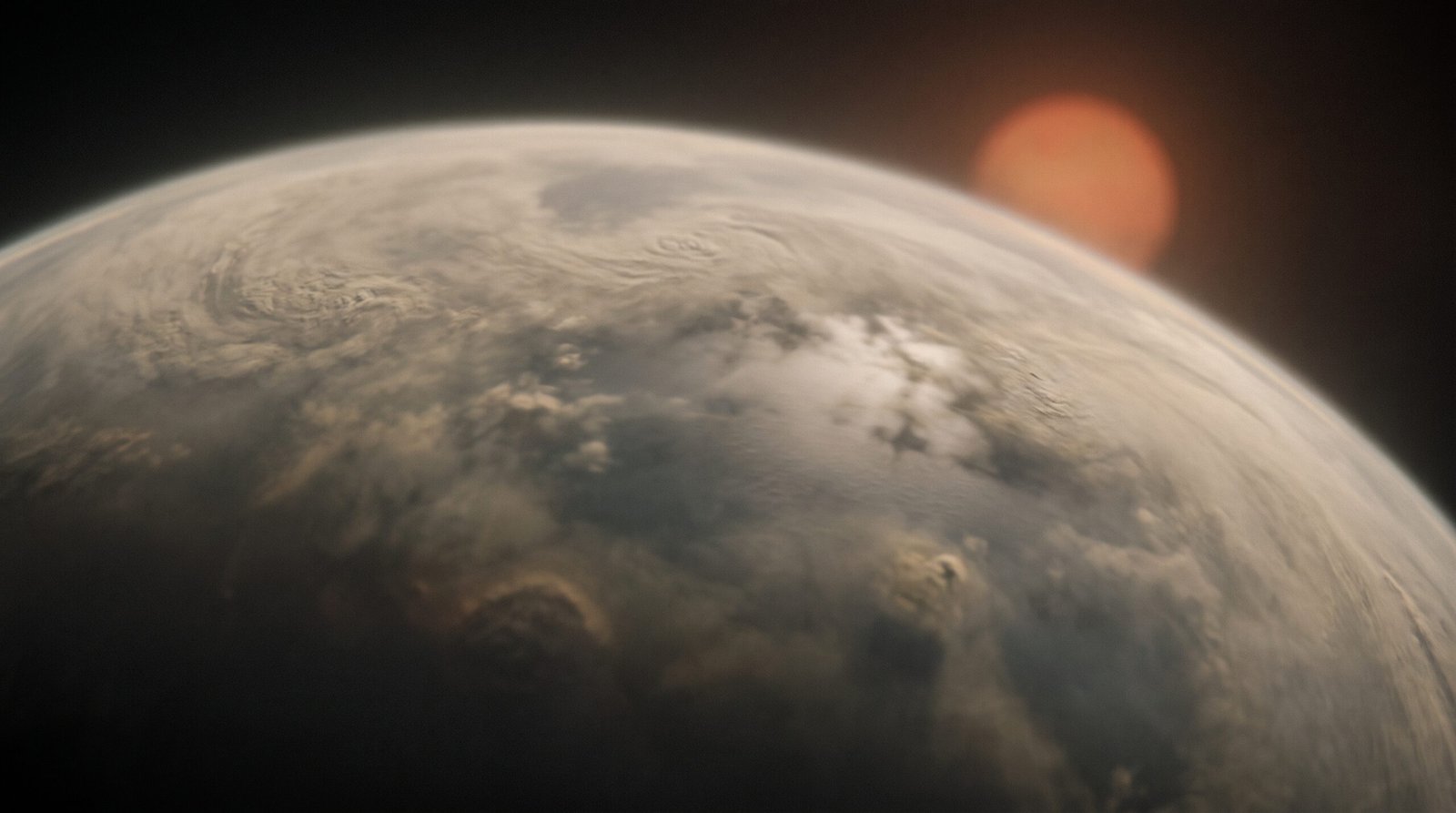
This is one of the biggest unanswered questions in planetary science. Some climate models have produced a remarkable possibility.
In 2016, NASA researchers published climate simulations suggesting that ancient Venus could have maintained a shallow liquid water ocean and potentially habitable surface conditions for as long as two billion years under certain modeled conditions. Their simulations assumed an early atmosphere and surface configuration very different from the Venus we see today.
The idea is extraordinary.
Imagine Venus billions of years ago. Not the furnace we know today. Not a planet hidden beneath suffocating clouds. But a rocky world with water on its surface.
The model suggested that Venus’s slow rotation could have produced persistent cloud cover on the planet’s dayside. Those clouds could have reflected substantial sunlight back into space, helping keep surface conditions within a potentially habitable range despite Venus receiving more sunlight than Earth does today.
But there is an important scientific caveat. A climate model is not a photograph of the past. It is a physically based simulation built using assumptions about ancient Venus.
Other research has reached different conclusions.
A 2024 study in Nature Astronomy investigated Venus’s interior and atmospheric chemistry and argued that the planet’s interior is likely very dry. If that interpretation is correct, it would make a long lived ocean on the surface much less likely.
Scientists are still trying to determine whether Venus once had oceans, and different lines of evidence currently point toward different possibilities.
A Planet That May Have Taken a Different Path
There is a deeper reason scientists care so much about ancient Venus. Earth and Venus began with many important similarities. Both are rocky planets. Both are close in size. Both formed from broadly similar material in the inner Solar System.
Yet Earth became a world dominated by liquid water and life, while Venus became a world dominated by carbon dioxide, crushing pressure and extreme heat.
Understanding that divergence could tell us something fundamental about planetary habitability. A planet does not become habitable simply because it is rocky. It needs the right combination of atmosphere, temperature, water, geological activity and long term climate stability.
Venus demonstrates what can happen when that balance is lost.
NASA’s VERITAS science program describes Venus as an especially valuable comparison point for understanding rocky planets and planetary habitability. Studying Venus can help scientists understand how planets evolve and how similar worlds around other stars might follow very different paths.
In other words, Venus is not simply telling us about Venus. It may be telling us how common worlds like Earth can become very different worlds.
The Day Venus Lost Its Water
If Venus once possessed significant surface water, how could it have disappeared?
One possibility involves the planet’s increasing temperature. As Venus became warmer, more water could enter the atmosphere as vapor. Water vapor is itself a greenhouse gas. More water vapor can trap more heat. More heat can cause more water to evaporate.
As temperatures rise, more water enters the atmosphere. The atmosphere then becomes better at retaining heat. Higher temperatures drive further evaporation.
Eventually, the planet can reach a state where stable liquid water can no longer survive on the surface.
Once water enters the upper atmosphere, ultraviolet radiation can split water molecules apart. Hydrogen, being extremely light, can escape more readily into space. Oxygen can follow other chemical pathways, including reactions with the surface and atmospheric chemistry.
Over geological timescales, a planet can lose an enormous amount of its original water inventory.
NASA describes this type of water loss as one possible pathway in Venus’s transformation from a potentially wetter ancient world into the dry planet we see today. But exactly when this happened, how rapidly it happened and whether Venus ever maintained oceans for an extended period remain major questions.
Could Venus Have Once Been Habitable?
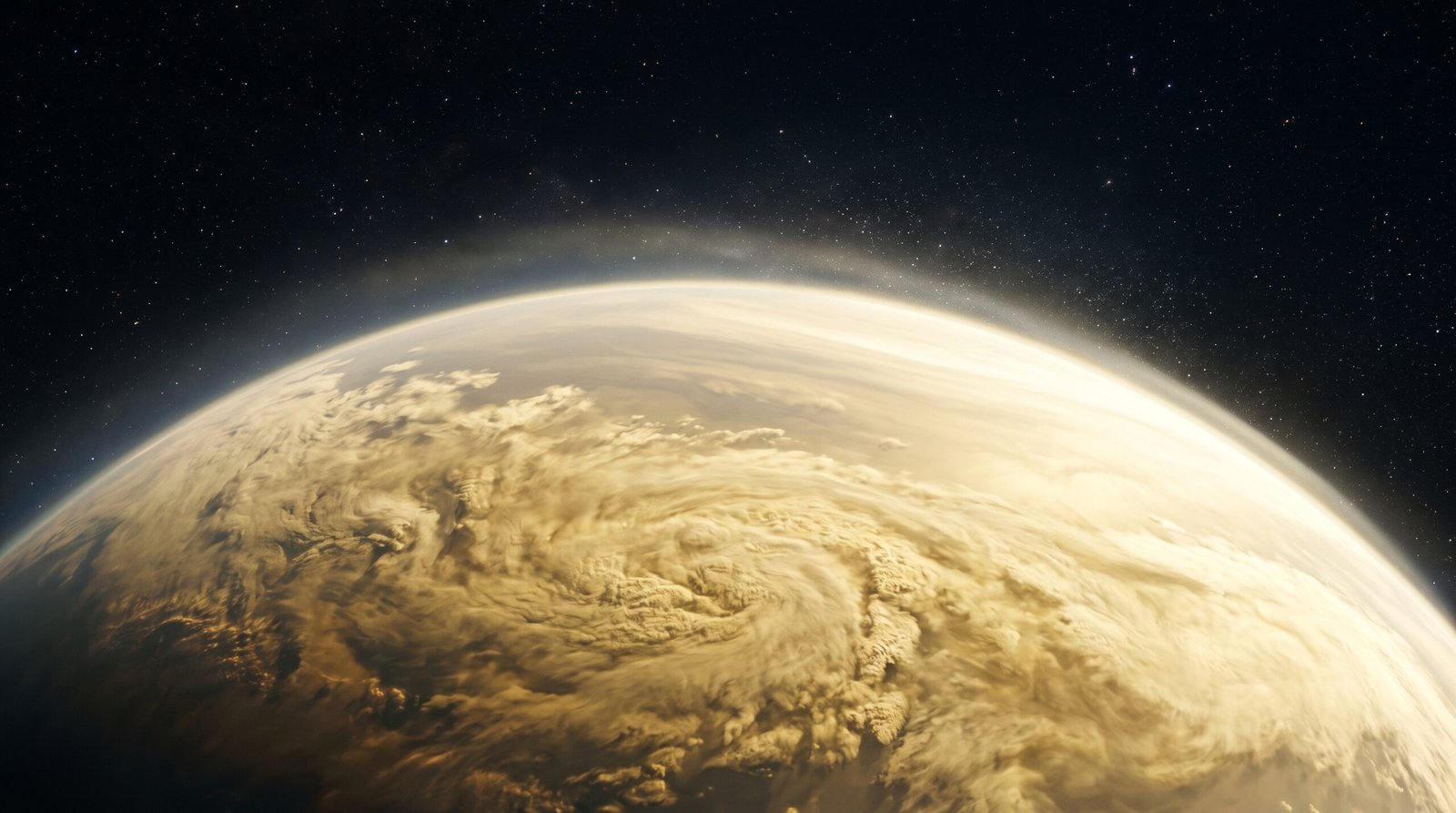
The word habitable does not mean that Venus definitely had forests, animals or an advanced ecosystem.
In planetary science, habitability generally refers to conditions that could allow environments suitable for life, particularly environments where liquid water could persist.
Some climate models suggest that ancient Venus may have met those conditions for a substantial period. Other research questions whether Venus ever had enough surface water to create a long lived habitable environment.
So we do not know whether ancient Venus was alive. We do not even know with certainty whether it had oceans. But the possibility is important enough that future missions are being designed specifically to investigate it.
NASA’s DAVINCI mission is intended to study Venus from above its clouds down through the atmosphere toward the surface. Its instruments will measure atmospheric chemistry, temperature, pressure and winds while the descent probe travels toward the ground. It will also obtain high resolution images of Alpha Regio, a mountainous region that may preserve clues about the planet’s ancient history.
Those measurements could help scientists determine whether Venus once had a much wetter environment. And if Venus did have oceans, they could help answer another extraordinary question.
Could There Be Life in the Clouds of Venus?
The surface of Venus is an extremely hostile place for life as we know it. The temperature is around 467°C. The pressure is roughly 93 times that at Earth’s sea level. Liquid water cannot exist there under normal surface conditions. But Venus’s atmosphere changes dramatically with altitude.
Around 50 kilometers above the surface, temperatures and pressures become far more moderate. NASA notes that temperatures in this region range roughly from 30°C to 70°C.
That has made the clouds of Venus a subject of serious scientific interest. Could microscopic organisms survive there? The idea is not that humans could simply breathe the atmosphere and live among the clouds. They could not.
The question is whether microbial life might survive within tiny droplets or particles suspended in the atmosphere, using chemistry available in the cloud environment.
There is currently no confirmed evidence of life on Venus.
Claims surrounding possible biosignature gases have generated intense debate, but none has established that Venus contains living organisms. That distinction matters.
Venus is a place where scientists are searching for clues. It is not a place where life has been discovered.
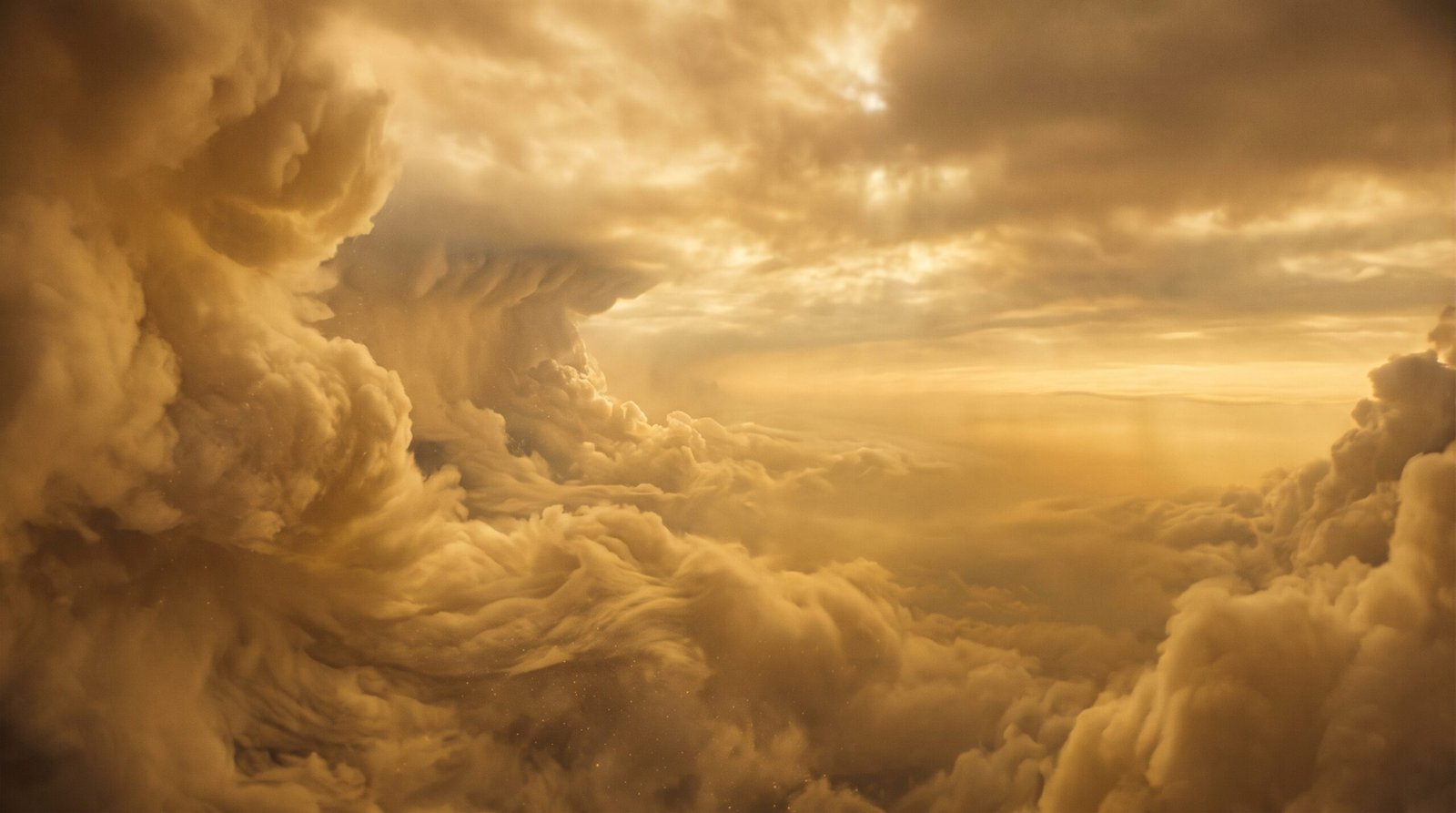
The Mystery Is Bigger Than Water
The story of Venus is becoming more complicated as scientists learn more. For decades, the planet was often treated as a warning about what happens when a greenhouse effect becomes extreme. That remains true.
But Venus may also be a record of planetary evolution. If ancient Venus was wet, scientists need to understand how that water disappeared. If it was never covered by long lived oceans, scientists need to understand why.
If the planet’s interior is unusually dry, that may tell us something about how Venus formed. If its oldest rocks preserve evidence of ancient water, those rocks could provide an entirely different story.
And if future missions discover chemical or geological evidence suggesting that Venus once had conditions suitable for life, the significance would extend far beyond our neighboring planet. It would change the way we think about the possibilities for life throughout the galaxy.
Venus sits close enough to Earth to act as a natural comparison. One planet retained oceans and developed a biosphere. The other became a world where water is almost completely absent from the surface. The difference between them may hold one of the most important lessons in planetary science.
Earth is not simply habitable because it is Earth. Its climate and surface conditions are the result of billions of years of planetary evolution. And Venus may show us what can happen when that evolution takes another path.
Humanity Has Already Reached Venus
The first spacecraft to visit another planet was NASA’s Mariner 2, which flew past Venus in December 1962. It made the first successful close measurements of another planet and helped reveal just how extreme Venus really was.
But reaching Venus was only the beginning. The Soviet Union eventually sent a series of increasingly sophisticated spacecraft toward the planet through its Venera program.
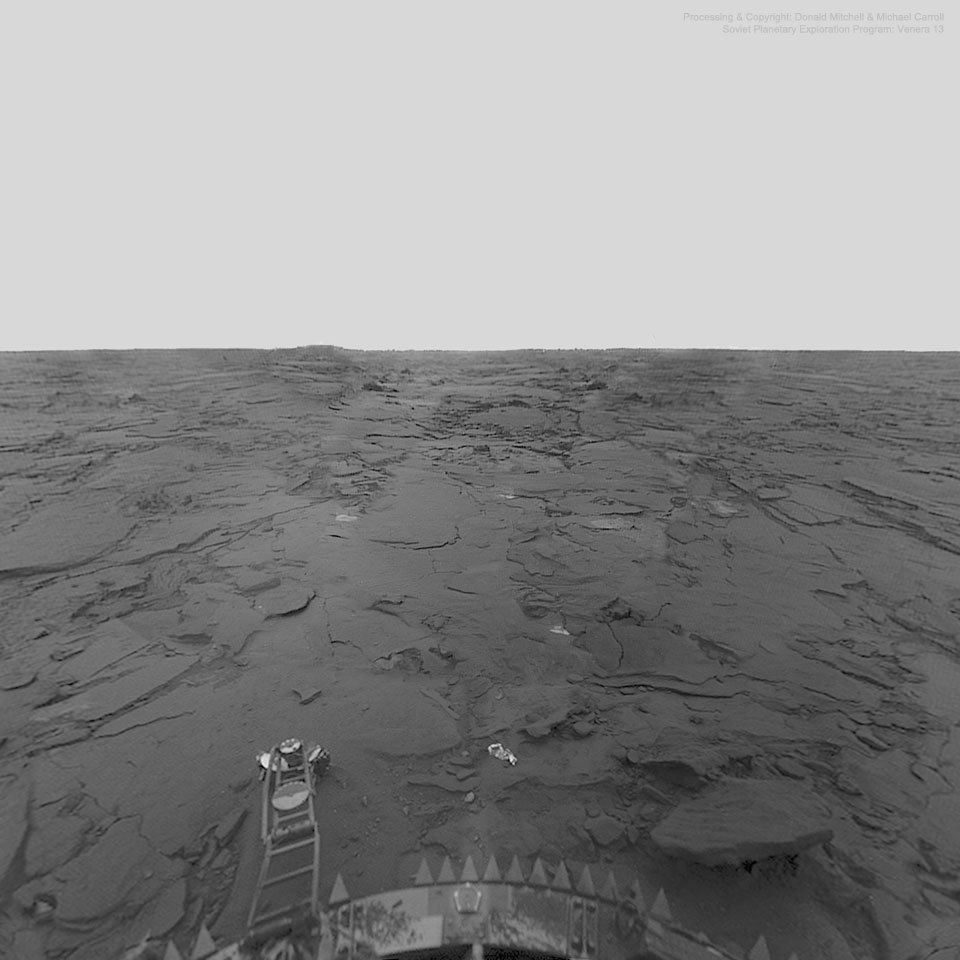
Several of them descended through the atmosphere. Some reached the surface. And for a brief period, they survived.
The Venera landers discovered a landscape that looked nothing like the beautiful bright planet seen from Earth. The surface was barren, rocky and dim beneath the thick atmosphere. NASA records that ten Venera probes reached the surface, with some functioning only briefly after landing. The longest survivor lasted about two hours.
Think about what that means.
A machine traveled millions of kilometers through space, entered one of the most hostile atmospheres in the Solar System, survived the descent, landed on another world and transmitted information back to Earth.
Then the heat and pressure won.
Magellan Finally Revealed the Hidden Planet
The Soviet missions gave humanity the first direct glimpses of the surface. But they could only see tiny areas. Most of Venus remained hidden.
That changed with NASA’s Magellan spacecraft.
Launched in 1989, Magellan used radar to see through the planet’s thick clouds and became the first spacecraft to image the entire surface of Venus. Its observations transformed our understanding of the planet’s geology and revealed enormous volcanic plains, mountains, ridges and other structures hidden beneath the atmosphere.
Suddenly, Venus was no longer an almost featureless golden sphere. It was a world. A world with a history written across its surface. And that history raised even more questions.
How recently was the surface reshaped?
How much volcanic activity is happening today?
What lies beneath the crust?
Did Venus once have oceans?
Why did its evolution diverge so dramatically from Earth’s?
And perhaps most importantly:
When did Venus become the planet we see today?
The Next Generation Is Going Back
For decades, Venus received far less attention than Mars.
That is beginning to change.
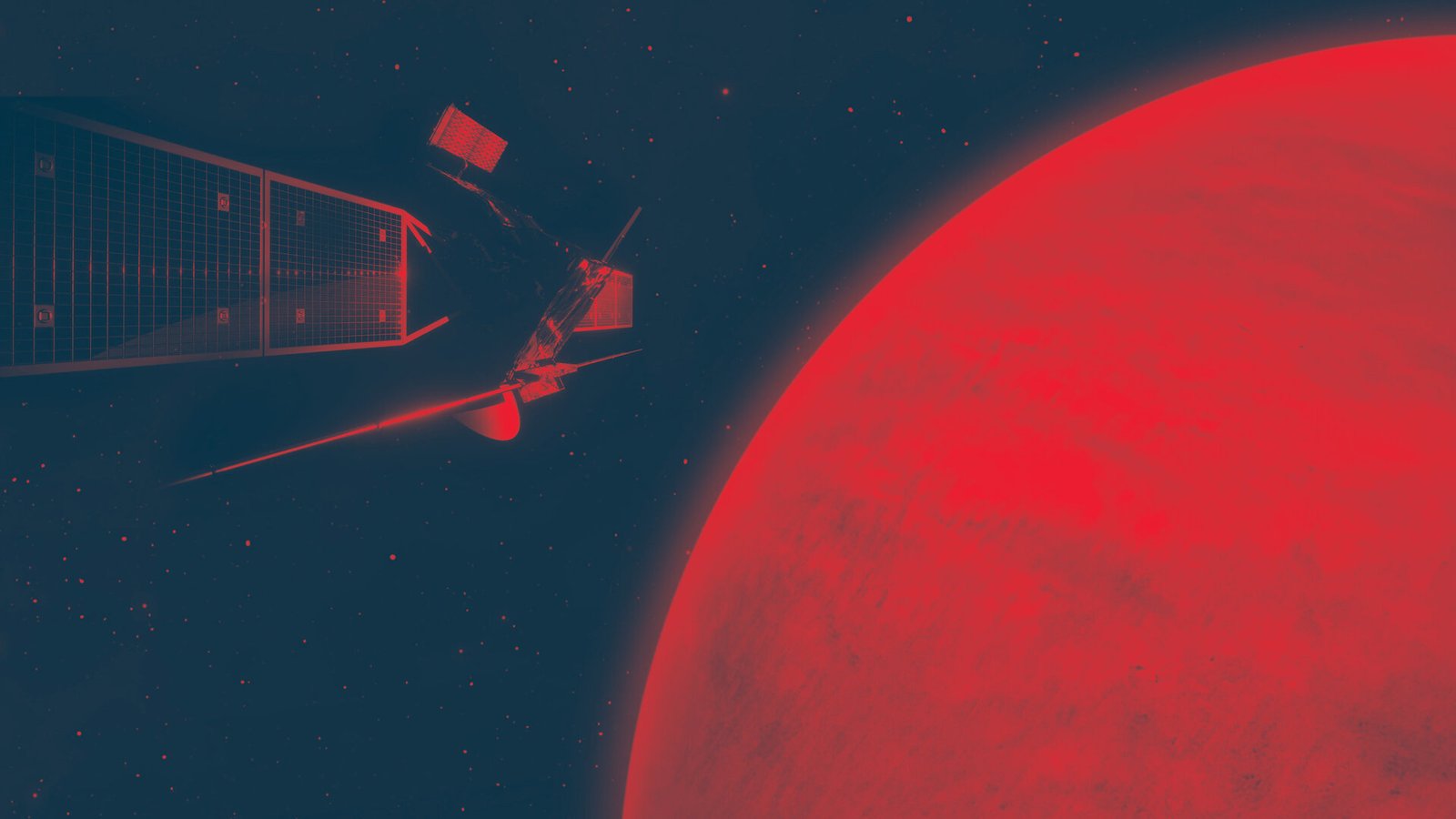
NASA is developing DAVINCI, a mission designed to send a probe through Venus’s atmosphere while collecting detailed measurements of its chemistry, temperature, pressure and winds. The spacecraft will also attempt to obtain high resolution images of Alpha Regio during its descent. NASA was still testing components for the mission in July 2026, including a prototype of the camera system that will eventually descend through Venus’s atmosphere.
DAVINCI is important because it will not simply look at Venus from orbit. It will travel downward. Through the clouds. Through the atmosphere. Toward the surface.
As it descends, its instruments will sample the atmosphere at different altitudes, giving scientists a vertical profile of Venus that previous missions could not obtain in the same way.
It is essentially a scientific journey through the entire atmosphere. And it could help answer one of the biggest questions in the entire Venus story:
What was Venus like before it became a furnace?
VERITAS Will Look Beneath the Surface
NASA’s VERITAS mission has a different job.
Rather than descending through the atmosphere, VERITAS is designed to orbit Venus and investigate its surface and interior using advanced radar, spectroscopy and other measurements. NASA describes the mission as an effort to understand how Venus and Earth followed such different evolutionary paths.
The spacecraft could reveal geological changes that are difficult or impossible to identify from the ground. It could help scientists understand how Venus’s crust behaves. It could investigate volcanic activity. It could improve our understanding of the planet’s interior.
And it could provide important evidence about whether Venus is still geologically active. The mission’s ultimate question is enormous.
How did a planet so similar to Earth become so different?
EnVision Will Study Venus From the Inside Out
Europe is also preparing to return to Venus. The European Space Agency’s EnVision mission is designed to study the planet from its interior through its surface and atmosphere.
The mission is currently targeting a launch in November 2031. ESA says EnVision will spend about 15 months traveling to Venus, followed by roughly 11 months of aerobraking before reaching its science orbit. Its planned science phase is four Earth years.
What makes EnVision especially important is the breadth of its investigation. It will examine Venus’s atmosphere. Its surface. Its interior. And the interactions between these layers.
That could provide another piece of the puzzle connecting Venus’s geological history with its atmospheric evolution. In other words, humanity is not simply returning to photograph Venus. We are returning to understand it.
Could Humans Ever Live on Venus?
This is where imagination often runs far ahead of science. The surface of Venus is not a realistic place for humans to live with current technology. The temperature is around 467°C. The pressure is roughly 93 times Earth’s sea level pressure. The atmosphere is dominated by carbon dioxide. And the clouds contain sulfuric acid.
A human settlement sitting directly on the ground would require technology far beyond anything humanity has ever built. But Venus has a strange advantage. You do not necessarily have to live on the surface.
At an altitude of roughly 50 kilometers, the temperature and atmospheric pressure become dramatically more Earth like. NASA notes that temperatures there can range from about 30°C to 70°C, while atmospheric pressure is much closer to what humans experience at Earth’s surface.
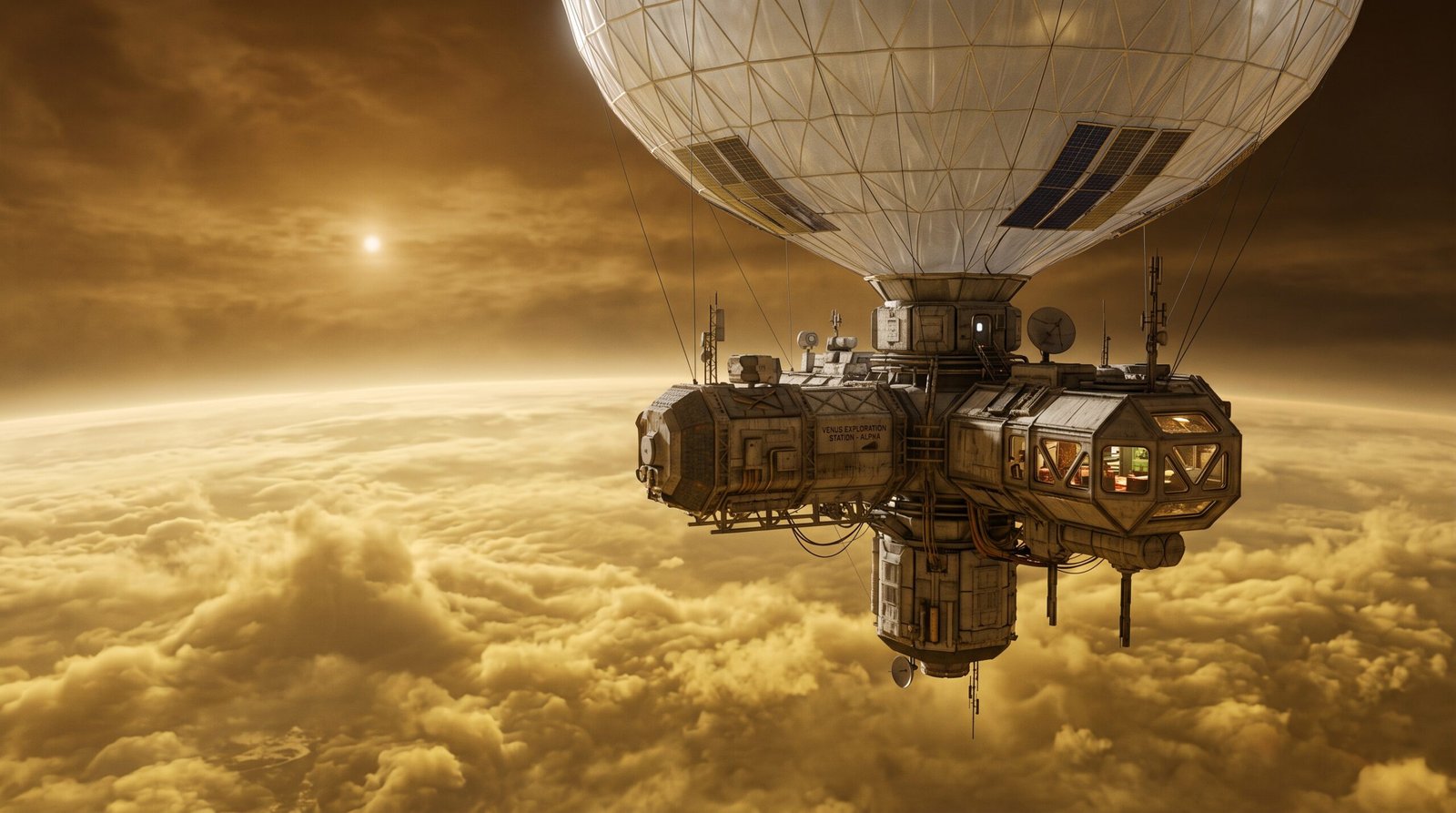
This has led scientists and engineers to investigate the theoretical possibility of floating habitats in Venus’s upper atmosphere. The idea sounds like science fiction. But there is real physics behind it.
Because Venus’s atmosphere is mostly carbon dioxide, a breathable mixture of oxygen and nitrogen would actually be buoyant in the surrounding atmosphere.
That means an enormous balloon like habitat could potentially float. The environment would still be extremely challenging. The clouds contain sulfuric acid. Solar energy is complicated by the atmosphere. Materials would have to withstand a corrosive environment.
Food, water, equipment and industrial resources would need to be supplied or produced. And no such human settlement currently exists.
So the honest answer is simple:
Humans cannot live on Venus today. But floating habitats in the upper atmosphere are physically conceivable concepts for a distant future.
Could Venus Ever Be Terraformed?
Terraforming Venus is a completely different question. It would not mean building a few habitats. It would mean changing an entire planet.
To make the surface of Venus Earth like, humanity would somehow need to deal with its enormous carbon dioxide atmosphere, extreme temperatures, crushing pressure and lack of stable surface water.
That is an almost unimaginable engineering challenge.
Ideas proposed by scientists and futurists include reducing the amount of sunlight reaching Venus with an enormous solar shade, removing or chemically binding atmospheric carbon dioxide, cooling the planet and eventually introducing water. But these are theoretical concepts.
Humanity currently has no technology capable of terraforming Venus. And even if we eventually developed the necessary technology, the transformation would not be a simple engineering project.
It would be a planetary scale undertaking lasting far beyond ordinary human timescales. So when we ask whether Venus could become another Earth, the scientifically responsible answer is:
Not with anything resembling today’s technology. Perhaps not even with technology we can currently imagine. And that may be exactly why Venus is so valuable. We do not need to change Venus to learn from it.
We only need to understand it.
Venus May Be Earth’s Warning
Venus is more than a hot planet. It is a comparison.
Earth and Venus are similar enough to make the comparison meaningful, yet different enough to show how dramatically planetary evolution can diverge.
Venus demonstrates what an atmosphere can do when enormous amounts of carbon dioxide accumulate. It shows how temperature, atmospheric chemistry, water and geological activity can become connected in ways that reshape an entire world.
It also reminds us that habitability is not permanent. A planet’s history matters. Its atmosphere matters. Its interior matters. Its distance from its star matters. And the interactions between all of these systems matter.
That is why scientists are so interested in Venus. Understanding the planet next door can help us understand Earth. It can also help us understand planets orbiting distant stars.
When astronomers discover a rocky planet in another solar system, they need to determine whether it is more Earth like, more Venus like, or something entirely different.
Venus gives us one of the closest natural laboratories available for answering those questions.
Venus Is Not Earth’s Twin Anymore
From space, Venus can look peaceful. A beautiful golden sphere wrapped in clouds. But beneath those clouds is a world of crushing pressure, extreme heat, volcanic landscapes and atmospheric chemistry unlike anything on Earth.
It may once have been dramatically different. Perhaps it held oceans. Perhaps its surface remained habitable for a significant part of its early history. Perhaps it never became as wet as some models suggest.
We do not yet know. And that uncertainty is precisely what makes Venus so fascinating. The planet is not simply a dead warning about runaway greenhouse warming. It is a world whose past is still being reconstructed.
A world whose atmosphere still moves in ways we do not completely understand. A world where volcanoes may still be active. A world whose clouds hide geological evidence that could rewrite our understanding of its history.
And somewhere beneath those clouds may be the answer to a question that reaches far beyond Venus: How does a world become a world like Earth?
Because if Venus and Earth began with so much in common and ended so differently, then understanding Venus may help us understand just how rare a truly Earth like world might be.
Venus does not need to become another Earth. It only needs to tell us why it did not.
CONCLUSION
Venus is often described as Earth’s evil twin. But perhaps there is a better way to think about it. Venus is Earth’s other possibility. It is a reminder that two rocky worlds can begin with striking similarities and still travel toward completely different futures.
Today, Venus is a furnace hidden beneath brilliant clouds. But its surface preserves clues to a much older planet. Its atmosphere carries evidence of a complicated past. Its volcanoes reveal a world that may still be geologically active. And its clouds continue to hide questions that spacecraft have only begun to answer.
The next generation of missions will descend through those clouds, map the surface in greater detail and investigate the planet’s interior. They may tell us whether Venus once had oceans. They may reveal how its climate transformed. They may determine how active the planet remains today.
And they may bring us closer to understanding one of the most important questions in planetary science: Why did Earth become a home for life while Venus became a world almost completely hostile to it?
For now, Venus remains hidden behind its clouds. But humanity is going back. And the next time we look beneath them, we may finally see the planet’s true story.
FAQs
Why is Venus hotter than Mercury?
Venus is hotter because its extremely dense carbon dioxide atmosphere traps heat through a powerful greenhouse effect. Mercury is closer to the Sun but has an extremely thin exosphere and cannot retain heat in the same way.
What would happen if a human stood on Venus?
A human without extraordinary protection would be exposed to temperatures around 467°C, crushing atmospheric pressure and an atmosphere that cannot be breathed. Survival on the surface is currently impossible.
Does Venus really have acid rain?
Venus has clouds containing sulfuric acid droplets. However, sulfuric acid precipitation does not reach the surface in the same way ordinary rain reaches Earth. The droplets evaporate at lower altitudes because of the extreme heat.
Did Venus ever have oceans?
Scientists do not yet know. Some climate models support the possibility of ancient surface water, while other research has questioned whether Venus ever had long lived oceans. This remains an active area of research.
Could Venus have once supported life?
It is possible that ancient Venus may have experienced conditions suitable for life, but there is currently no evidence that life ever existed there. NASA considers understanding Venus’s ancient environment essential to investigating its potential habitability.
Could life exist in the clouds of Venus?
Scientists have considered the possibility of microbial life in the cloud layers because conditions at certain altitudes are much less extreme than at the surface. However, no confirmed evidence of life has been found.
Does Venus have active volcanoes?
There is evidence that Venus has been volcanically active in relatively recent geological history, and scientists continue to investigate whether volcanic activity is occurring today. Future missions should help resolve this question.
Why does Venus rotate backwards?
Venus rotates in the opposite direction from most planets. Its rotation is also extremely slow, taking about 243 Earth days. Scientists continue to investigate the processes that produced its unusual rotational state.
Is a day on Venus longer than its year?
Yes. Venus takes about 243 Earth days to rotate once relative to the distant stars, while it takes about 225 Earth days to orbit the Sun.
Could humans live on Venus?
Not on the surface with current technology. The surface environment is far too hot and pressurized. However, researchers have explored theoretical concepts involving floating habitats in the upper atmosphere, where temperature and pressure are much more moderate.
Could Venus be terraformed?
Terraforming Venus is theoretically discussed but currently far beyond human technological capability. It would require transforming the planet’s atmosphere, temperature and water environment on an enormous scale.
What spacecraft first visited Venus?
NASA’s Mariner 2 became the first spacecraft to successfully visit another planet when it flew past Venus in December 1962.
What was the first spacecraft to land on Venus?
The Soviet Venera 7 became the first spacecraft to successfully land on Venus and transmit data from the surface in 1970. Later Venera missions returned increasingly detailed measurements and photographs.
What did Magellan discover about Venus?
Magellan used radar to map the planet’s hidden surface and became the first spacecraft to image the entire surface of Venus. It revealed extensive volcanic terrain, mountains and other geological structures beneath the clouds.
What are NASA’s DAVINCI and VERITAS missions?
DAVINCI is designed to study Venus’s atmosphere during a descent toward the surface and investigate clues about the planet’s history. VERITAS is a planned orbiter designed to study Venus’s surface and interior and investigate how Venus and Earth evolved differently.
What is ESA’s EnVision mission?
EnVision is an ESA led mission designed to study Venus from its interior through its surface and atmosphere. It is currently targeting a November 2031 launch and is intended to investigate why Venus evolved so differently from Earth.
Want to Go Beyond Venus?
Venus is only one of the worlds hiding extraordinary stories across our Solar System and beyond.
At From Worlds Beyond, we explore the planets, stars, black holes and cosmic mysteries that make our universe stranger than fiction.