
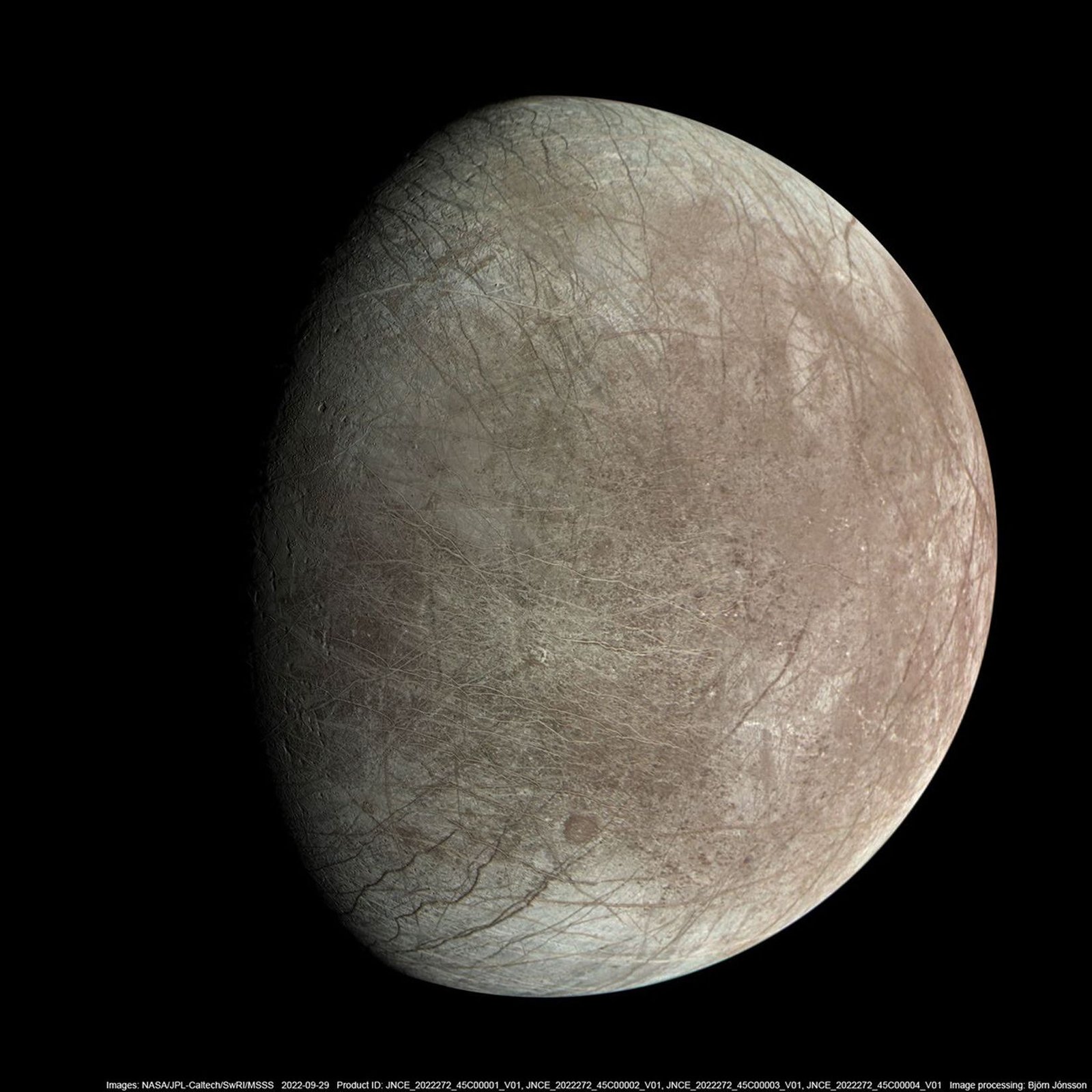
Somewhere beneath a shell of ice thick enough to bury entire mountains, there is a place no human eye has ever seen, and yet scientists now believe it may hold more liquid water than every ocean on Earth combined. That place is Europa’s hidden ocean, sealed inside one of Jupiter’s smaller moons, and in the first months of 2026 it became the center of one of the most genuinely unresolved debates in modern astrobiology. Two teams of scientists, working independently, reached opposite conclusions about whether anything could survive down there. Neither has been proven wrong yet.
What Is Europa’s Hidden Ocean
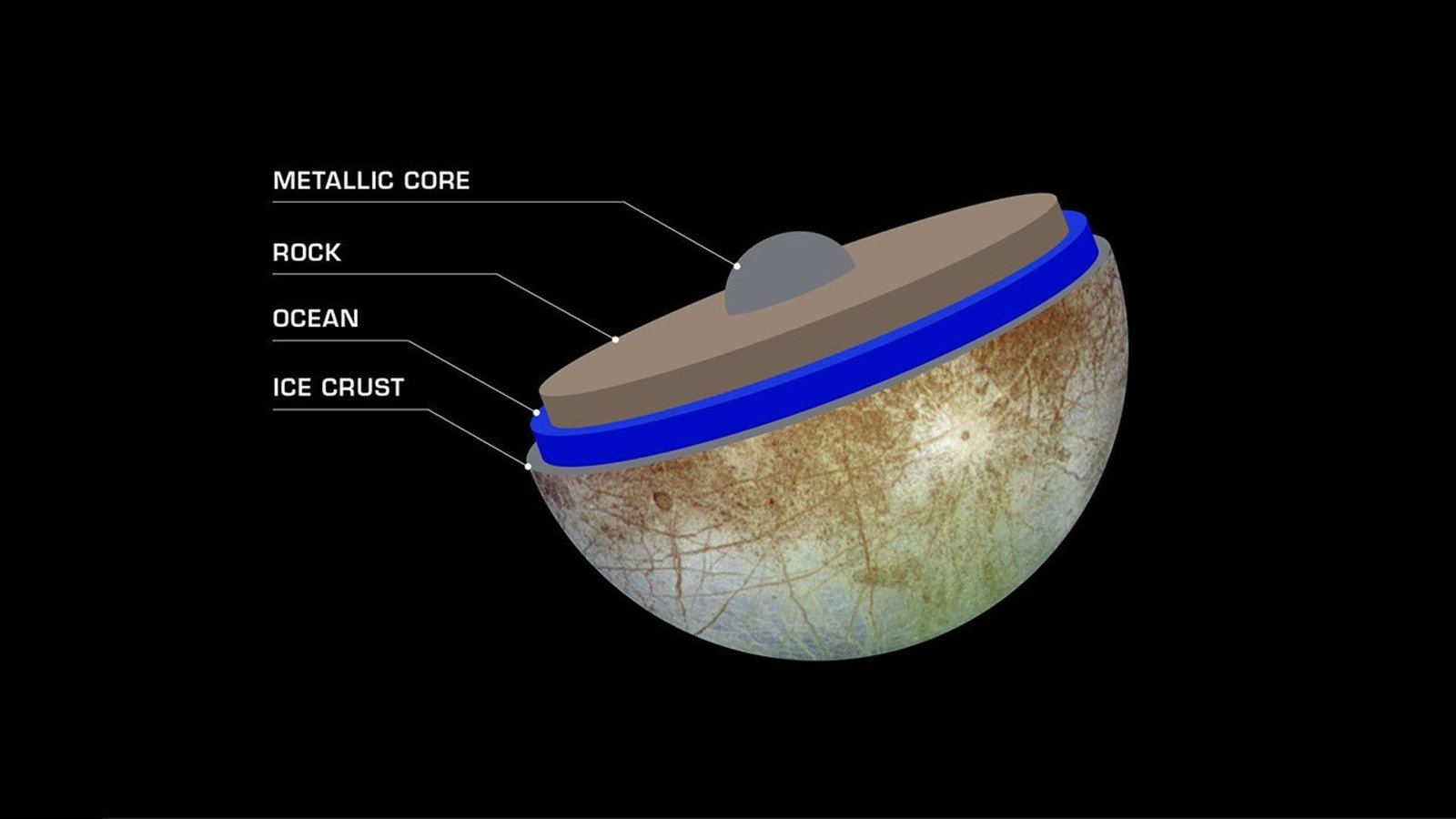
Europa’s hidden ocean is a vast layer of liquid saltwater believed to exist beneath the icy crust of Jupiter’s moon Europa, potentially containing more than twice as much water as all of Earth’s oceans combined. No spacecraft has ever seen it directly. Its existence is inferred from magnetic field measurements, surface geology, and models of the moon’s interior, and NASA’s Europa Clipper mission is now on its way to investigate it directly, arriving in 2030.
A Moon Smaller Than Our Own, Holding More Water Than Our Planet
Europa is slightly smaller than Earth’s own Moon, a fact that makes what lies beneath its surface even harder to picture. Scientists estimate the ocean itself runs somewhere between 60 and 150 kilometers deep, dwarfing anything on Earth, where even the deepest ocean trenches average under 4 kilometers. The comparison only works because Europa’s water is not spread thin across a wide surface the way Earth’s oceans are. It is stacked, layer after layer, wrapping the entire moon in a shell of liquid far deeper than it is wide.
What keeps that ocean from freezing solid, this far from the Sun, is not sunlight at all. It is Jupiter itself. As Europa orbits, Jupiter’s immense gravity stretches and flexes the moon’s interior in a process called tidal heating, generating enough warmth to keep water liquid in a place that should, by every measure of distance from the Sun, be frozen through.
The Ice Shell Turns Out to Be Thicker Than Anyone Expected
For years, scientists debated how thick the ice sealing that ocean away actually is, with estimates ranging anywhere from 15 to 25 kilometers. In January 2026, data from NASA’s Juno spacecraft settled part of that argument and complicated another. Using a flyby from 2022, Juno’s microwave radiometer measured the ice shell at an average of 29 kilometers thick, thicker than three Mount Everests stacked end to end.
A thicker shell is not just a bigger number. It matters because oxygen, nutrients, and chemistry from the surface, created by Jupiter’s radiation, need a path down into the ocean for life to have any real chance at existing there. The thicker the ice, the longer and harder that path becomes.
Is There Life in Europa’s Hidden Ocean
This is where the story stopped being simple. On January 6, 2026, researchers from Washington University in St. Louis published findings suggesting Europa’s seafloor is likely “quiet and lifeless,” lacking the geologic activity, such as hydrothermal vents, that life on Earth’s ocean floors depends on. Their conclusion was based on Europa’s size, its rocky core, and how much heat that core could realistically generate.
A Competing Study Says the Door Might Still Be Open
That same month, a separate team published research proposing a different pathway entirely. Rather than requiring heat from below, their study suggested that radiation striking Europa’s surface constantly generates chemical nutrients, and that those nutrients could sink downward through the ice and feed the ocean from above rather than below. Neither study has been disproven. Both were published in peer reviewed journals within weeks of each other, and both remain live, competing explanations rather than settled fact.
Then in July 2026, a third study added another wrinkle. Research led by planetary scientist Lujendra Ojha found that if shallow pockets of liquid water exist closer to Europa’s surface, they may have formed locally from melted ice, disconnected entirely from the deep ocean below. That would mean even if Europa Clipper finds water near the surface, it might not be a shortcut to answering whether the deep ocean itself is habitable.
Why Europa Still Matters More Than Almost Anywhere Else
Despite all of that uncertainty, Europa remains one of the most promising places in the solar system to search for life beyond Earth, because it has all three ingredients scientists look for: liquid water, the right chemical elements, and a genuine energy source in the form of tidal heating. Few other worlds in the solar system can claim all three at once.
NASA’s Europa Clipper, launched in October 2024, is now on a 1.8 billion mile journey to answer these questions directly, arriving at Jupiter in April 2030 and completing 49 close flybys of the moon. The European Space Agency’s JUICE mission, launched in 2023, will join the investigation in 2031. Between them, the coming decade should finally turn this ancient mystery into something scientists have actually measured.
Interesting Facts
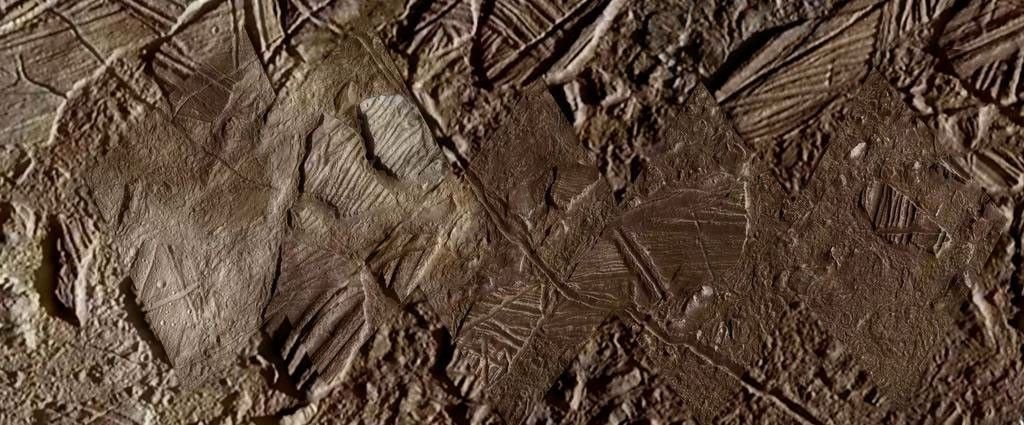
- Europa’s icy surface displays “chaos terrain,” regions where the ice appears to have broken apart, rotated, and refrozen, evidence that the crust above the ocean is not static but genuinely moving.
- Europa has almost no impact craters compared to its neighboring moons, meaning its surface is geologically young and constantly being resurfaced, most likely by activity connected to the ocean beneath it.
- Europa is one of at least six icy moons in our solar system now thought to hide oceans beneath their surfaces, alongside Enceladus, Ganymede, Callisto, Titan, and Triton.
FAQ
Is there life in Europa’s hidden ocean? Nobody knows yet, and that is the honest answer. As of 2026, scientists have published directly conflicting studies, one suggesting the seafloor lacks the activity needed to sustain life, another suggesting nutrients could still reach the ocean from above. NASA’s Europa Clipper mission, arriving in 2030, is specifically designed to gather the evidence needed to settle this question.
How deep is Europa’s ocean? Current estimates place it between 60 and 150 kilometers deep, which would make it far deeper than any ocean on Earth, even though Europa itself is smaller than our Moon.
How thick is Europa’s ice shell? NASA’s Juno spacecraft measured the ice shell at an average of 29 kilometers thick in a 2026 study, thicker than earlier estimates of 15 to 25 kilometers.
When will we know for certain if Europa has an ocean? NASA’s Europa Clipper spacecraft arrives at Jupiter in April 2030 and will spend years conducting close flybys specifically designed to confirm the ocean’s existence, depth, and composition directly.
Is Europa’s ocean saltwater? Yes, based on magnetic field measurements from NASA’s Galileo mission, scientists believe Europa’s ocean is a salty, electrically conductive body of water, similar in that respect to Earth’s oceans.
Conclusion
Europa keeps its secret sealed behind tens of kilometers of ice, in darkness no sunlight has ever touched. Two teams of scientists have already looked at the same moon and reached opposite conclusions about what might be waiting down there. That is not a failure of the science. It is exactly where real discovery looks like from the outside, before the answer is known. For now, Europa’s hidden ocean remains precisely what its name promises, hidden, and one of the most important open questions left in our solar system.
Some Worlds Keep Their Secrets
If distant moons hiding oceans in the dark fascinate you as much as they fascinate us, explore more deep space stories on the From Worlds Beyond blog, and follow along on YouTube for more of the universe brought to life.