
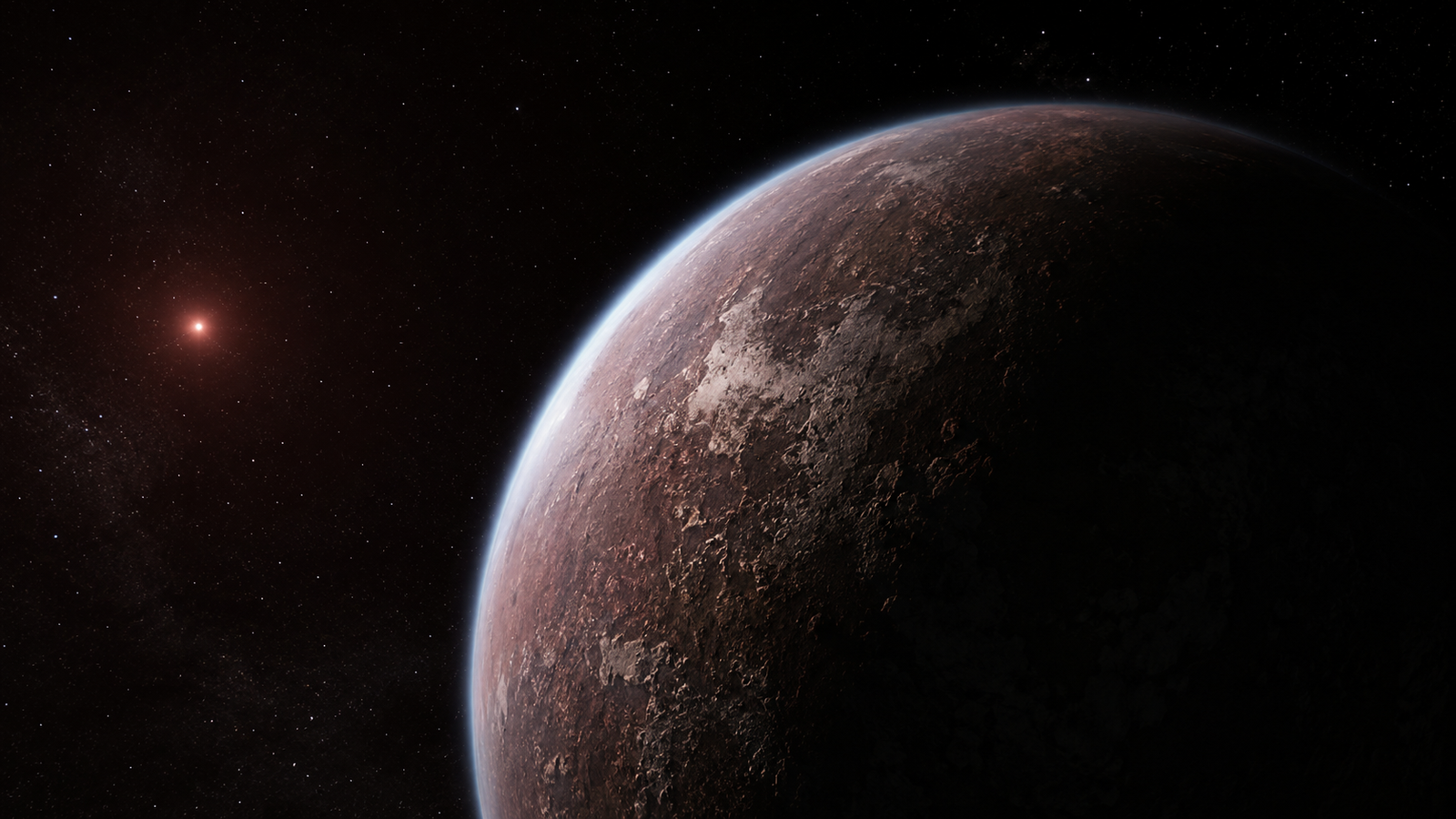
This is the first atmosphere found on habitable planet LHS 1140 b, located outside our solar system. Forty eight light years away, in the constellation Cetus, a rocky planet just answered a question astronomers have been chasing for over a decade. Can a rocky world in the habitable zone actually hold onto an atmosphere, or does every one of them eventually lose it?
The answer, published in the journal Science in July 2026, is yes. At least one can.
The planet LHS 1140 b is not a new discovery, it was first found back in 2017. What’s new is proof that it has kept an atmosphere for a very long time, discovered in the most unexpected way possible, by watching helium quietly leak away from it into space.
The Discovery: First Atmosphere Found on Habitable Planet LHS 1140 b
You cannot point a telescope at a planet 48 light years away and simply see clouds. Instead, astronomers led by Harvard’s Collin Cherubim used a technique called transit spectroscopy. As LHS 1140 b passed in front of its star, a sliver of starlight filtered directly through the planet’s upper atmosphere on its way to Earth. That light carries a fingerprint, specific wavelengths get absorbed by specific elements, and in this case, the fingerprint pointed to helium escaping the planet.

That escaping helium is the real story. It means LHS 1140 b has a real, physical atmosphere sitting above its surface, one that researchers estimate has survived for more than three billion years. That is the first time this has ever been confirmed for a rocky planet sitting inside a habitable zone, the region around a star where temperatures could theoretically allow liquid water.
What This Actually Proves, and What It Doesn’t
What This Actually Proves, and What It Doesn’t
This marks the first atmosphere found on a habitable planet in the history of exoplanet science. Here is where most coverage of this story gets it wrong, and where it is worth being precise.
This discovery does not prove LHS 1140 b has life. It does not even prove the planet has liquid water on its surface, or breathable air, or conditions anything like Earth’s. What it proves is narrower and still genuinely important, a rocky planet in a habitable orbit is capable of holding onto an atmosphere at all, rather than losing it entirely to its star’s radiation, which is exactly what many scientists feared happens to every rocky world orbiting close to a small, active star.
Even more interesting, the helium signal was not always there. Researchers detected escaping helium in a 2024 observation, then found none at all in a follow up look in 2025. Rather than a mistake, that inconsistency suggests LHS 1140 b’s atmosphere is layered and dynamic, changing in ways scientists can now actually observe happening on human timescales, something one of the researchers involved described as a rare privilege to witness.
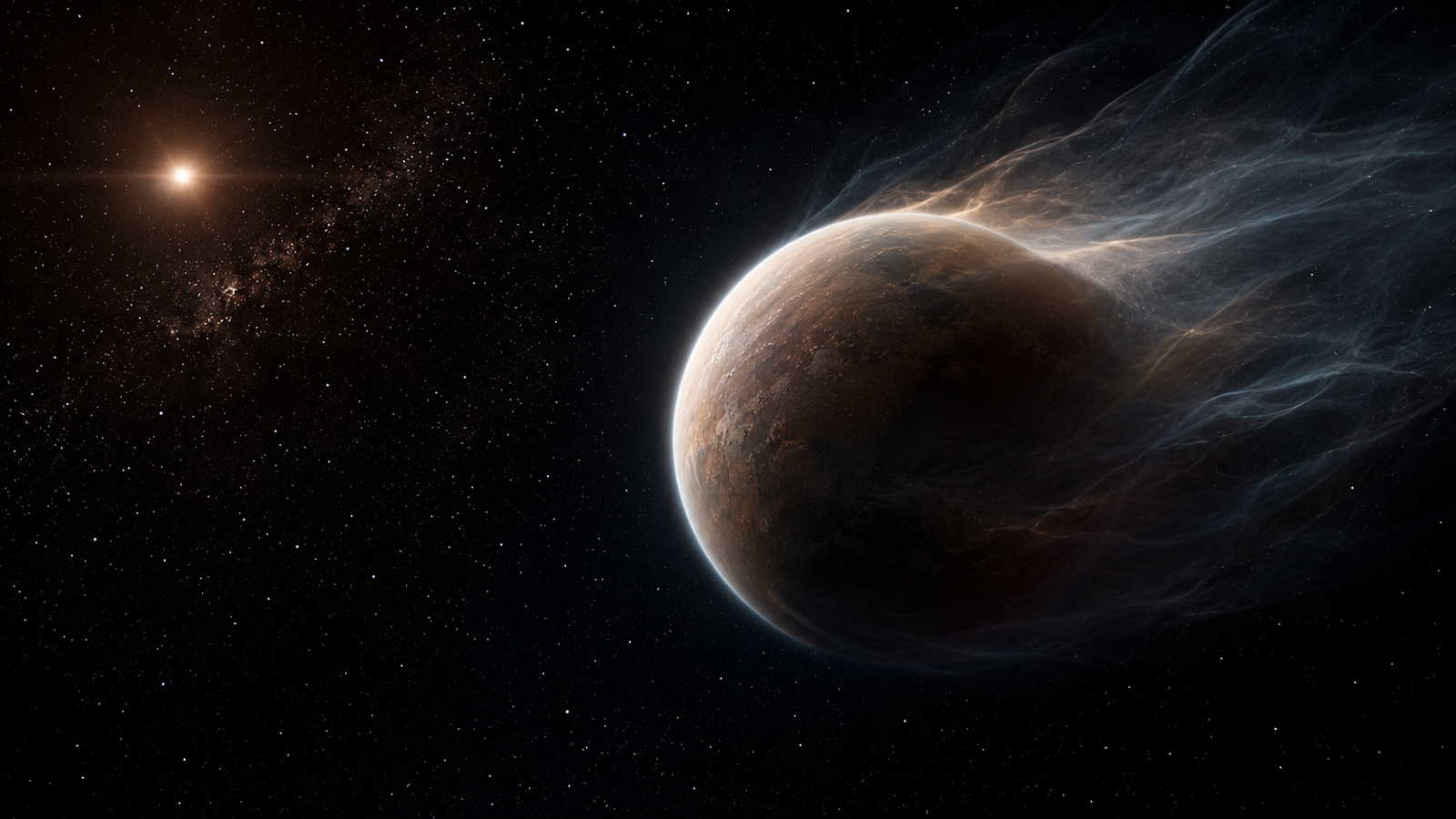
The planet itself is roughly 1.7 times Earth’s radius and about 5.6 times Earth’s mass, orbiting a small, cool red dwarf star every 24.7 days. Its estimated surface temperature sits around minus 47 degrees Celsius, cold by Earth standards, but that number alone does not rule out habitability, since a thick enough atmosphere could trap heat the same way Earth’s does.
What Happens Next
This result opens the door for a much more targeted search. Now that scientists know LHS 1140 b can retain an atmosphere, the James Webb Space Telescope has several more observation windows planned specifically to search for heavier gases like carbon dioxide and nitrogen, the kind of atmospheric fingerprint that would make a much stronger case for surface water, and eventually, for genuine habitability. NASA has more on the James Webb Space Telescope’s exoplanet research at science.nasa.gov/mission/webb.
For now, LHS 1140 b holds a simpler but still remarkable title, it is the first confirmed proof that a rocky world doesn’t have to lose its air just for sitting in the right place around the wrong kind of star.
Frequently Asked Questions
What is LHS 1140 b? LHS 1140 b is a rocky exoplanet about 48 light years from Earth, orbiting a red dwarf star in the constellation Cetus. It is roughly 5.6 times Earth’s mass and sits within its star’s habitable zone.
Is LHS 1140 b habitable? Not confirmed. Scientists have confirmed the planet has an atmosphere, which is a necessary condition for habitability, but they have not yet confirmed liquid water, breathable gases, or any direct sign of life.
How did scientists detect the atmosphere? By observing helium escaping from the planet’s upper atmosphere during a transit, using a technique called transit spectroscopy, which reads how starlight changes as it passes through a planet’s atmosphere.
How far away is LHS 1140 b? Approximately 48 light years from Earth, meaning the light and data astronomers are studying left that system decades ago.
Explore More From Worlds Beyond
If discoveries like this fascinate you, you might also enjoy our deep dive into what would happen if Earth lost its gravity.